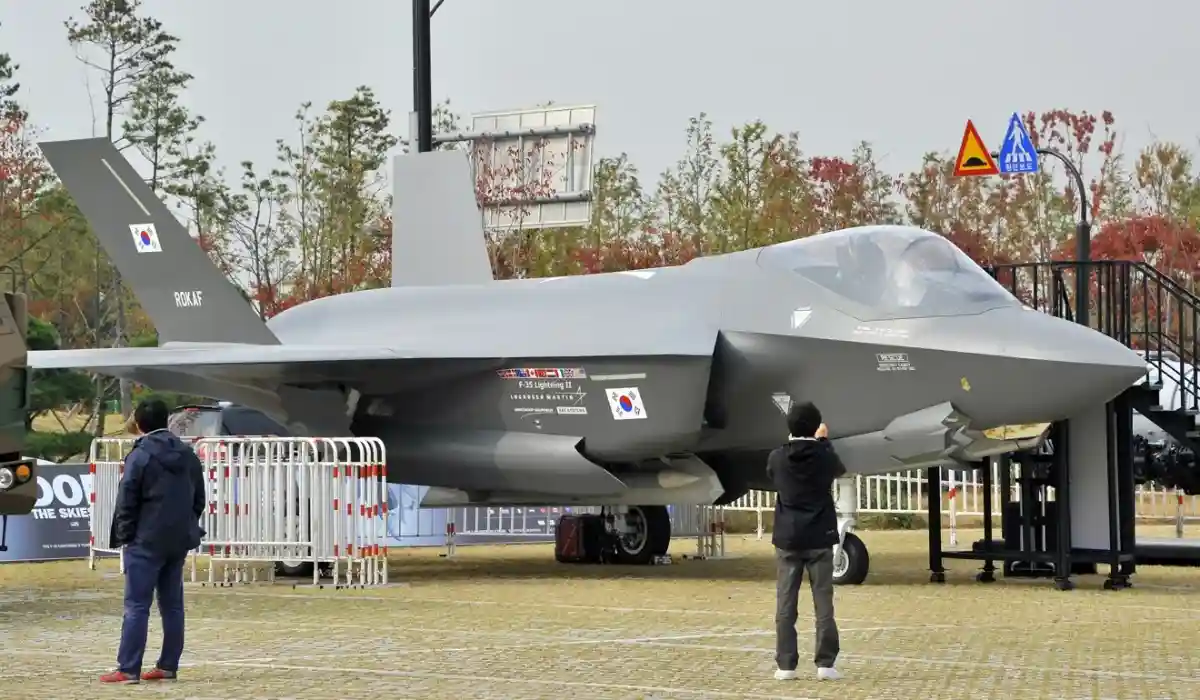
The Republic of Korea’s acquisition of the F-35 Lightning II marks a pivotal moment in its ongoing defense modernization and alliance-building with the United States. As of 2025, South Korea operates 39 F-35A stealth fighters, with an additional 20 units expected to arrive by 2026, bringing the total to 59 operational aircraft, part of a broader plan to acquire 85 units. This makes South Korea the third-largest F-35 operator globally, behind only the United States and Japan. However, beneath this seemingly robust airpower enhancement lies a web of strategic dilemmas, economic burdens, and geopolitical intricacies that complicate Seoul’s defense narrative.
Deployment Strategy: Dispersion Amid Missile Threats
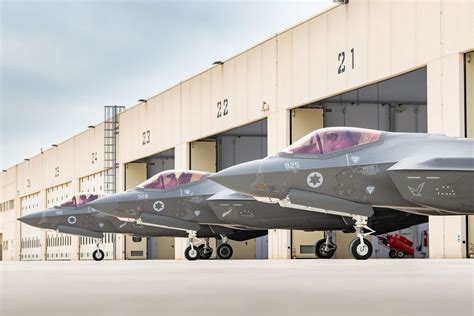
Initially, South Korea’s entire fleet of F-35As was concentrated at Cheongju Air Base, approximately 100 kilometers south of Seoul. This location, while strategically positioned to respond swiftly to threats from North Korea, presents a critical vulnerability. Intelligence assessments indicate that North Korea’s short-range ballistic missile arsenal, including systems like the KN-23 and KN-25, can target virtually every point on South Korean territory, including Cheongju.
To mitigate this risk, the Republic of Korea Air Force (ROKAF) has announced plans to disperse future F-35 units across multiple bases in central Korea, starting with the new batch arriving post-2026. This agile basing strategy is designed to improve survivability in wartime scenarios by avoiding the pitfalls of asset concentration. Nonetheless, the limited geographic depth of the Korean Peninsula casts doubt on the overall effectiveness of this plan. Most proposed air bases remain within North Korean missile strike range, limiting the actual strategic gain of dispersion.
The Procurement Debate: Strategic Necessity or Political Symbolism?
South Korea’s F-35 program is one of the most expensive defense projects in its history. Each aircraft comes at a unit cost of approximately $100 million, with maintenance costs exceeding 100,000 RMB ($13,000+) per flight hour. These figures have sparked fierce domestic debates over whether such an investment genuinely enhances national security or merely serves geopolitical signaling purposes.
Critics point out that the decision to procure such a large fleet appears driven, in part, by the need to demonstrate allegiance to the United States amid rising regional tensions. The asymmetric nature of the ROK-U.S. alliance means that South Korea has little say over certain critical operational aspects. Notably:
- Core software and technical data remain under U.S. control, limiting Seoul’s ability to independently upgrade or customize the platform.
- Authorization is required for specific combat missions, including take-offs in crisis scenarios.
- Technology transfer restrictions hinder the domestic defense industry from absorbing and replicating F-35 capabilities.
These limitations have led some to argue that the F-35 program represents strategic dependence rather than military autonomy.
Reliability Concerns: A Stealth Fighter with Frequent Breakdowns
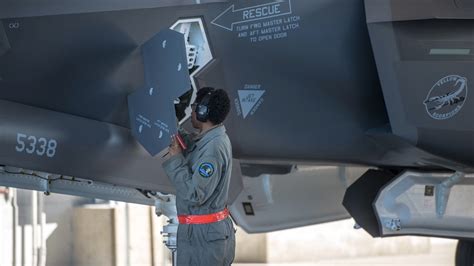
Despite its cutting-edge stealth and sensor fusion capabilities, the F-35A has shown troubling reliability issues in South Korean service. Between 2021 and 2022 alone, the ROKAF reported 234 distinct incidents, of which 172 grounded the aircraft entirely. Among the most significant issues were engine vibrations, which prompted global maintenance advisories and temporarily sidelined fleets in multiple countries.
These recurring technical failures raise concerns about the combat readiness and sustainability of South Korea’s most advanced fighter fleet. Additionally, the F-35A’s combat performance is not without caveats when measured against potential adversaries:
- Speed: F-35A – Mach 1.6 vs. J-20 – Mach 2.5
- Combat Radius: F-35A – 1,093 km vs. J-20 – 1,500 km
- Payload Capacity: F-35A – 8,160 kg vs. J-20 – 11,000 kg
Such comparisons highlight that, while the F-35 is optimized for first-strike stealth missions, it falls short in areas like range, speed, and load capacity, which are critical in sustained operations or counter-air missions.
The Indigenous Alternative: KF-21 Boramae and Future Capabilities
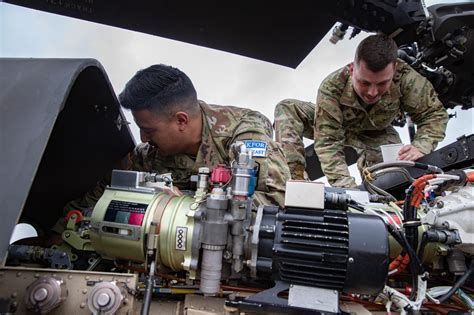
In response to both strategic and technological limitations of the F-35, South Korea is investing heavily in the KF-21 Boramae, a 4.5-generation multirole fighter developed by KAI (Korea Aerospace Industries). Scheduled for full deployment by 2030, the KF-21 project aims to reduce dependency on U.S. platforms and provide a cost-effective air superiority solution tailored for regional requirements.
While not as stealthy as the F-35, the KF-21 is expected to offer superior reliability, easier maintenance, and greater local control over upgrades and deployment. Seoul envisions a future where its fleet includes both F-35s for precision first strikes and KF-21s for broader air operations, ensuring operational diversity and supply chain resilience.
Tactical Integration: Joint Exercises and Agile Combat Employment (ACE)
In March 2025, the U.S. Air Force deployed F-35B fighters from Japan to South Korea as part of the “Freedom Shield” joint military exercises, testing the Agile Combat Employment (ACE) concept. This tactic involves rapid dispersal of fighter units across several airfields to complicate enemy targeting and enhance survivability against long-range missile attacks.
While ACE is a logical evolution in modern warfare doctrine, analysts remain skeptical of its practical value in the confined terrain of the Korean Peninsula. The short distances between key installations and the infrastructure limitations of auxiliary bases mean that dispersed assets may still be vulnerable to saturation missile attacks from both North Korea and potentially China.
The Geopolitical Dilemma: Balancing Between China, the U.S., and North Korea
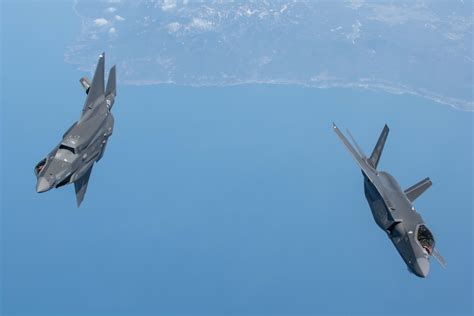
Beyond military considerations, the F-35 deployment plays into the larger strategic triangle of the Korean Peninsula, involving North Korea, China, and the United States. Each actor views the F-35 program through a different lens:
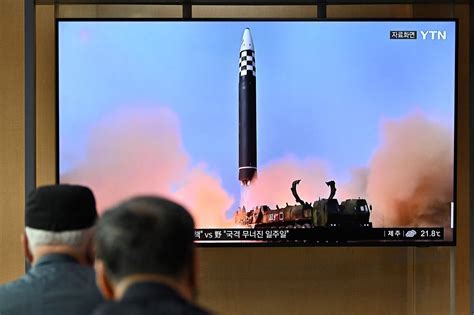
- North Korea has labeled the aircraft a “decapitation strike weapon”, frequently citing it as justification for missile tests and preemptive strike doctrines. Pyongyang’s reaction includes testing short-range tactical missiles aimed at disabling forward bases like Cheongju.
- China perceives the F-35’s presence as part of a broader U.S. encirclement strategy. The People’s Liberation Army (PLA) has ramped up its own air and missile drills, and possesses long-range strike capabilities that can target South Korean bases even from inland Chinese provinces.
- The United States, meanwhile, views South Korea’s F-35 program as a cornerstone of regional deterrence, aligning with Indo-Pacific Command’s forward posture aimed at countering Chinese expansionism.
Caught between these competing pressures, South Korea’s defense posture must walk a tightrope, ensuring credible deterrence against North Korea while avoiding strategic overreach that could escalate tensions with China or compromise national autonomy.
Conclusion
The South Korean F-35 program stands as a case study in the intersection of modern military technology, strategic geography, and great power politics. While the aircraft undeniably enhances Seoul’s deterrent posture, especially in the context of rapid strike capability and interoperability with U.S. forces, its operational limitations, budgetary strain, and strategic dependencies invite critical reflection.
As the regional balance continues to shift, South Korea will need to evolve from a procurement-driven strategy to a holistic defense ecosystem, combining domestic innovation, flexible deployment models, and geopolitical prudence. The future of Korean airpower may not lie in the F-35 alone, but in a diversified, resilient force structure that reflects both technological foresight and sovereign agency.
Frequently Asked Questions
What is the current number of F-35s in South Korea?
As of 2025, South Korea operates 39 F-35A fighters, with 20 more scheduled for delivery, bringing the total to 59. The broader procurement plan aims for 85 total units.
Why is the F-35 controversial in South Korea?
The F-35 has drawn criticism for its high cost, technical reliability issues, and the limited operational autonomy due to U.S. control over key systems. Critics argue it serves more political than strategic purposes.
How does the F-35 compare to the KF-21?
The F-35 offers superior stealth and strike capabilities, but suffers from higher costs and maintenance burdens. The KF-21 Boramae, set for deployment by 2030, is a locally developed platform aiming for greater operational control and affordability.