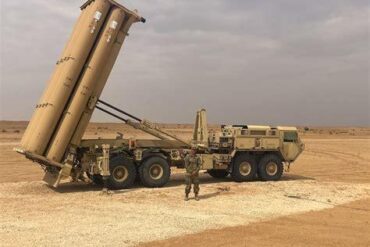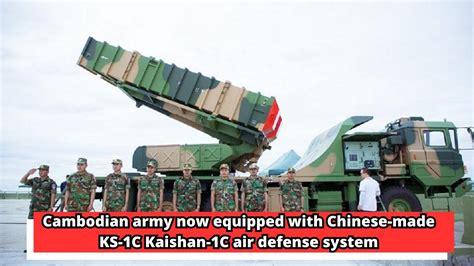
The escalating border tensions between Thailand and Cambodia have entered a new and dangerous phase following reports that Cambodia has deployed Chinese-made KS‑1C medium-range surface-to-air missile systems near the frontier. This revelation, made public by Chamnan Chuenta, Governor of Thailand’s Surin province, has prompted a sweeping security warning urging civilians to avoid areas within 120 kilometers of the Thai-Cambodian border. The advisory, issued on July 26, 2025, reflects mounting concern over Cambodia’s growing arsenal of long-range rocket and missile systems and their potential impact on regional stability.
Rising Hostilities and Clashes Along the Frontier
The warning comes on the heels of violent clashes that erupted on July 24, 2025, in contested border regions, including areas surrounding the historically significant Prasat Ta Muen Thom temple. The fighting was reportedly triggered when a Thai soldier stepped on a land mine in the Chong An Ma area, sparking a fierce exchange of fire between the two nations’ forces. Thai authorities accused Cambodia of recent mine-laying activities, which Cambodian officials have categorically denied, countering that Thai troops had crossed into their territory.
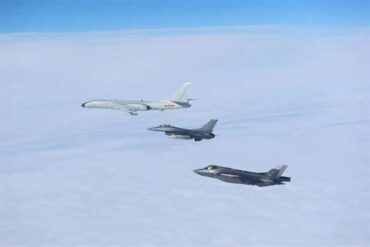
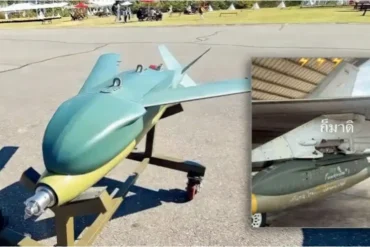
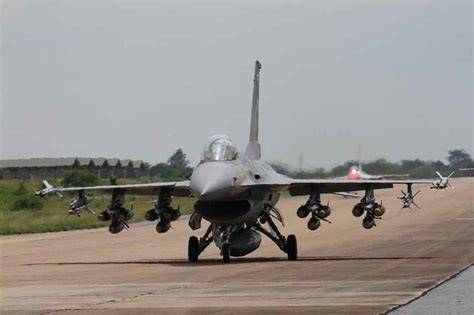
The clash left at least 11 Thai civilians dead and dozens more injured. In a significant escalation, the Royal Thai Air Force (RTAF) deployed four F‑16 fighter jets to conduct airstrikes on Cambodian military positions, allegedly targeting command hubs of the 8th and 9th Infantry Divisions. While Phnom Penh confirmed artillery duels and armed engagements, it did not disclose casualty figures. This outbreak of violence follows months of simmering tensions, including a May 28 incident where a Cambodian soldier was killed near Chong Bok, which set off a chain reaction of diplomatic hostilities, including petitions to the UN Security Council and the International Court of Justice.
What Makes the KS‑1C System a Concern for Thailand?
The KS‑1C, developed by China Aerospace Science and Industry Corporation (CASIC), represents a formidable addition to Cambodia’s air defense. It is an export variant of the Chinese HQ‑12 (Hongqi‑12) system and builds upon the earlier KS‑1A platform. Featuring canister-launched missiles rather than the older rail-based designs, the KS‑1C is designed to counter modern aerial threats, including fighter aircraft and cruise missiles.
Each missile measures 5.6 meters in length and weighs approximately 886–900 kilograms, carrying a 100‑kilogram high-explosive warhead. According to manufacturer specifications, the system can simultaneously engage six targets with eight missiles over a range of 5 to 70 kilometers and an altitude window of 0.3 to 27 kilometers. The KS‑1C also boasts a lethal radius exceeding 50 meters and a single-shot kill probability of ≥0.89 against conventional aircraft targets.
System Composition and Operational Capabilities
According to technical data from China National Precision Machinery Import & Export Corporation (CPMIEC), a KS‑1C battery consists of a multi-layered combat and support framework designed for sustained operational readiness. Key components include:
- 24 ready-to-use missiles supported by six launcher vehicles.
- A guidance station equipped with the H‑200 passive phased-array radar for target acquisition and tracking.
- Two power distribution vehicles and an additional frequency conversion vehicle to maintain system stability.
- Six transport and loading vehicles for missile resupply.
- A missile test vehicle for operational checks and readiness verification.
- Spare parts, collimation mast vehicles, and nitrogen supply units for routine maintenance.
These capabilities, while robust on paper, rely heavily on a well-integrated air defense command network, something Cambodia is still struggling to establish.
Why Did the KS‑1C Fail to Intercept Thai Airstrikes?
Despite its advanced design, the KS‑1C systems in Cambodia reportedly failed to intercept any of the Thai F‑16s during the July 24 airstrikes. Analysts attribute this failure to several critical factors:
- Systemic Integration Issues: Cambodia’s TH‑S311 air defense command system, meant to integrate the KS‑1C with other platforms like LY‑80 and HQ‑17AE, did not respond effectively during the attack.
- Coverage Gaps: With only 12 KS‑1C and 12 LY‑80 launchers, Cambodia’s defenses were stretched thin over its 800‑kilometer border, leaving exploitable gaps.
- Thai Tactical Advantage: Thai pilots may have employed terrain masking and electronic countermeasures, leveraging their familiarity with the KS‑1C—acquired by Thailand in 2016—to exploit its weaknesses.
Thai Superiority in the Skies
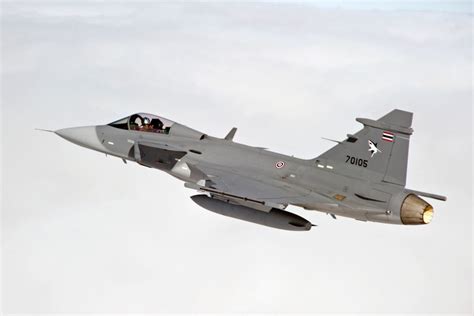
The Royal Thai Air Force enjoys overwhelming air dominance, fielding over 50 fourth-generation fighters, including F‑16s and Gripen C/Ds, many of which have undergone modern avionics and weapons upgrades. In stark contrast, the Royal Cambodian Air Force has only six FTC‑2000G advanced trainers, offering minimal combat capability and limited radar coverage.
Cambodian pilots reportedly avoided engaging Thai aircraft, likely due to the latter’s superior firepower, which includes AIM‑120C beyond-visual-range missiles, electronic warfare pods, and airborne early warning support. Without a fully integrated radar network or real-time surveillance assets, Cambodia’s missile batteries functioned as isolated defensive nodes, severely limiting their effectiveness against coordinated Thai air operations.
Political Fallout in Bangkok and Phnom Penh
The border conflict has also sparked political upheaval in both capitals. In Thailand, Prime Minister Paetongtarn Shinawatra was suspended by the Constitutional Court after a leaked phone call surfaced in which she criticized the military’s handling of the crisis during a conversation with former Cambodian leader Hun Sen. The controversy fractured her parliamentary coalition, causing a government crisis.
In Cambodia, Prime Minister Hun Manet lodged an emergency petition with the UN Security Council, condemning Thai military actions as aggressive and destabilizing. The two nations have since expelled diplomats in a tit-for-tat escalation, further straining bilateral relations.
China’s Role and Future Military Aid
Amid the standoff, Cambodia has reportedly requested additional Chinese military support, including J‑10CE and JF‑17 fighter jets, HQ‑9 long-range surface-to-air missiles, and advanced surveillance drones. Analysts suggest that China may channel such assistance indirectly via Pakistan to minimize backlash from Thailand and its allies, particularly the United States. As of now, no confirmed transfers have been announced, and Beijing has remained officially silent on the matter.
Military Balance and Strategic Outlook
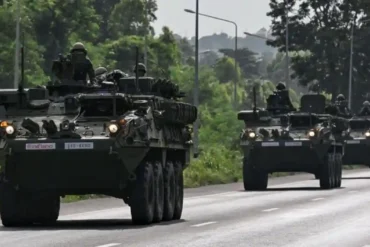
Thailand’s overall military posture significantly outweighs Cambodia’s. Bangkok maintains 360,000 active-duty personnel backed by 200,000 reservists and 45,000 paramilitary forces, while Cambodia’s total strength stands at 124,000. In terms of ground armor, Thailand operates 49 Ukrainian T‑84 Oplot and 62 Chinese VT‑4 tanks, while Cambodia relies primarily on outdated Soviet-era T‑54/55 and Type 59 tanks.
While both militaries share a reliance on Chinese-origin small arms and artillery, Thailand’s broader modernization initiatives and superior logistics give it a decisive edge. This disparity raises questions about whether Cambodia can sustain a prolonged military confrontation without significant external support.
A Volatile Road Ahead
Analysts describe the current conflict as a limited engagement focused on controlling key border areas, rather than a prelude to all-out war. However, the deployment of advanced Chinese missile systems, combined with political instability and the involvement of external powers, has created a volatile situation that could spiral further if diplomacy fails.
As both countries strengthen their positions, the risk of miscalculation and escalation remains high. The coming weeks will determine whether international mediation can defuse the crisis or if Southeast Asia is on the brink of a deeper conflict.