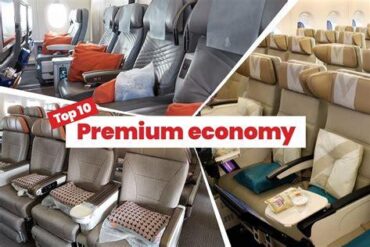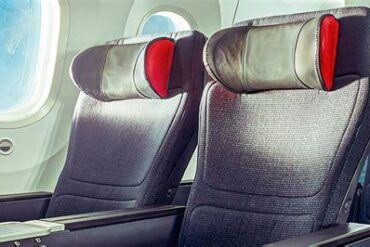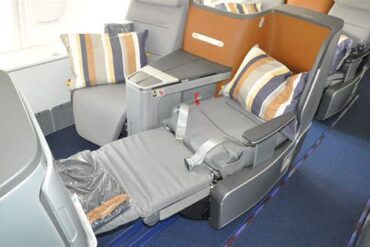
Flying economy class no longer means sacrificing comfort and space, especially when traveling with the world’s leading airlines. In 2025, a select group of carriers are redefining the economy experience with exceptional seat design, generous legroom, modern in-flight entertainment, and attention to passenger comfort that rivals even some premium cabins. These standout carriers are primarily based in Asia, a region long celebrated for its elevated service standards and customer-first philosophies.
EVA Air: Taiwan’s Benchmark for Economy Comfort
EVA Air, headquartered in Taipei, Taiwan, has consistently ranked among the world’s top carriers, and in 2025, it continues to set the standard for economy class excellence. Known for being the first to introduce premium economy, EVA has not neglected its standard economy offering.
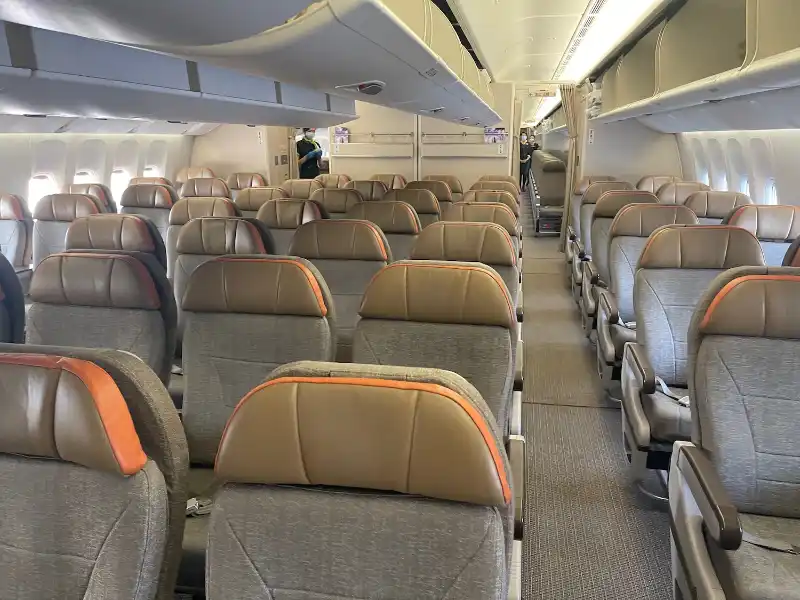
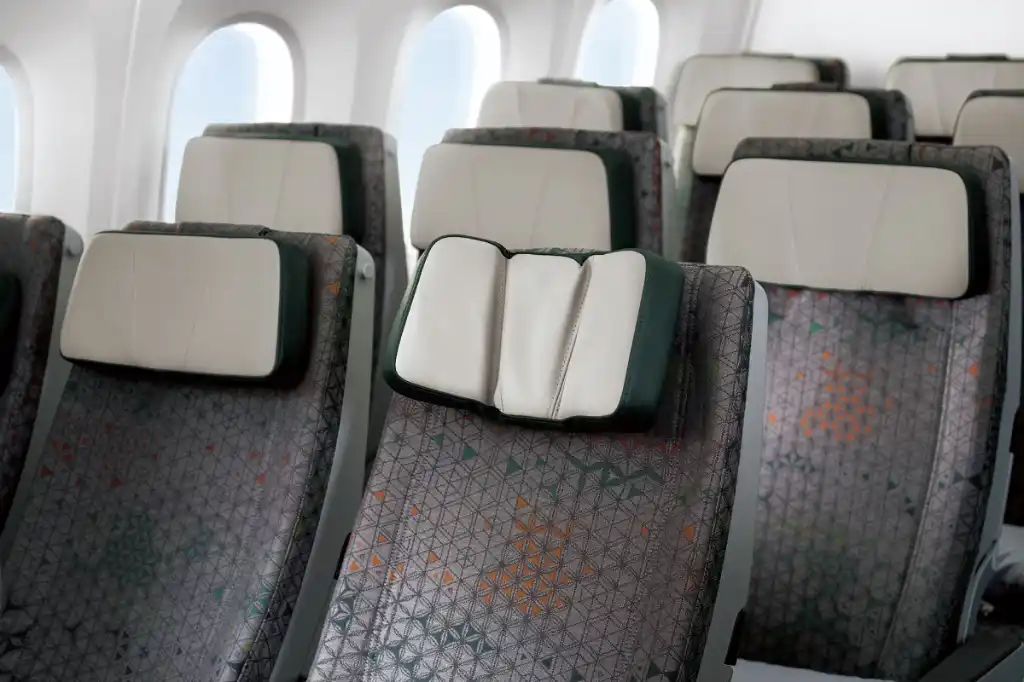
EVA Air operates a modern fleet that includes the Airbus A330-300, Boeing 777-300ER, and both the Boeing 787-9 and 787-10. Among these, the Boeing 777-300ER stands out with its nine-abreast configuration—rare in a market that increasingly crams in ten. These aircraft offer seats 18 inches (45.72 cm) wide, enhancing passenger comfort with wider aisles and less crowding.
Seat pitch across the fleet is 32 inches (81.28 cm), offering ample legroom for long-haul comfort. The Collins Pinnacle seats on the 777s and the Recaro CL3710 on Dreamliners provide ergonomic support, while seatback screens range up to 10 inches (25.4 cm). EVA’s attention to comfort, coupled with its superior catering, elevates its economy experience to near-premium levels.
Singapore Airlines: Southeast Asia’s Gold Standard
Singapore Airlines remains one of the world’s most prestigious carriers, and its economy seating strategy continues to impress in 2025. Across its long-haul and regional fleet, the airline ensures consistency and quality, using the Safran Z300 and Recaro CL3710 seat models on widebody aircraft, while the Collins Meridian equips its Boeing 737 MAX 8.
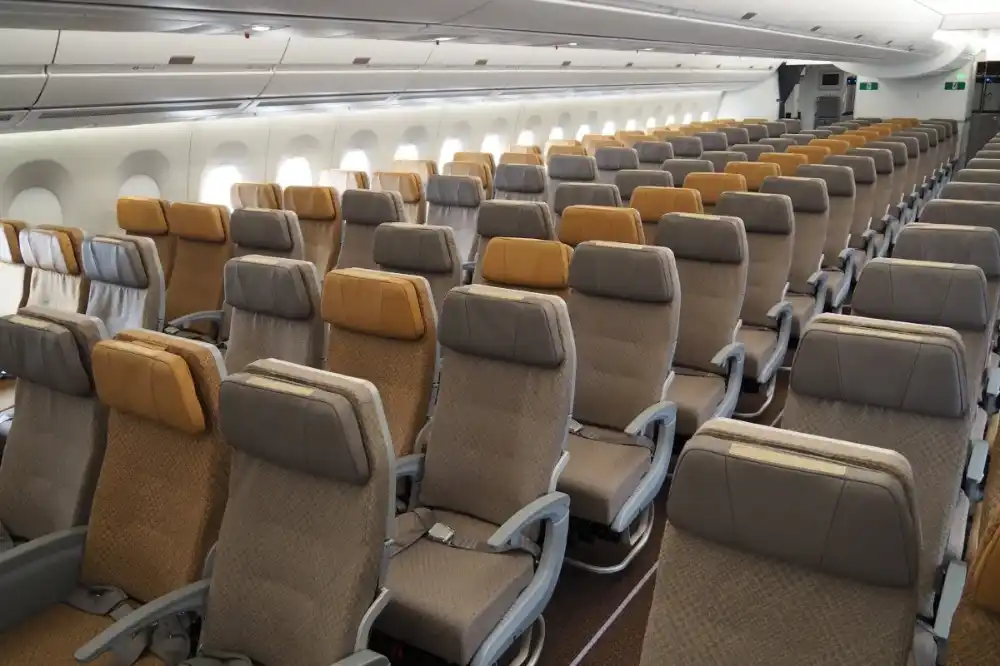
Economy seats on widebodies, such as the Airbus A350-900 and Boeing 777-300ER, feature 18-inch wide cushions and 32-inch seat pitch, offering passengers both width and legroom. Even the regional Airbus A380s and 787-10s follow this commitment to comfort, maintaining high standards of space.
Singapore Airlines also excels in in-flight technology, providing 11.1- to 11.9-inch HD screens, Panasonic Wi-Fi, and universal power outlets across its fleet. Unlike many competitors, it maintains a 9-abreast layout on the Boeing 777-300ER, ensuring a more spacious cabin experience. Every detail—from headrests to seat materials—is thoughtfully curated for passenger ease and satisfaction.
Korean Air: Spacious Seating Across the Skies
As South Korea’s flag carrier, Korean Air has built a reputation for providing generous legroom and superior economy seats, even as it undergoes a merger with Asiana Airlines. While Asiana aircraft may offer standard 32-inch legroom, Korean Air goes further—many of its widebody aircraft provide 33 inches (83.82 cm), setting a new benchmark.
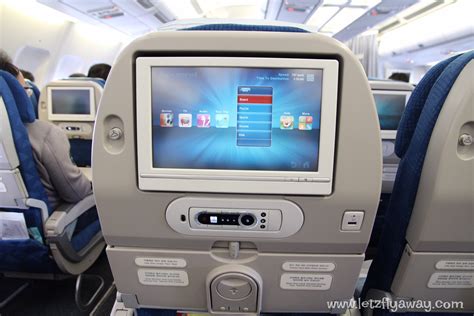
On aircraft such as the Boeing 777, Korean Air installs a nine-abreast economy configuration, ensuring 18-inch wide seats. Even though newer 777s are being reconfigured with tighter ten-abreast layouts, the current fleet still hosts some of the most spacious and comfortable seating options available.
Economy passengers enjoy large seatback screens, USB ports, and a refined in-flight entertainment system, further enhancing the travel experience. Combined with its award-winning catering and hospitality, Korean Air stands as one of the top choices for long-haul economy travel, especially within Asia and across the Pacific.
All Nippon Airways (ANA): Engineering Comfort into Every Seat
Japan’s All Nippon Airways (ANA) has long been admired for meticulous attention to detail, and its economy class cabins reflect that same ethos. On international widebody routes, ANA provides an impressive 34 inches (86.36 cm) of legroom—an offering typically reserved for premium economy on Western carriers.

ANA’s long-haul aircraft—especially the Airbus A380 and Boeing 777-300ER—feature 13.3-inch screens, universal power ports, and six-way adjustable headrests, setting a high bar for technological and ergonomic enhancements. Of particular note is the ANA Couchii seat on the A380, a rare feature that allows passengers to extend their legrests to form a makeshift bed.
While nine-abreast 787s and ten-abreast 777s represent industry-standard density, ANA’s commitment to maximizing legroom and offering smart features such as extendable footrests and modern in-flight entertainment makes its cabins standout.
Japan Airlines (JAL): The Unquestioned King of Economy Class Width
No discussion of economy class comfort is complete without Japan Airlines (JAL). In 2025, the airline retains its position as the global leader in economy seat width, offering a truly world-class experience that merges design, functionality, and space in ways no other airline has matched.
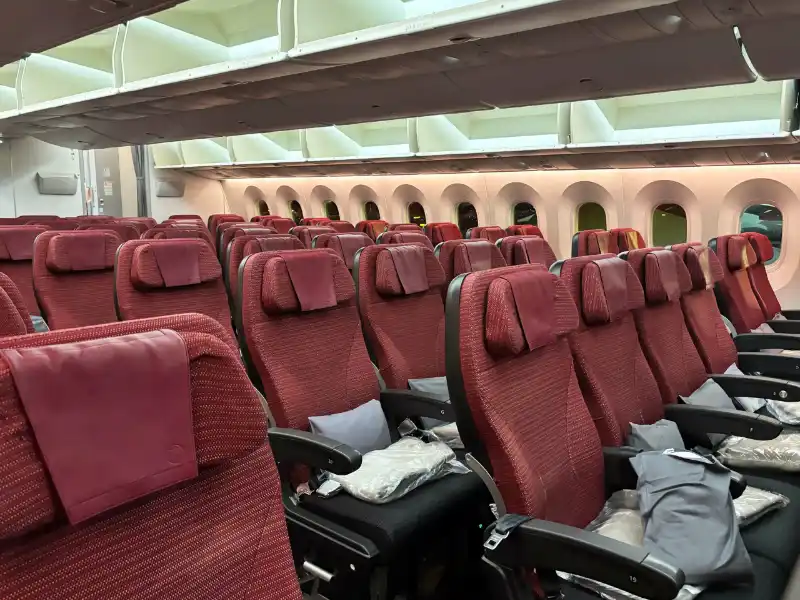
JAL’s Boeing 777-300ERs and Airbus A350s feature seats up to 18.5 inches (46.99 cm) wide, while its Boeing 787 fleet is configured in a rare eight-abreast layout, a unique approach that provides the widest Dreamliner economy seats in the world. No other airline dares deviate from the industry norm of nine-abreast on the 787, making JAL’s 18.5-inch-wide 787 seats truly special.
The seat pitch on international widebodies is 34 inches (86.36 cm), identical to that of ANA, but when paired with larger screens, modern seat models, and superior service, JAL emerges as the definitive leader in passenger comfort.
Why Seat Configuration and Comfort Still Matter in Economy Class
In a world increasingly focused on cost-cutting, these airlines remind us that passenger comfort remains a vital differentiator, even in economy class. While many carriers race to densify cabins with ten-abreast layouts, narrow seats, and minimal recline, these Asian giants are making deliberate decisions to retain generous seat widths, legroom, and personal space.
Economy class doesn’t have to be a compromise. The airlines mentioned above prove that it’s possible to fly affordably without surrendering dignity or comfort. The emphasis on 18-inch-wide or wider seats, 32 to 34 inches of legroom, seatback entertainment, and well-designed ergonomics elevates these carriers well above their peers.
As travelers become more discerning, comfort in economy is no longer a luxury but an expectation. Airlines like Japan Airlines, ANA, EVA Air, Singapore Airlines, and Korean Air are setting the gold standard—one seat at a time.
Final Thoughts: Flying Economy with Premium Comfort
The aviation landscape of 2025 demonstrates that not all economy seats are created equal. Beyond price and flight times, passengers are prioritizing airlines that invest in seat comfort, layout, and onboard experience. Airlines that refuse to compromise on these essentials are not just winning awards—they’re winning loyal customers.
When choosing an airline in 2025, frequent flyers would be wise to consider not just the brand reputation but the actual seating configuration, seat width, and legroom offered by each fleet type. For those who value comfort without the premium price tag, these airlines deliver an experience that rivals business class from decades past.
The message is clear: economy class can be exceptional. And these airlines are leading the way, seat by seat, flight by flight.