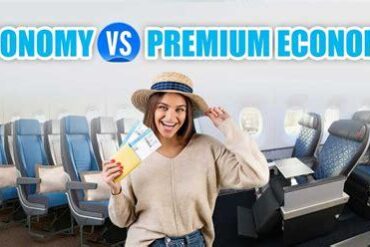
When travelers consider long-haul comfort, the gap between standard economy and flat-bed business class often feels like an uncomfortable middle ground — too basic on one end, too expensive on the other. American Airlines’ Premium Economy cabin bridges that gap with a product purpose-built for international flyers who want genuine comfort, enhanced service, and a relaxed cabin environment without stepping into business class pricing. It stands as a class of its own, offering elevated seating, refined dining, and priority services that reshape the travel experience from the terminal to landing.
Premium Economy is available fleet-wide across American Airlines’ Boeing 777, Boeing 787 Dreamliner, and new-generation Airbus A321XLR aircraft. Positioned above Main Cabin and Main Cabin Extra — yet below flagship business cabins — it delivers a carefully designed mid-tier product that has quickly become one of the airline’s most in-demand travel options. Wide body aircraft like the Boeing 777-200ER, 787-8, and 787-9 carry between 21 and 32 Premium Economy seats, ensuring a smaller, quieter, more attentive environment for international travelers seeking comfort without excess.
We examine the full breadth of benefits that justify choosing American Airlines’ Premium Economy — covering ground experience, seat design, cabin comfort, onboard meal service, entertainment quality, pricing, suitability for long-haul routes, and how this cabin elevates the journey from departure to arrival.
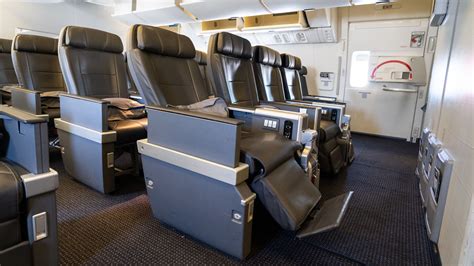
A Wider Seat And More Personal Space In The Air
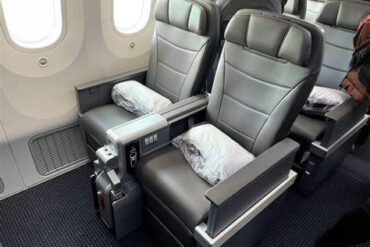
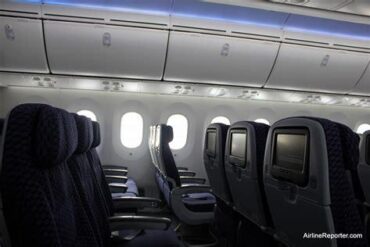
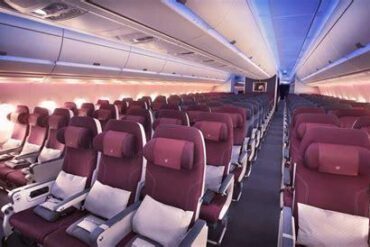
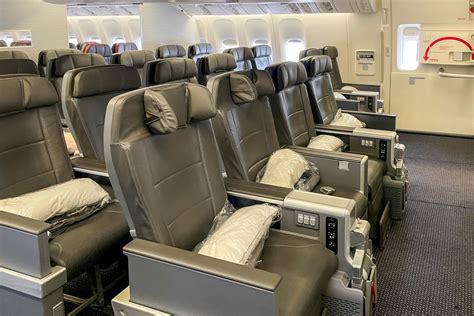
The most immediate and easily measurable upgrade is the seating. American Airlines configures its 777 economy section ten-abreast, while Premium Economy reduces this to eight-abreast. On the 787 Dreamliner, economy runs nine-abreast, with Premium Economy comfortably spaced to seven-abreast — a structural enhancement that is felt instantly when passengers settle in. On the new Airbus A321XLR, the contrast sharpens further: economy sits at six-abreast, yet Premium Economy drops to four-abreast, leaving noticeably more shoulder and hip room.
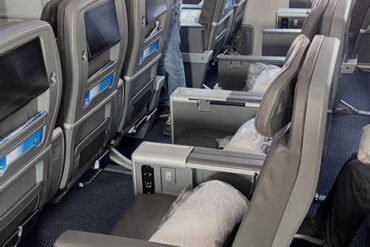
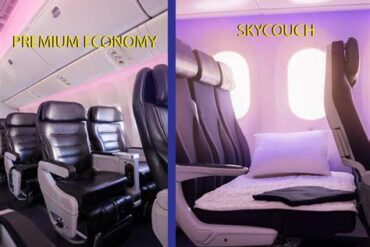
Seats measure 18.5 to 19 inches wide on 777 and 787 aircraft — compared to roughly 17 inches in economy — and expand to 21 inches wide on the A321XLR. The additional space means less armrest conflict, easier movement, and the ability to sit naturally rather than compressed inward. Seat pitch increases to 38 inches, creating far more legroom than standard economy. Extended recline, calf-resting leg support (or footrests depending on aircraft row), and ergonomic padding mean passengers can finally relax in a semi-lounged posture that supports long-haul comfort.
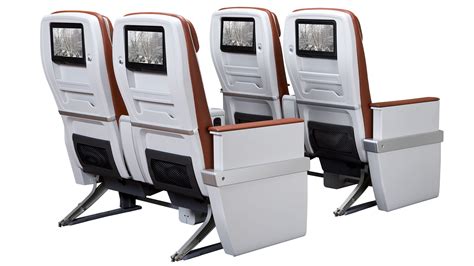
Enhanced Cabin Privacy Without Isolation
Premium Economy is intentionally sized small: between 12 and 32 seats, depending on aircraft type. This creates a quieter environment compared to economy’s large, high-density cabins. With fewer seats, aisle traffic reduces. Boarding and deplaning become smoother. Conversations stay subtle rather than overwhelming. Passengers feel part of a premium section without losing the communal atmosphere of international travel.
This cabin positioning also places Premium Economy between business class and economy. The effect is psychological and practical — closer to premium service flow, yet unrestricted by the formality of upper class travel. Flyers receive cabin attention faster, meal trays sooner, and amenity kits directly on boarding. The smaller cabin is also serviced by two dedicated flight attendants, whose attention remains focused instead of dispersed throughout hundreds of seats.
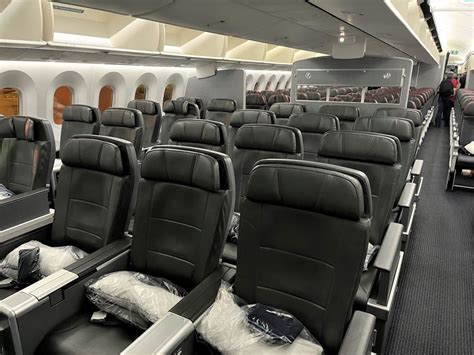
Priority Travel From Check-In To Boarding Gate
One of the underrated benefits of Premium Economy is Priority access — a perk usually associated with upper-tier elite status. At the airport, Premium Economy travelers use dedicated check-in desks and security lanes structured to bypass standard queue congestion. These fast-track lanes are the same used by business and first-class passengers, as well as AAdvantage elite members.
During boarding, Premium Economy boards in Group 4, comfortably ahead of Main Cabin Extra and standard economy. This ensures overhead luggage space is plentiful upon entry and eliminates the stressful scramble that economy passengers encounter. While lounge access is not included as standard — it still requires elite status or separate purchase — the ground experience alone removes much of the airport friction that travelers dread most.
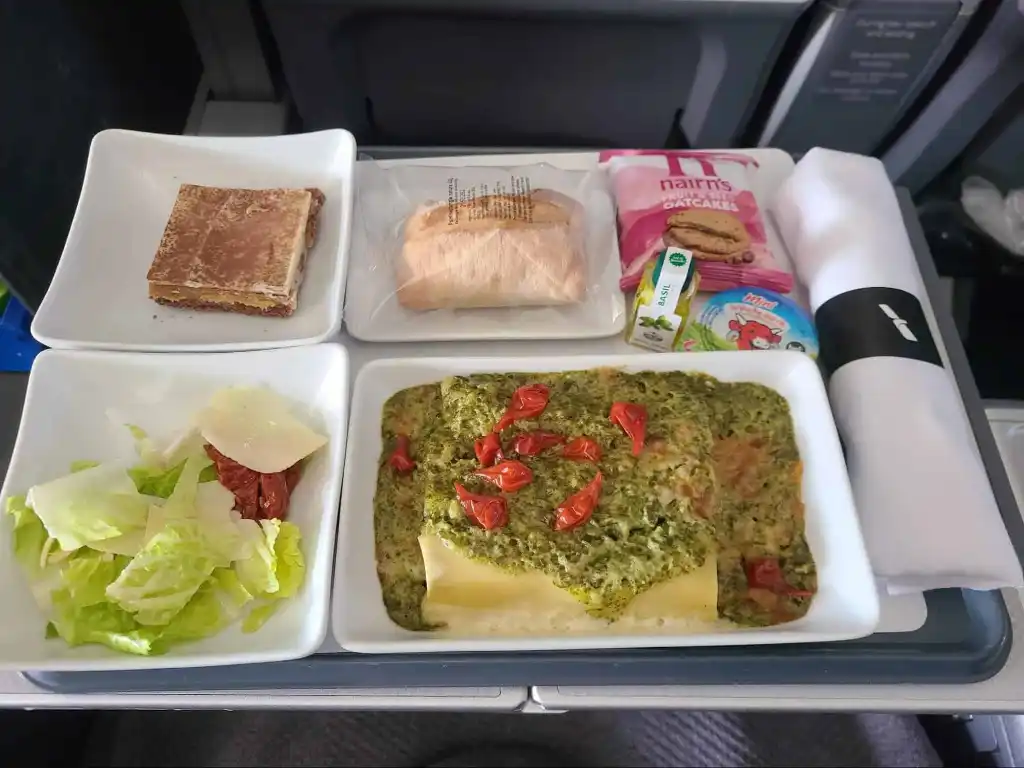
Premium Dining, Real Tableware, Bigger Portions
Where Main Cabin meals rely primarily on efficiency, Premium Economy places emphasis on dining quality and plating style. Meals arrive on ceramic dishes, cutlery is metal, and portion size increases significantly from the basic economy tray configuration. The menu features elevated selections designed to reflect long-haul dining expectations. Entrées offer sauces, sides, and proteins plated attractively rather than compactly.
Flight attendants serve Premium Economy before Main Cabin, so meals arrive fresh, heated properly, and without delay. Complimentary wine and spirits elevate the dining experience further, adding a restaurant-meets-cabin feel without business class formalities. Travelers also receive a curated amenity kit, including skincare products, eye masks, oral care, earplugs, and travel essentials — small conveniences that produce noticeable comfort throughout long flights.
A Premium In-Flight Entertainment Experience
Entertainment is another measurable upgrade. Standard economy screens vary widely in resolution, but Premium Economy improves clarity and impact across the fleet. Seat-back displays measure 11.5 inches minimum, expanding to 13.3 inches on the A321XLR and new 787-9 Safran Z535i seating — with full 4K resolution, crisp color accuracy, and faster interface response.
Passengers enjoy noise-reducing headsets instead of basic earbuds, and power outlets include USB-C on next-generation Dreamliners and the XLR fleet. Wifi access remains consistent with the rest of the aircraft, but the quieter cabin improves concentration, making movies more immersive and work more productive.
Who Benefits Most From Premium Economy?
The upgrade appeals most to travelers for whom economy feels restrictive but business class still exceeds budget expectation. Long-haul flights to Europe, Asia, and trans-Pacific destinations show the highest leap in comfort value, particularly where sleep and personal space matter most. Premium Economy allows travelers to enjoy near-business-class relaxation during cruise without the cost of a lie-flat suite.
Business travelers who do not require a bed find Premium Economy an efficient compromise — enough space to work, rest, and deplane refreshed. Leisure travelers appreciate the extra comfort on vacation starts and returns, reducing jet lag during twelve-hour routes. Couples benefit from wider shared seating, and solo travelers enjoy quieter cabin ambience without needing business-class privacy walls.
Is It Worth The Upgrade?
Pricing varies by route and season, but the comfort differential per dollar often proves compelling. Economy densification continues worldwide; seats shrink, and legroom thins as demand surges for cheaper travel. Premium Economy exists as a counter-trend — restoring the comfort economy once offered decades ago. For many travelers, the question becomes not whether Premium Economy is luxury, but whether economy has grown too compressed to remain viable.
On a twelve-hour flight, 38 inches of pitch can transform posture and circulation. Upgraded bedding improves sleep cycles. Plated meals elevate dining from refueling to experiential. The sum total creates a journey that feels manageable, humane, and pleasantly memorable.
Conclusion — A Smart Middle-Ground For Modern Flyers
Premium Economy on American Airlines serves a clear purpose for the modern traveler — more room than economy, less cost than business. The wider seats, enhanced recline, refined meal service, and priority access deliver substantial comfort without requiring a leap to ultimate luxury. Cabin size remains intentionally intimate. Entertainment screens impress visually. The journey feels smooth from boarding to descent.
As long-haul flying becomes more common and economy grows tighter, Premium Economy stands as a smart, meaningful investment in personal well-being during travel. For flyers who want space to sleep, space to breathe, and space to enjoy the journey rather than endure it, Premium Economy is a choice that consistently proves worth the upgrade.
American Airlines continues refining the product—and with next-generation aircraft receiving seat upgrades, expanded screen sizes, and forthcoming cabin enlargements, this segment may soon represent the future of long-haul travel comfort. The sweet spot between economy and business is no longer hypothetical — it is here, airborne, and ready to board under Group 4, where the flight experience finally begins to feel truly premium.