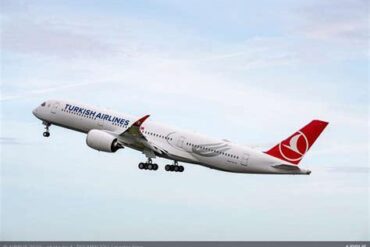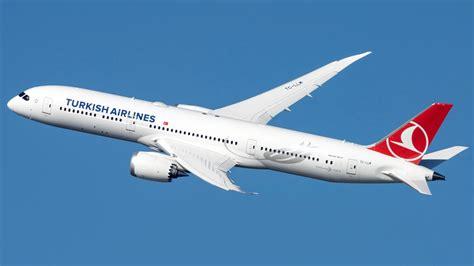
Turkish Airlines continues shaping long-haul travel in 2025, and the Boeing 787 Dreamliner sits at the center of its global strategy. The aircraft’s range, fuel efficiency, and modern passenger comforts allow the airline to strengthen its position as a transcontinental connector. The following analysis explores how the Dreamliner is being deployed across Turkish Airlines’ most frequent and strategic routes in 2025, highlighting the markets that define the carrier’s network and its long-term fleet ambitions.
Turkish Airlines treats the 787 not simply as a long-range aircraft, but as a utility tool capable of flexing across multiple continents. The type fits neatly between the airline’s larger 777-300ERs and its Airbus A330 fleet, creating an aircraft family that is versatile enough to reach thinner long-haul markets while providing enough capacity for major intercontinental links.
The Dreamliner’s introduction in 2019 ushered in a redesigned business-class cabin for the airline, adopting a 1-2-1 configuration that significantly elevated its premium product. The aircraft’s composite structure, reduced cabin altitude, and enhanced humidity serve both operational and passenger-comfort goals. Passengers feel fresher on arrival, and Turkish Airlines benefits from outstanding operating economics.
Its range—more than 7,500 nautical miles—makes global deployment possible from the airline’s rapidly growing megahub at Istanbul Airport (IST), a facility specifically designed to handle intercontinental flows with minimal connection times. The Dreamliner’s quiet operation, strong climb performance, and operational reliability make it a dependable choice for consistently busy corridors.
The Mexico Connection: The Airline’s Most Frequent And Longest Dreamliner Routes
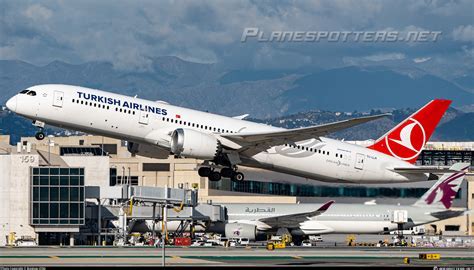
By 2025, Turkish Airlines demonstrates a notable emphasis on Mexico, operating its two longest and most frequent 787-9 routes toward this fast-growing leisure and business destination. The link between Istanbul and Mexico City International Airport (MEX) stands out as the single most significant Dreamliner operation in the network.
The Istanbul–Mexico City route stretches across 7,088 miles (11,407 km), representing one of the longest regular 787 deployments in the world. In 2025, it supports 499 flights, amounting to 149,700 seats offered. Such volume underscores the airline’s ambition not only to serve point-to-point demand but to shuttle travelers onward through Istanbul toward Europe, Africa, and Asia.
Close behind is the Istanbul–Cancun International Airport (CUN) route. Measuring 6,493 miles (10,449 km), this market welcomes 498 flights and 149,400 seats. Cancun’s mix of resort-driven inbound tourism and growing international connectivity makes it an ideal match for the Dreamliner’s efficiency on long-distance leisure-heavy routes.
The importance of Mexico in Turkish Airlines’ network is tied to its strategy of linking underserved transatlantic markets with Europe and Asia. By channeling passengers through Istanbul, the airline positions itself as a bridge between hemispheres.
Connecting The Heart Of The United States: Dallas/Fort Worth And Beyond
The airline’s Dreamliner footprint in North America grows deeper each year, and the Istanbul–Dallas/Fort Worth (DFW) route exemplifies high-demand, year-round deployment. Covering 6,275 miles (10,098 km), this corridor receives 448 flights and an impressive 134,400 seats, generating more than 843 million available seat miles (ASMs) in each direction.
Dallas serves as a strong dual-purpose market: a major U.S. business center and a natural gateway for Turkish Airlines’ transit philosophy. The connection allows American travelers to reach dozens of cities in Europe, the Middle East, and Asia via Istanbul’s favorable geographic position.
As more multinational businesses deepen their presence in the Dallas region, demand for stable and efficient long-haul connectivity continues rising, supporting the route’s heavy Dreamliner frequency.
The Core Of The Long-Haul Network: High-Frequency Deployments To Chicago, Atlanta, And Bangkok
A significant portion of Turkish Airlines’ busiest Dreamliner routes fall within the 4,000–6,000-mile range, typically representing 10–13-hour flights. These are the bread-and-butter corridors where the 787’s economic and operational advantages compound over time.
The most frequent route in this segment is Istanbul–Chicago O’Hare (ORD). This corridor handles 401 flights and 120,300 seats, moving substantial traffic between two globally connected airports. The 787 supports high reliability on this route, essential for maintaining daily frequency and strong business presence.
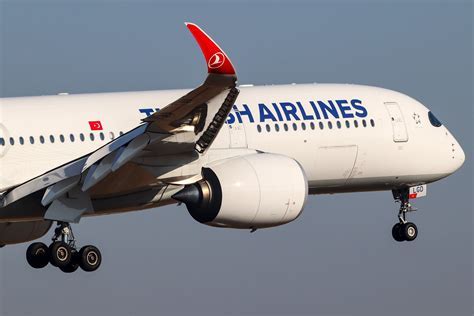
Another key Dreamliner deployment is the Istanbul–Atlanta (ATL) connection. At 5,759 miles (9,269 km), this route serves one of the United States’ busiest airports. With 350 flights and 105,000 seats, it ties together two enormous aviation ecosystems. Atlanta’s sheer scale—powered by massive domestic and international flows—makes it a powerful feeder for Turkish Airlines’ global network.
In Asia, the Dreamliner plays a vital role in strengthening the Istanbul–Bangkok Suvarnabhumi (BKK) route. This corridor spans 4,672 miles (7,663 km) and commands 197 flights eastbound and 195 westbound, for a combined 117,700 seats. Thailand’s tourism appeal and year-round travel demand make this route particularly resilient.
Here the Dreamliner serves a dual purpose: delivering a premium long-haul passenger experience while offering the capacity flexibility needed during peak travel periods.
Premium Cabins And Passenger Appeal On High-Density Long-Haul Markets
Turkish Airlines leverages the Dreamliner to elevate service quality on some of its most competitive international markets. Premium travelers enjoy the privacy of the staggered 1-2-1 business-class configuration, while economy passengers benefit from improved cabin pressure and noticeably better comfort on long-haul journeys.
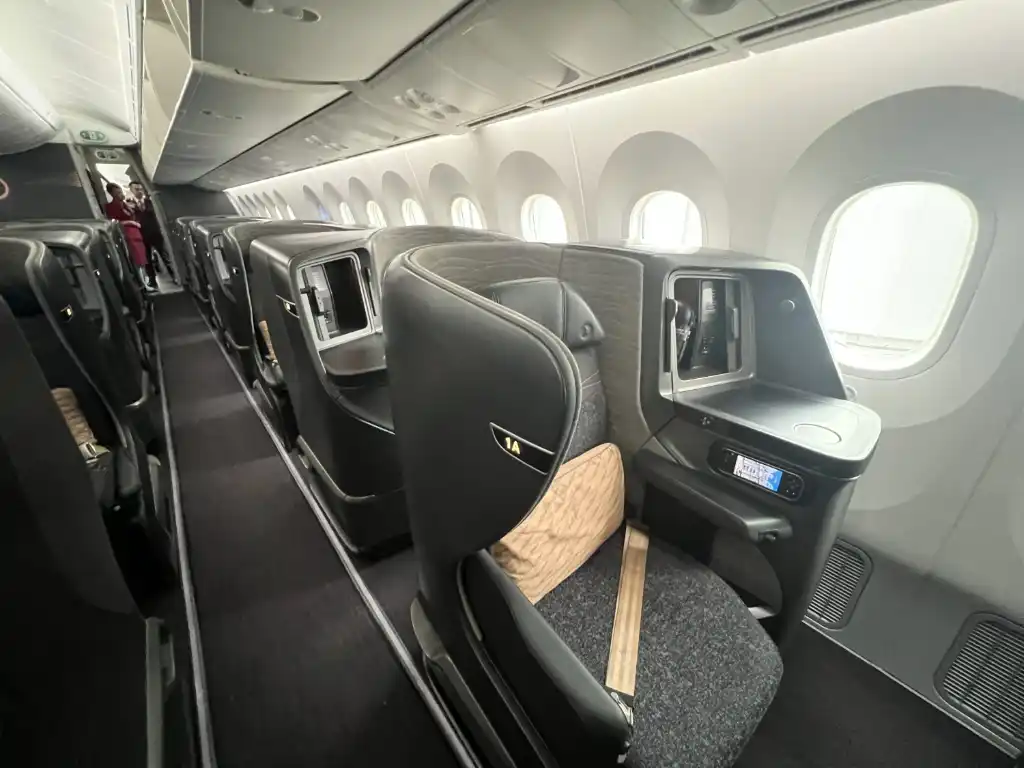
These comfort improvements are especially significant on routes that exceed 10 hours, where Turkish Airlines competes both with Gulf carriers and with Western European airlines. Modern cabin humidity levels—nearly double that of older aircraft types—allow passengers to arrive feeling more refreshed, an advantage that becomes part of the airline’s global brand.
The Dreamliner helps maintain consistency across the network, enhancing the passenger experience while delivering strong operational performance.
Deploying A Widebody On Shorter Segments: Dubai And Antalya
While the Boeing 787-9 is inherently designed for long-range missions, Turkish Airlines occasionally assigns it to shorter routes to maximize fleet utilization and meet seasonal or time-sensitive demand. This flexibility expands the aircraft’s role beyond transcontinental operations.
One of the most prominent shorter Dreamliner routes is Istanbul–Dubai (DXB). Covering 1,882 miles (3,028 km), this corridor sees 271 flights and 81,300 seats in 2025. The link connects two heavyweights in global air travel and supports a vibrant mix of business travelers, leisure passengers, and long-haul transit flows.
Meanwhile, the shortest Dreamliner deployment in the airline’s network is the Istanbul–Antalya (AYT) service, just 320 miles (515 km). Despite the short distance, the route hosts 228 flights and 68,400 seats. Antalya’s massive tourism market demands significant peak-season capacity, and the 787 is occasionally deployed when required. This move enhances operational efficiency and ensures passengers experience widebody comfort even on brief segments.
Such deployments also strengthen the domestic tourism economy, linking Istanbul’s international gateway with Turkey’s premier vacation region.
Long-Term Vision: The Dreamliner As The Foundation Of A Next-Generation Fleet
As part of a transformative fleet expansion, Turkish Airlines has placed orders for up to 75 Boeing 787s, including 35 additional 787-9s, 15 787-10s, and 25 options. Deliveries are scheduled between 2029 and 2034, marking the largest widebody commitment in the airline’s history.
This order supports the airline’s strategic target of operating a fleet of around 800 aircraft by 2033, with an emphasis on modern, fuel-efficient jets. The Dreamliner family will become central to this evolution. The introduction of the 787-10 variant, offering greater seating and cargo capacity, allows the airline to fine-tune its long-haul strategy by matching aircraft size to market demand across North America, Africa, Southeast Asia, and the Middle East.
The 787 fleet will work in tandem with Turkish Airlines’ Airbus A350-900s, creating a balanced and flexible long-haul toolkit. Over time, this will enable higher route frequencies, the launch of new intercontinental destinations, and stronger competitiveness in premium markets.
Looking Forward: How The Dreamliner Continues Shaping Turkish Airlines’ Future
The Boeing 787’s importance to Turkish Airlines extends far beyond 2025. It is a defining asset in the airline’s expansion across the Americas, Asia, and Africa, and an essential part of servicing emerging markets that pair long-range reach with dynamic passenger demand. Its technical efficiency and passenger experience reinforce the airline’s ambition to act as a global bridge at the crossroads of Europe and Asia.
As Turkish Airlines continues building one of the world’s largest and most modern fleets, the Dreamliner will remain central to its mission: connecting more cities, carrying more travelers, and strengthening Istanbul’s role as a global aviation superhub.