
The Airbus A321XLR has rapidly become a game-changer in narrowbody long-haul aviation, pushing boundaries once dominated by widebody aircraft. With a maximum range of up to 4,700 nautical miles, this extended-range variant is carving out new route possibilities, allowing airlines to operate long-haul flights on routes once considered inefficient or impossible for single-aisle jets. In 2026, its footprint is growing, with major carriers unlocking new transatlantic, Latin American, and transcontinental opportunities.
The first half of 2026 offers a glimpse into the aircraft’s true potential, with data sourced from official airline schedule filings and industry databases. Here, we explore the ten longest scheduled Airbus A321XLR flights, ranked by maximum block time, reflecting operational endurance, route complexity, and global demand.
Madrid to Washington Dulles – Iberia’s 9h 40m Flagship Narrowbody Route
Topping the list is Iberia’s bold transatlantic service between Madrid and Washington Dulles, registering a maximum block time of 9 hours and 40 minutes. Operated three times weekly during the winter and scaling to daily in the summer, this route exemplifies the XLR’s ability to replace larger aircraft on mid-demand long-haul segments. It’s not just a feat of engineering but a strategic pivot in fleet utilization and fuel efficiency.
Madrid to Santo Domingo – Long-Haul to the Caribbean with 9h 35m
Also from Iberia, the Madrid–Santo Domingo service stretches to 9h 35m, reaffirming the XLR’s strength in connecting Europe to secondary Latin American cities. This service has seasonal frequency variations but demonstrates consistent deployment in winter-heavy schedules, when Caribbean demand remains strong and the lower seat count of the A321XLR aligns with yield optimization goals.

Aer Lingus Ventures West: Dublin to Nashville at 9h 20m
Aer Lingus, another key XLR operator, has leveraged the aircraft’s efficiency to expand into underserved U.S. markets. Its Dublin–Nashville route, timed up to 9h 20m, is a prime example. Offering three to five weekly flights, it reflects a shift in transatlantic strategy, where narrowbody economics enable profitable services to tier-two U.S. cities.
Madrid to JFK – Iberia’s High-Frequency Narrowbody Link at 9h 15m
In a significant move, Iberia is also deploying the XLR on the Madrid to New York JFK route. Despite being a highly competitive transatlantic corridor, the daily-to-10-weekly frequency during winter underscores confidence in the aircraft’s reliability. The 9h 15m block time matches longer seasonal headwinds, yet operational savings and scheduling flexibility make this a compelling business case.
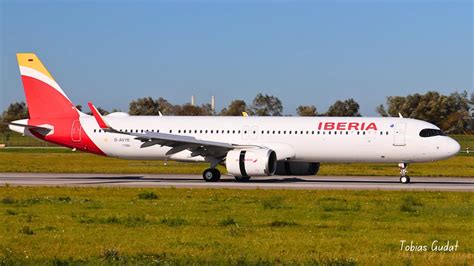
Madrid to San Juan – Connecting Spain to Puerto Rico in 9h 10m
The Madrid–San Juan route returns to the top ten with 9h 10m of flying time, leveraging the XLR’s range to provide direct service between Spain and Puerto Rico. With up to 11 weekly flights during winter, Iberia is tapping into diaspora and leisure markets traditionally served by widebodies, all while slashing trip costs and reducing per-seat emissions.
Palma de Mallorca to Toronto – Air Canada’s Island Ambition in 9h 00m
Air Canada brings innovation into the game with its Palma de Mallorca to Toronto flight, debuting June 17. Initially operated four times weekly on the A321XLR, it later transitions to the 787-8. This 9-hour journey highlights the aircraft’s versatility not just in dense hub-to-hub markets, but in connecting secondary leisure destinations across the Atlantic.
Madrid to Toronto – Iberia Returns to Canada After 30 Years
With daily flights beginning June 13, Iberia’s Madrid–Toronto route (also timed at 9h 00m) marks a significant comeback for the Spanish flag carrier in Canada. Absent for three decades, the narrowbody makes the route economically viable again, bridging major cities with improved frequency and fleet efficiency.

Madrid to Recife – South America Narrowbody Revival at 8h 55m
Brazil’s Recife joins the list via Iberia’s return to the route, restarted on December 13, 2025. The 8h 55m block time stands out not just for distance, but for historical context: Iberia last flew this route in 2011 using an A340-300. Now, a single-aisle aircraft handles the mission with ease—evidence of technological progress and evolving market strategies.
Dublin to Indianapolis – Aer Lingus’ Midwestern Bet at 8h 50m
Dublin–Indianapolis, also clocking in at 8h 50m, is Aer Lingus’ next U.S. foray, serving another secondary market with high VFR (visiting friends and relatives) and growing business ties. This route, operating four to five times weekly, illustrates the growing trend of targeted long-haul narrowbody routes designed to minimize risk while capturing niche demand.
Madrid to Newark – Iberia Expands U.S. Presence in 8h 50m
Completing the top ten, Madrid–Newark, launching March 29, reaffirms Iberia’s investment in the U.S. East Coast via the XLR. At 8h 50m, this daily service opens new scheduling and cost-saving options, even in a market dominated by alliance partners and high-capacity jets.

Routes Just Below the Top Ten Threshold
Several other impressive XLR-operated routes fell just short of the 8h 50m mark, including:
- Madrid to Fortaleza and Boston – both at 8h 45m, showing Iberia’s confidence in the XLR’s Latin American and East Coast expansion.
- Delhi to Athens (IndiGo) – another showcase of long narrowbody sectors within Eurasia, also at 8h 45m.
- Dublin to Minneapolis (8h 35m) and Raleigh/Durham (8h 30m) – Aer Lingus continues its U.S. expansion with strategic growth in mid-continent cities.
Further west, Aer Lingus will launch Dublin to Pittsburgh, expected to clock in around 8 hours, giving more credence to the aircraft’s value on thinner transatlantic routes.
A New Era of Long-Haul, Right-Sized Travel
The Airbus A321XLR is more than an aircraft; it’s a revolution in how airlines approach long-haul flying. As it continues to replace older widebodies and unlock new routes, the XLR is reshaping route economics, airport pairings, and passenger expectations.
From Madrid to the Americas and Dublin to mid-sized U.S. cities, the first half of 2026 marks a milestone moment in narrowbody long-haul growth. With even more airlines set to receive deliveries—like Saudia, IndiGo, and Aegean—we can only expect the global reach of the A321XLR to stretch further in the years to come.