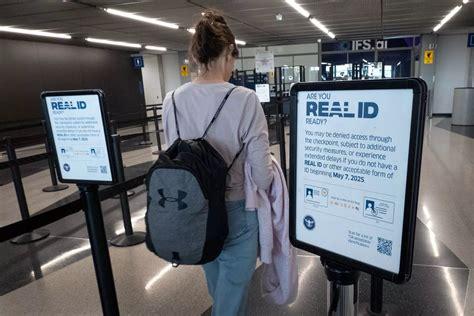
We examine the tightening of identity standards at U.S. airport security checkpoints with the awareness that travelers are now stepping into an aviation environment transformed by federal mandates, biometric technology, and a national deadline that is no longer subject to delay. The shift is more than administrative; it marks a national pivot toward stricter identity certainty, and the result is a new reality for passengers who arrive at TSA screening without a compliant identification document.
From 2025 onward, the Transportation Security Administration enforces the REAL ID Act with full force, and the consequences of failing to meet ID requirements are no longer limited to a few extra questions or a slightly longer wait. Instead, passengers may face an $18 verification fee, a technologically assisted identity probe, elevated screening, or complete denial of boarding. Airlines cannot override the regulation, and airport staff cannot bend it. Those who attempt to navigate airport security underprepared are welcomed by a system built precisely to stop them.
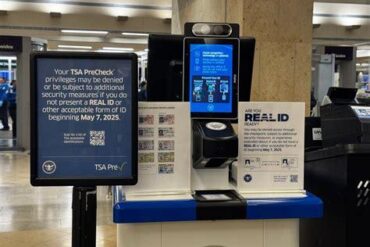
The REAL ID Act, an initiative conceived after the vulnerabilities exposed on September 11, has spent years working its way through bureaucratic layers, state-level hesitations, and public misinterpretations. For a long stretch, the start date for enforcement continued to drift into the future, giving many travelers a false sense of security that the requirement was either symbolic or perpetually postponed. That changed definitively on May 7, 2025, when REAL ID compliance became a Federal Aviation Administration–recognized requirement for domestic flights.
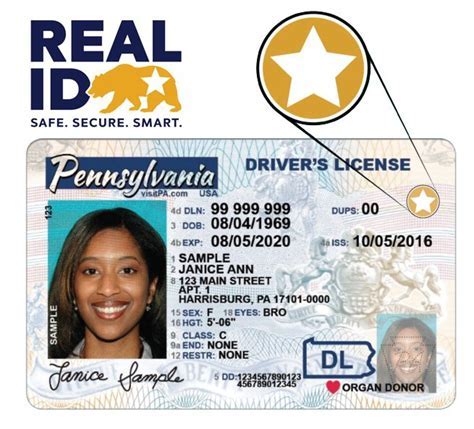
This shift means that a standard state-issued driver’s license—once all a person needed to fly within the United States—is now often invalid unless it carries the REAL ID symbol, typically a star in the upper right corner. The implications reach far beyond a small design change. The distinction between compliant and noncompliant IDs is the switch that either grants clearance to the secure area or immediately triggers a cascade of extra verification steps.
For travelers who assume that “domestic travel doesn’t require much anyway,” the new rules feel like a sudden collision with red tape. Yet the tightening is deliberate. Federal agencies have built an interconnected identity-checking ecosystem designed to use both documentation and biometric support to limit impersonation, fraud, and unauthorized access to airport secure zones.
What TSA Now Considers a Valid Form of Identification
In practice, TSA offers a wide variety of accepted IDs, though the list is narrower than many travelers expect. REAL ID–compliant driver’s licenses remain the most familiar option, but passports, passport cards, federally issued IDs, trusted traveler cards, and U.S. military IDs all qualify. Enhanced Driver’s Licenses issued by a handful of states also qualify automatically because these licenses include stricter verification features.
Foreign travelers within the United States are expected to present their passport, a permanent resident card, or another DHS-recognized immigration document. Digital IDs and mobile driver’s licenses are acceptable only if they originate from a TSA-approved state and meet the agency’s mobile verification criteria.
Standard licenses without REAL ID markings, temporary paper licenses issued during renewal periods, and nearly every form of non-government photo document are now invalid. One of the most common misunderstandings—seen constantly on travel forums—is the belief that a temporary paper license is adequate when paired with an expired physical license. Under the new requirements, this combination no longer meets federal standards for domestic air travel.
What Happens the Moment a Passenger Arrives Without Valid ID
The moment a passenger attempts to pass through airport security without an acceptable ID, TSA activates an alternative identity-verification system. This system historically depended on agents calling an internal identity hotline and asking the passenger a variety of personal questions intended to authenticate the traveler. The process could be slow, inconsistent, and heavily dependent on officer availability.
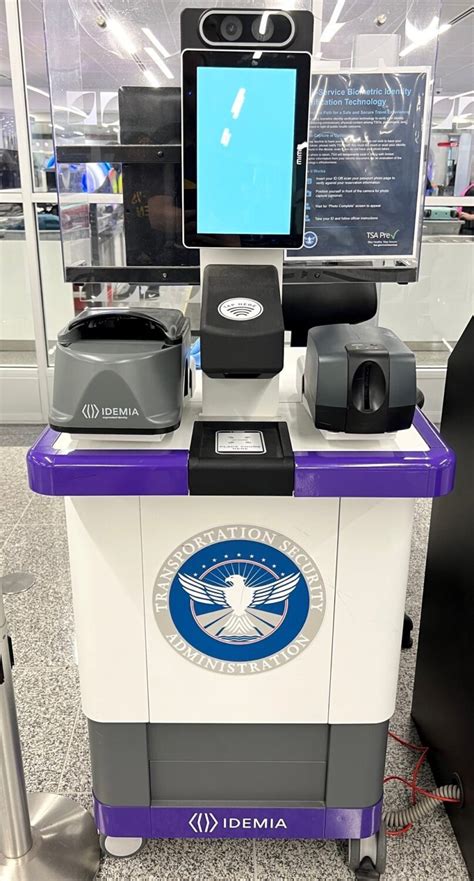
The arrival of a modernized system in late 2025 replaces these manual steps with a more efficient, technology-based verification method. Under this system, passengers must pay an $18 non-refundable fee before the verification process begins. The fee supports the identity-checking infrastructure and compensates for the extra resource strain caused by non-compliant documentation.
Verification may involve:
- Biometric confirmation such as facial matching
- Accessing government databases to authenticate identity
- Cross-referencing personal details provided by the passenger
- Supplementary screening measures intended to ensure safety
A successful identity verification provides up to 10 days of airport access, functioning as a temporary, short-term travel authorization for those who lacked proper ID at the checkpoint.
Success, however, is not guaranteed. If the system fails to match or confirm the traveler, TSA will deny entry into the secure area, and the missed flight becomes unavoidable. The fee remains non-refundable whether the traveler passes or fails the process.
The Rising Role of Biometrics in TSA Identity Checks
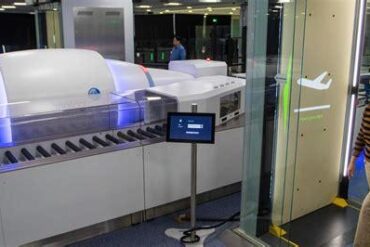
The biometric dimension of TSA’s alternate verification program signals a federal shift toward identity systems that rely less on physical documents and more on real-time data analysis. As millions of travelers adopt facial-recognition boarding passes, touchless security lanes, and digital identification wallets, TSA’s expanded biometric tools form the backbone of a security structure intended to eliminate ambiguity at the checkpoint.
The biometric process incorporated into the alternative ID program is not a convenience feature; it is a mandatory component for those without valid ID, meant to verify the individual with greater certainty than manual questioning ever could. While TSA states that biometric scans are stored and managed according to federal privacy regulations, the central objective remains clear: identity certainty.
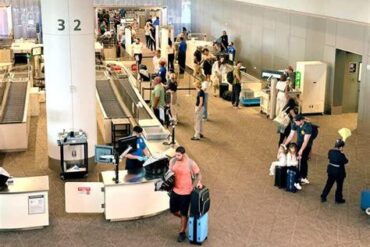
Travelers accustomed to speeding through security with nothing more than a paper license will discover that the new system feels dramatically different—closer to an immigration checkpoint than a casual domestic screening lane.
Real Stories From Travelers Caught Unprepared
As soon as REAL ID enforcement began, first-person accounts began appearing across digital communities. Some travelers reported that TSA still permitted certain trusted traveler cards, such as Global Entry or NEXUS, while others said officers treated these documents as insufficient because they technically lack a REAL ID symbol. The confusion stems from the fact that these cards are acceptable, yet their appearance often leads to misinterpretation by agents unfamiliar with the nuances.
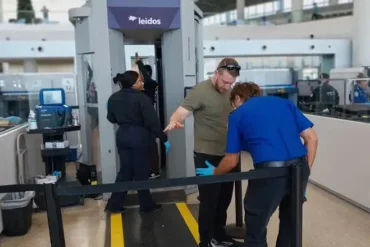
A common thread running through most stories is delay. Travelers report extra bag checks, pat-downs, extended screening, and being sent to secondary desks for further questioning. Several claimed they received a slip from TSA indicating that additional screening was required, which sometimes caused missed flights even after successful identity confirmation.
The broader pattern shows that while TSA may allow a traveler to continue after the alternative check, the process is not smooth, fast, or predictable. Those who arrive without proper identification quickly learn that the system is not designed to accommodate them efficiently. In practice, the fallback option operates less like a courtesy and more like a final, resource-intensive safety net for emergencies.
Why the $18 Fee Was Introduced and What It Means for Travel
The formal introduction of the $18 identity-verification fee in November 2025 reflects a major operational transition for TSA. Before this fee existed, officers had to manually conduct lengthy identity checks, interrupting the flow of security lines and diverting personnel away from routine screening duties. The new fee helps finance an automated verification platform that reduces officer burden and makes identity checks more scalable.
According to federal documentation, the fee applies regardless of flight urgency, personal circumstances, or verification outcome. Its non-refundable nature discourages travelers from relying on last-minute verification as a convenience. The system is meant for exceptional circumstances, not regular use, and TSA’s design clearly intends to ensure that travelers treat proper identification as a mandatory part of air travel preparation.
The fee’s appearance in the Federal Register formalized the rule and allowed TSA to scale the alternative verification process nationwide. Agencies have described the upgrade as essential for protecting the system from overload, especially as air travel steadily increases. With tens of millions of passengers moving through airports each month, even small lapses in preparedness generate cascading slowdowns across the network.
The Practical Fallout: A System That No Longer Forgives Forgetfulness
Travelers accustomed to running late, relying on temporary IDs, or assuming that TSA will “work with them” now navigate a very different environment. The system no longer forgives forgetfulness. The alternative identity-verification process is neither quick nor assured, and even successful verification can result in long delays, extensive searches, and missed flights.
For many, the real consequence is not the $18 fee—it is the loss of time, the risk of failing verification, and the possibility of being forced to rebook entirely. Families traveling with children, business travelers on tight schedules, and passengers connecting through multiple airports now treat ID compliance as an essential pre-flight step rather than a formality.
How Travelers Can Avoid Problems Under the New Rules
The most effective way to navigate the new TSA landscape is preparation. Travelers benefit from checking their ID for the REAL ID star before the travel day rather than learning at the checkpoint that their license is non-compliant. Keeping a passport valid and available remains one of the most reliable strategies, as passports are universally recognized and bypass all REAL ID complications.
Arriving early takes on new importance for anyone who fears their ID may be borderline acceptable. One extra hour gives the verification system time to operate; without it, a slight slowdown ensures a missed flight. Frequent travelers should prioritize securing a compliant ID long before travel; the days of upgrading at the last minute are ending, as appointment backlogs and processing delays can stretch renewals into weeks.
Carrying a backup ID, such as a passport card or trusted traveler document, gives travelers flexibility, especially during renewal gaps. For those who routinely misplace IDs at home, keeping a passport in the same place as travel documents can prevent last-minute disasters.
The Larger Meaning Behind TSA’s New ID Standards
The shift to stricter identity enforcement at airport checkpoints symbolizes a broader evolution in national security philosophy. Documentation is moving away from reliance on simple physical credentials and towards technology-enhanced authentication supported by biometrics and centralized verification databases. TSA is positioning airports as gateways that require near-absolute certainty about who enters secure areas.
The alternative verification program, though framed as a convenience option, reinforces this philosophy. It is designed to process identity with far greater precision than previous manual systems and to discourage travelers from relying on exceptions. In essence, the availability of a backup pathway does not soften the rules; it emphasizes how important they have become.
As more airports implement facial-recognition boarding, touchless identity gates, and real-time authentication systems, the role of traditional ID cards may diminish further. The REAL ID requirement represents not an endpoint but a stepping stone toward a future where identity verification is instantaneous, digital, and deeply integrated with travel infrastructure.
Moving Forward in a Stricter Travel Landscape
The consequences for traveling without a valid ID have never been more serious. Passengers risk paying an unavoidable fee, facing extended screening, missing their flights, or being turned away entirely. The new biometric-enhanced system may eventually feel seamless, but for now it is a stern reminder that preparedness is not optional.
The reality is simple: TSA now treats ID with the same non-negotiable importance as a boarding pass or an airport security rule. Those who take the requirement seriously pass through checkpoints smoothly; those who do not face a series of escalating procedures designed to prevent security breaches.
Air travel in the United States is entering a period defined by clarity of expectation. The rules are firm, the consequences are tangible, and the path forward is unmistakable. Travelers who adapt early will find the skies open to them. Those who ignore the requirements may find themselves learning a lesson the hard way—at the airport entrance, not the departure gate.