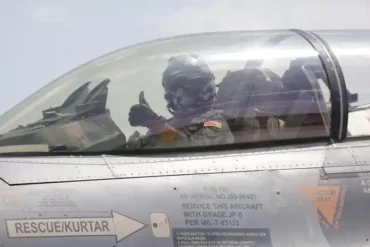
Graduating with a degree in aviation management opens a runway’s worth of opportunity far beyond the cockpit. The field rarely rewards on paper alone; real momentum comes from experience, industry proximity, and the confidence to step into roles that stretch capability. A post-graduate entering the workforce today stands at the intersection of aviation operations, regulatory oversight, business management, digital transformation, and a rapidly evolving global air transport network. Choosing a first job is less about locking into a career and more about stepping into an environment where access, mentorship, and growth accelerate.
Aviation Management Degree Job Opportunities: Building a Career at High Altitude
The aviation ecosystem depends on professionals who understand how aircraft, airports, and people move through space and time. Graduates who combine flight knowledge with management foundations can adapt into multiple segments of the industry. While pilot training continues, a management-track career can unfold concurrently, and often enriches cockpit-oriented roles later in life. Employers value candidates who understand aircraft scheduling pressures, passenger experience, supply chains, safety systems, and the intricate language of regulatory compliance.
The advantage of an aviation management degree is range. It is not a narrow path. Entry-level roles can lead to higher responsibility quickly for candidates willing to learn from the inside. A job at a major hub airport, a charter firm, a regional airline or an airport authority builds operational fluency and offers upward mobility. Experience in dispatch, airport operations, safety oversight, scheduling, or logistics can transition fluidly into major airline operations or corporate aviation leadership.

Airport Operations Jobs: Where First Careers Take Off
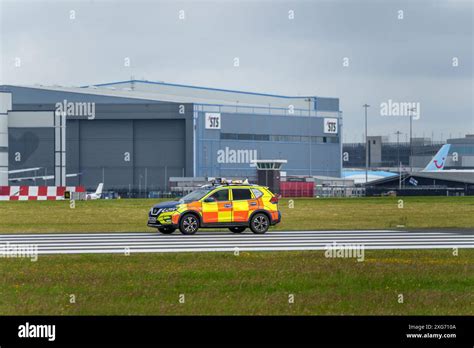
Airport operations remains one of the most common destinations for graduates. It is fast-paced, structured by procedure, and rich with interaction across security, engineering, airlines, and regulatory agencies. Many airport authorities hire assistants or coordinators who learn by doing: airfield inspections, ramp safety checks, wildlife management, NOTAM processing, and support during weather disruptions. A class C or D airport often offers the best opening — smaller facilities are more likely to trust early-career professionals with meaningful responsibility, and hands-on experience becomes deep quickly.
Internships at major hubs like DEN, DFW, ATL or ORD are structured pipelines into authority-level employment. A candidate who performs well can move into supervisory or duty manager tracks within a few years. Airports are 24-hour organisms — shift work builds resilience, operational instinct, and the kind of stress-tested problem solving that airlines prize. When internal hiring preference favors those who already understand the system, early positioning matters.
Flight Dispatch & Airline Operations Control: The Nerve Center Career
Airline dispatch is intellectually demanding and strategically critical. Dispatchers make weather decisions, fuel calculations, route adjustments, irregular operations responses, and maintain continuous communication with flight crews. Many graduates pursue dispatch certification as a gateway into airline operations. Breaking into the field is easier at regionals rather than major carriers, but once inside, internal transfers are common.
A dispatch role is often the closest non-flying position to flight deck decision-making. It builds meteorological judgment, regulatory awareness under FAR 121, and proficiency with dispatch software and flight planning tools. The role evolves into systems operations management, crew scheduling leadership, or operations control supervision. For graduates who dream of airline operations management, dispatch competence is a strong credential.
Charter & Corporate Aviation: Smaller Teams, Faster Responsibility
Charter environments reward flexibility and ambition. Unlike airlines, charter firms may place young professionals into scheduling, client relations, logistics planning, or ground coordination early in their tenure. Work spans everything from arranging last-minute positioning flights to securing hangar space and negotiating catering and security for VIP passengers. Growth occurs through exposure: the person who can keep aircraft, crew, and client aligned becomes indispensable.
Corporate fleet departments operate similarly but with deeper emphasis on safety management systems, confidentiality, and efficiency. Aviation management graduates with a pilot background often climb rapidly here — understanding cockpit constraints improves scheduling realism and builds trust with flight crews and executives.
Airport Authority & Port Administration: Where Policy Meets Operations
Airport authorities govern infrastructure investment, noise abatement, airfield expansion, environmental compliance, and public-travel interface. These institutions hire analysts, operations coordinators, planning assistants, tenant relations specialists, and emergency management staff. A graduate in aviation management fits almost anywhere in that matrix.
Authority work can lead to:
- terminal planning and passenger-flow optimization
- runway/taxiway long-range development strategy
- concessions, leasing, and airline contracting
- government liaison roles with TSA, Customs, and FAA
- emergency response and continuity management
A career here evolves into leadership through exposure to capital planning and big-picture decision making. Being present when billion-dollar infrastructure decisions occur develops a strategic mindset few entry-level jobs offer.
Aviation Safety, SMS Management & Quality Assurance
Safety roles are expanding as aviation standards evolve. ICAO initiatives, FAA compliance frameworks, Part 139 requirements, and SMS integration create constant demand for analysts who can audit data, verify procedural adherence, and guide remediation. Graduates with strong communication skills excel — safety is as much about influencing culture as measuring metrics.
Aviation safety positions can place employees inside airlines, airports, MROs, charter firms or manufacturing environments. Work revolves around hazard identification, risk assessment, reporting systems, safety investigations, and safety training. A few years of SMS experience can grow into director-level oversight, FOQA (Flight Operational Quality Assurance) leadership, or safety investigator specialization.

Air Traffic Control, FAA Inspection & Regulatory Pathways
Aviation management degrees intersect with regulatory work when paired with pilot qualifications or technical exposure. FAA Aviation Safety Inspectors must demonstrate operational experience, but management graduates with flight training are well-positioned to qualify. Inspectors oversee airworthiness, maintenance, operations, airmen certification, and enforcement — the role is respected, stable, and compensated well.
Air traffic control remains another path, though entry is governed by strict testing windows and training pipelines. For graduates considering ATC, persistence and willingness to relocate can turn opportunity into a lifelong profession.
Corporate, Fortune-50 and Non-Aviation Business Roles
Large corporations — even outside aviation — hire aviation management graduates into supply chain management, project coordination, procurement, logistics, finance rotation programs, and operations development. A graduate landing inside a Fortune-50 company gains structured training, tuition reimbursement for graduate degrees, and exposure to global operations scale. Experience matters more than major title; performance turns opportunity into career acceleration.
A manager with a history degree once led engineering teams — proof that aviation management is a launchpad, not a limitation. A graduate who secures a corporate role, builds five years of performance credibility, and earns a sponsored master’s degree can return to aviation with leverage or rise in corporate leadership where aviation knowledge supports fleet acquisition, travel strategy, or corporate flight department growth.
Building Toward Major Airline Operations
The student who dreams of working inside a major airline’s operations control center must think in stages. The process is rarely direct. It forms as a sequence of stepping-stones:
- begin in airport operations, dispatch, scheduling, or safety
- earn internal experience and cross-department visibility
- leverage dispatch certification or SMS exposure to transfer internally
- rise through operational control, crew coordination or flight planning teams
- move into NOC (Network Operations Center) leadership or system-level management
Airlines promote internally because performance is observable and trust is built through operational reliability. A strong first role matters not because it defines the future, but because it grants access to the gate where real advancement begins.
Final Approach: A Degree That Opens More Doors Than It Closes
Aviation management graduates live in a world built upon movement — aircraft, cargo, people, and careers. The industry rewards those who enter early, learn aggressively, accept shifts, pursue certifications, and stay close to runways, radios, and real-time decisions. Whether one’s journey leads through dispatch desks, airport authority boardrooms, regulatory oversight, charter scheduling, or Fortune-50 operations pathways, the degree remains more versatile and expansive than it appears on paper.
The runway is long. The climb is steady. The view, as always in aviation, is worth it.