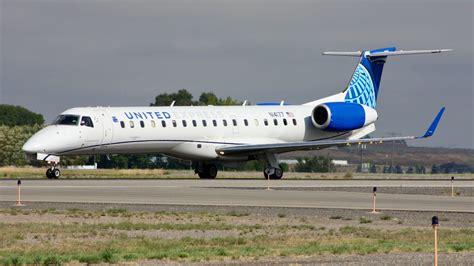
Few air travelers expect to board a commercial flight and discover that they are the only passenger onboard. Yet that extraordinary scenario recently unfolded on a United Express service operated by a CommuteAir Embraer ERJ145, transforming a routine regional journey into an experience more akin to flying on a private jet.
The unusual flight departed from Huntsville International Airport in Alabama and headed to George Bush Intercontinental Airport in Houston, one of United Airlines’ largest operational hubs. What made headlines, however, was not merely the solitary traveler. To safely operate the aircraft, airline personnel reportedly loaded sandbags into the cabin as ballast, highlighting the often-overlooked science behind aircraft weight and balance.
For aviation enthusiasts, the incident offered a fascinating glimpse into the operational complexities that airlines manage every day.
A Commercial Flight With Only One Passenger
The remarkable journey came to light after a passenger shared her experience online, explaining that she was the sole traveler aboard a United Express flight from Huntsville to Houston. The aircraft, an Embraer ERJ145 operated by regional partner CommuteAir, departed following a period of severe weather disruptions that had grounded flights and significantly reduced passenger traffic.
Upon arriving at Huntsville International Airport, the traveler reportedly found the terminal nearly deserted. By boarding time, only a handful of airline employees remained at the gate. Despite the bizarre circumstances, the flight proceeded as scheduled, creating an exceptionally rare flying experience.
The cabin crew embraced the unusual situation with humor. The lone flight attendant reportedly joked throughout the safety demonstration, acknowledging the surreal nature of conducting a full pre-departure briefing for a single customer. Following arrival in Houston, the passenger was even invited to visit the cockpit, adding another memorable element to an already unique journey.
While stories of empty or lightly booked flights occasionally surface, a commercial service carrying just one paying passenger remains exceedingly uncommon in modern airline operations.
Why United Airlines Operated the Flight Anyway
At first glance, operating an aircraft for a single passenger appears economically irrational. Regional jet operations involve substantial expenses, including fuel, maintenance, crew salaries, airport charges, navigation fees, and aircraft ownership costs. One ticket sale clearly cannot offset those expenses.
However, airline scheduling extends far beyond individual flight profitability.
In this case, Houston’s George Bush Intercontinental Airport serves as a major hub for United Airlines. Aircraft throughout the network are assigned specific rotations, often operating multiple sectors daily. The Embraer ERJ145 involved in the flight was reportedly required in Houston for subsequent operations the following morning.
Canceling the service could have triggered a cascade of disruptions across the network. Future flights might have lacked an aircraft, crew positioning could have been affected, and passengers booked on subsequent segments could have experienced delays or cancellations.
Essentially, the aircraft needed to travel to Houston regardless of passenger demand. Even without the sole traveler onboard, the flight likely would have operated as a repositioning or ferry flight.
Airlines frequently conduct such repositioning flights to ensure aircraft and crew are located where they are needed most. These operational necessities often outweigh the immediate revenue considerations associated with a single sector.
The Critical Role of Aircraft Weight and Balance
The most intriguing aspect of the flight involved the addition of sandbags as ballast.
Aircraft are meticulously designed to operate within specific weight and balance limits. Pilots and dispatchers calculate an aircraft’s center of gravity before every departure, ensuring that weight distribution remains within certified parameters.
When an aircraft carries an unusually small number of passengers, particularly a regional jet such as the Embraer ERJ145, maintaining the proper center of gravity can become challenging.
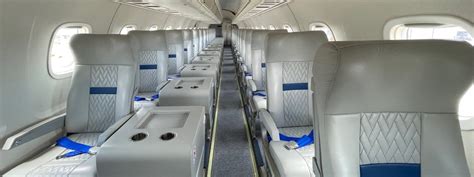
The ERJ145 features a relatively narrow fuselage and concentrated passenger seating area. With only one traveler onboard, the absence of normal passenger weight throughout the cabin can shift the aircraft’s balance envelope beyond acceptable limits.
To address this issue, airlines may place ballast—often sandbags or other approved weights—in strategic locations. These additional weights help ensure the aircraft remains safely within center-of-gravity restrictions during taxi, takeoff, flight, and landing.
In many cases, ballast is loaded into cargo compartments. However, depending on the aircraft type, loading configuration, and operational requirements, ballast may also be placed inside the passenger cabin.
Without proper balancing, an aircraft could experience degraded handling characteristics, reduced controllability, or difficulties during critical flight phases.
Sole-Passenger Flights Are Rare but Not Unprecedented
Although highly unusual, flights with only one passenger have occurred before.
One widely reported example involved an Air Canada Express service operated by Jazz Aviation between Philadelphia and Montréal in January 2017. Political uncertainty surrounding the first inauguration of Donald Trump, combined with protests and travel disruptions, reportedly resulted in a single passenger occupying the entire aircraft.
Such situations generally emerge during extraordinary circumstances, including severe weather, operational disruptions, large-scale cancellations, or sudden shifts in travel demand.
For passengers fortunate enough to experience one, an empty aircraft offers unparalleled comfort and personalized service. For airlines, however, these flights underscore the intricate logistical balancing act required to maintain vast global networks.
The recent United Express flight demonstrated that commercial aviation is about far more than selling seats. Behind every departure lies a complex web of scheduling, safety calculations, crew positioning, and operational planning—sometimes requiring something as simple, yet essential, as a few well-placed sandbags.