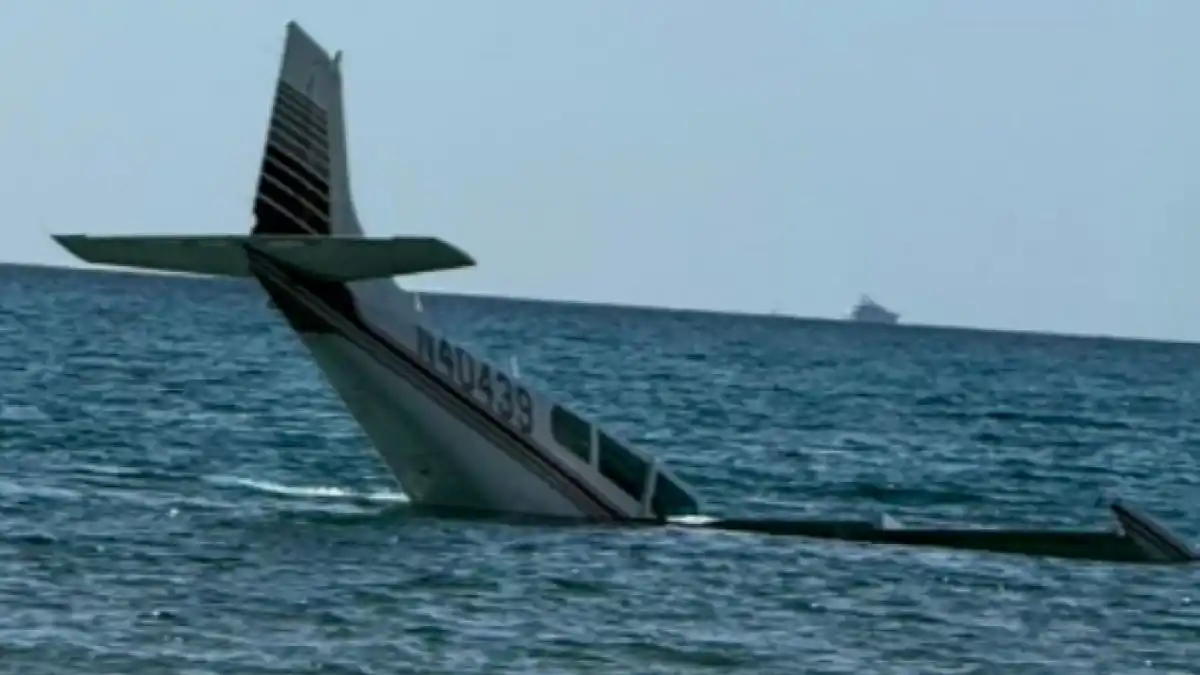
A 23-year-old pilot escaped serious injury on Saturday after being forced to ditch a Piper PA-39 Twin Comanche in the Atlantic Ocean off Boca Raton, Florida. The dramatic incident occurred after mechanical problems developed during a flight to the Bahamas, eventually leaving the pilot with no practical option but to land the aircraft on the water.
The pilot, Faith Tenkley, was the aircraft’s only occupant. She had departed Page Field in Fort Myers at approximately 8:55 a.m. local time on August 22, 2026, intending to fly to South Bimini Airport in the Bahamas. According to the reference information, Tenkley was making the trip to pick up her parents.
The flight initially appeared routine, but the situation changed after Tenkley had spent just over an hour in the air. The aircraft was approximately 15 miles west of Boca Raton when mechanical problems began affecting the flight. She diverted toward Boca Raton Airport, apparently hoping to complete the flight with a conventional landing, but a subsequent landing gear problem made that increasingly difficult.
Mechanical Problems Forced an Emergency Water Landing
The combination of mechanical difficulties and landing gear problems left Tenkley facing a particularly demanding emergency. Rather than continue toward an airport with uncertainty surrounding the aircraft’s ability to land safely, she ultimately ditched the airplane in the Atlantic just offshore from Boca Raton.
Witness accounts described the aircraft descending slowly toward the water before making what appeared to be a controlled landing. The circumstances were especially remarkable because the aircraft came down in an area close enough to shore for beachgoers and emergency responders to witness the incident.
For a pilot dealing with a serious aircraft malfunction, a water landing presents substantial risks. The objective is not simply to bring the airplane down, but to maintain control for as long as possible, manage the aircraft’s attitude, and minimize the forces involved in the final impact. In Tenkley’s case, the outcome suggests that she retained control throughout the descent.
The fact that Tenkley was able to exit the aircraft and swim to shore without serious injury was the most important outcome of the incident. The Piper, however, is believed to have sustained considerable damage after entering the Atlantic Ocean.
Pilot Swims to Shore After Ditching
Emergency assistance arrived remarkably quickly. A lifeguard reportedly reached Tenkley within about a minute of the ditching, with a fire department rescue boat arriving afterward. Although she was reportedly uninjured, she was subsequently taken to hospital as a precaution.
The rapid response was particularly valuable because even a successful ditching does not eliminate the dangers that can follow an aircraft accident. Water conditions, aircraft wreckage, fuel, and the possibility of injury can all create additional hazards. Tenkley’s ability to reach shore under her own power nevertheless demonstrated how well the initial emergency landing had been managed.
The incident also attracted attention from local aviation professionals, who emphasized the importance of maintaining aircraft control during an emergency. One local pilot told WPBF photojournalist Marcus Giordano that a fundamental principle taught to pilots is to fly the airplane all the way down. The relatively controlled condition of the aircraft after the ditching was viewed as evidence that Tenkley had done exactly that.
Other reported possibilities included communication difficulties and an engine failure, although the precise sequence and causes of the mechanical problems remain important matters for investigators to establish.
A Four-Year Pilot Faces a Serious Emergency
Tenkley has reportedly been a licensed pilot for approximately four years. Despite being only 23 years old, she was therefore not a completely inexperienced aviator when the emergency developed. The incident required her to make a series of decisions under pressure while operating an aging twin-engine aircraft away from an airport.
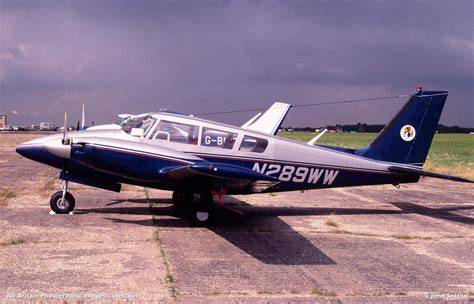
The aircraft involved was registered N40439 and was built in 1971. It was a Piper PA-39, a distinctive member of the Twin Comanche family. Unlike the standard PA-30, the PA-39 features counter-rotating propellers, a design intended to improve handling characteristics and reduce certain asymmetric thrust effects associated with conventional twin-engine aircraft.

The Piper PA-39 Twin Comanche
The Piper PA-30 Twin Comanche family was manufactured between 1961 and 1972 and became one of the better-known American light twin-engine aircraft families of its era. The standard PA-30 accounted for approximately 2,001 deliveries, while production of the PA-39 was considerably smaller, with 155 examples built.
The PA-39 was developed as an evolution of the Twin Comanche concept, incorporating counter-rotating propellers. Piper also developed a turbocharged version known as the Turbo Twin Comanche C/R, while another proposed development, the PA-40 Arapho, featured a modified fuselage and new wings. The PA-40 program was ultimately abandoned after three prototypes were constructed.
For Tenkley, however, the historical significance of the aircraft was secondary to the immediate challenge presented by its mechanical problems. Once the landing gear became unreliable and an airport landing was no longer considered a safe option, the Atlantic became the emergency landing area.
A Successful Ditching With One Critical Outcome
The Boca Raton incident is a striking reminder that an aircraft emergency does not necessarily end in catastrophe. Mechanical failures can rapidly transform an ordinary private flight into a situation requiring precise decision-making, and the safest available landing location may not always be a runway.
Tenkley’s decision to ditch the Piper rather than continue toward an uncertain airport landing ultimately produced the most important result: the sole occupant survived without reported serious injury. Her ability to control the airplane during its descent, survive the water impact, and swim to shore brought an otherwise alarming flight to a relatively safe conclusion.
The aircraft may be heavily damaged, but for the 23-year-old pilot, the successful escape from the Atlantic is the defining outcome of the August 22 emergency. Further investigation will be needed to determine exactly which mechanical failures occurred and how they developed during the flight, but the incident already stands as a powerful example of the importance of maintaining aircraft control when an unexpected emergency leaves few good options.