
Modern air travel operates with extraordinary precision. Every day, thousands of commercial aircraft cross vast oceans, remote polar regions, and sparsely populated landscapes with remarkable reliability. Yet aviation remains an industry built upon preparation for the unexpected. Medical emergencies, mechanical failures, cabin depressurization events, severe turbulence, onboard security concerns, and adverse weather conditions can instantly force a flight crew to abandon its original destination and divert elsewhere.
For long-haul airlines, especially those operating extended overwater routes, diversion planning is not merely a regulatory requirement—it is a cornerstone of flight safety. Pilots and dispatchers continuously monitor suitable alternate airports throughout a journey, ensuring that a safe landing option is always available should circumstances deteriorate.
Certain airports have emerged as indispensable components of this global safety network. Their strategic geography, long runways, robust rescue capabilities, minimal congestion, and ability to handle widebody aircraft at short notice have transformed them into the world’s most trusted diversion airports.
These seven airports stand at the heart of global contingency planning.
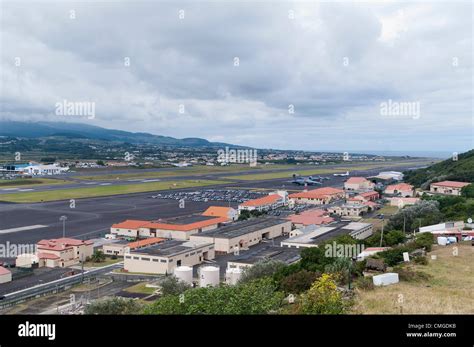
7. Azores Airports: The Mid-Atlantic Lifeline for Transatlantic Flights
Situated in the middle of the Atlantic Ocean, the Portuguese Azores archipelago occupies one of aviation’s most strategically significant positions. Located approximately halfway between North America and mainland Europe, these islands provide an essential safety bridge across one of the busiest long-haul corridors on Earth.
Two airports dominate diversion operations in the region: Lajes Airport (TER) on Terceira Island and João Paulo II Airport (PDL) in Ponta Delgada on São Miguel Island. Their geographical location allows airlines crossing the Atlantic from the southeastern United States, Central America, the Caribbean, and South America to maintain continuous diversion coverage throughout lengthy oceanic crossings.
For aircraft operating under Extended-range Twin-engine Operational Performance Standards (ETOPS), the Azores represent a critical emergency option. Modern twin-engine aircraft such as the Boeing 787 Dreamliner, Airbus A350, Boeing 777, and Airbus A330 routinely list these airports as designated alternates during flight planning.
Lajes Airport possesses particularly impressive infrastructure. Originally developed for military purposes, the airport features exceptionally long runways capable of accommodating virtually every commercial aircraft currently flying. Its capabilities once led to its designation as an emergency landing site for NASA’s Space Shuttle program.
Although passenger volumes remain modest compared with major international hubs, the airport has repeatedly welcomed widebody diversions involving medical emergencies, technical malfunctions, and precautionary landings. Flight crews crossing the Atlantic understand that the Azores often represent the nearest and safest option during critical situations.
The islands may appear isolated on a map, but in operational aviation terms, they serve as one of the Atlantic’s most important safety nets.
6. Bangor International Airport: Maine’s Quiet Role in Global Aviation Safety
At first glance, Bangor International Airport (BGR) seems an unlikely candidate among the world’s leading diversion airports. Nestled in the northeastern corner of Maine, it lacks the scale and passenger traffic of major hubs such as New York, Boston, or Chicago.
However, geography has given Bangor a uniquely important mission.
Positioned on the northeastern edge of the continental United States, Bangor sits directly beneath numerous transatlantic flight paths connecting Europe and North America. Aircraft arriving from Western Europe often remain within practical diversion range of Bangor for substantial portions of their journey.
The airport offers several advantages that make it exceptionally attractive during emergencies. Its long runways easily accommodate large aircraft, including Boeing 747s, Airbus A380s, Boeing 777s, and Airbus A350s. Equally important, Bangor benefits from relatively uncongested airspace, allowing diverted aircraft to land quickly without significant delays.
One of Bangor’s greatest strengths lies in its extensive customs and immigration infrastructure. Unlike many remote diversion fields, Bangor can efficiently process hundreds of unexpected international passengers should an overnight stop become necessary.
Historically, Bangor played a major role during the era when long-range aircraft lacked today’s capabilities. Before ultra-long-haul operations became commonplace, countless flights stopped there for refueling before continuing across the Atlantic.
While technological advances eliminated routine fuel stops, Bangor seamlessly evolved into one of North America’s most dependable diversion facilities. Today, it regularly handles emergency landings ranging from onboard medical incidents to technical failures and weather-related disruptions.
Its reputation among airline dispatchers and flight crews remains exceptionally strong, ensuring that Bangor continues to play a pivotal role in transatlantic safety.
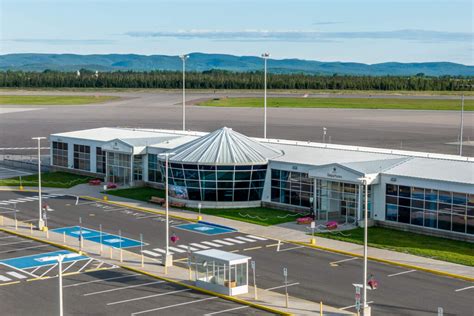
5. Goose Bay Airport: Canada’s Remote Guardian of the North Atlantic
Located deep within Labrador, Goose Bay Airport (YYR) appears remarkably isolated. Yet that very isolation explains why it remains one of aviation’s most valuable emergency landing facilities.
Positioned beneath major North Atlantic routes, Goose Bay offers a crucial diversion point for aircraft operating across northern oceanic tracks connecting North America and Europe.
Originally established as a military installation, the airport possesses infrastructure far exceeding the needs of its relatively small local population. Its long runways, expansive apron space, and robust support facilities were designed to accommodate large military aircraft and continue to serve modern commercial aviation exceptionally well.
As ETOPS regulations expanded during the late twentieth century, allowing twin-engine aircraft to venture farther from diversion airports, Goose Bay’s importance increased substantially. Airlines operating Boeing 767s, Boeing 777s, Boeing 787s, Airbus A330s, and Airbus A350s routinely rely on Goose Bay during flight planning.
The airport frequently appears in incident reports involving precautionary landings, engine anomalies, technical issues, and medical emergencies. Its ability to safely receive widebody aircraft in challenging northern conditions makes it indispensable to transatlantic operations.
Numerous airlines have diverted to Goose Bay over the decades, occasionally leaving passengers stranded while repairs are organized and replacement crews dispatched. Despite such inconveniences, crews universally regard Goose Bay as a reassuring presence along remote North Atlantic routes.
Beyond commercial aviation, military operators, cargo airlines, business jets, and government aircraft regularly depend upon the airport during irregular operations.
Few airports serve so few local residents while simultaneously holding such profound global importance.
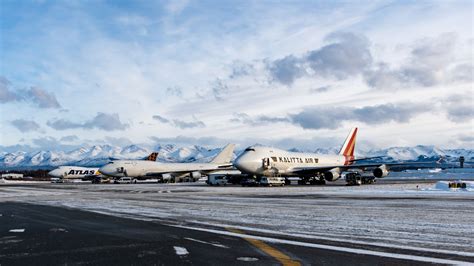
4. Ted Stevens Anchorage International Airport: The Pacific’s Primary Safety Valve
While many renowned diversion airports owe their status to North Atlantic traffic, Ted Stevens Anchorage International Airport (ANC) occupies an entirely different strategic niche.
Anchorage sits beneath some of the world’s busiest trans-Pacific and polar air corridors, making it indispensable for flights connecting North America with East Asia.
Modern airline route structures place countless aircraft within diversion range of Alaska. Flights linking New York with Tokyo, Chicago with Seoul, Los Angeles with Hong Kong, and numerous cargo routes between Asia and North America frequently pass near Anchorage.
When emergencies arise during these lengthy sectors, Anchorage often represents the safest and quickest solution.
The airport’s operational capabilities are extraordinary. Its runways can accommodate fully loaded Boeing 747 freighters, Airbus A350s, Boeing 777s, and virtually every other large aircraft type currently in service. Extensive maintenance infrastructure, customs facilities, and emergency response resources ensure that even highly complex diversion scenarios can be managed efficiently.
Anchorage occupies an especially critical role in cargo aviation. Major operators including FedEx, UPS, and numerous Asian cargo carriers maintain significant operations there, creating an ecosystem capable of supporting unscheduled arrivals at any hour.
Environmental factors also contribute to Anchorage’s diversion workload. Volcanic ash events across Alaska and the Aleutian Islands periodically disrupt Pacific traffic, forcing aircraft to seek alternate airports. Severe weather systems, technical anomalies, and onboard emergencies likewise funnel diverted flights into ANC.
As trans-Pacific traffic continues to grow, Anchorage’s strategic significance only becomes greater. It has evolved into one of the world’s foremost diversion airports, particularly for the increasingly busy Asia–North America market.
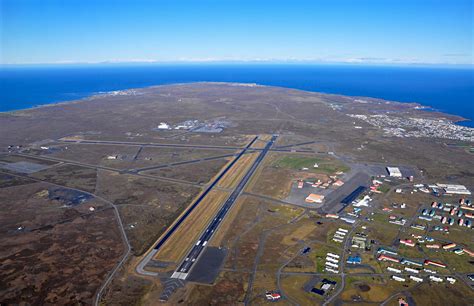
3. Keflavik International Airport: Iceland’s Essential Mid-Ocean Gateway
Few airports occupy a geographical position as advantageous as Keflavik International Airport (KEF).
Located on Iceland’s Reykjanes Peninsula, Keflavik sits almost perfectly between mainland Europe and North America. Every day, hundreds of flights crossing the North Atlantic remain within reach of Iceland, making Keflavik one of aviation’s most frequently designated alternates.
Unlike remote diversion facilities that primarily offer runways and emergency services, Keflavik functions as a fully developed international airport. Airlines benefit from comprehensive passenger amenities, maintenance support, customs processing, and substantial ground handling capabilities.
These characteristics make KEF exceptionally attractive during diversions involving large passenger aircraft. A flight carrying several hundred travelers can land safely while airlines arrange repairs, accommodation, or onward transportation with comparatively minimal disruption.
Keflavik routinely appears in airline ETOPS planning documents because it can accommodate virtually every commercial aircraft in operation. Boeing 787s, Airbus A350s, Boeing 777s, Airbus A330s, and even Airbus A380s can operate there without restriction.
The airport also plays a critical role during broader operational disruptions affecting European airspace. Severe weather, airport closures, air traffic control strikes, or congestion at major hubs often lead airlines to select Keflavik as an alternative destination.
Its combination of central geography, modern infrastructure, and operational reliability ensures that Keflavik remains among the North Atlantic’s most important diversion hotspots.
2. Shannon Airport: Europe’s Premier Transatlantic Safety Net
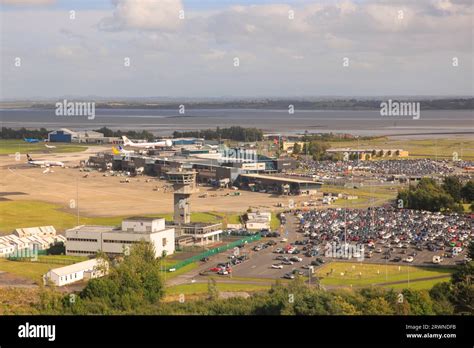
For generations, Shannon Airport (SNN) has occupied a legendary position in transatlantic aviation.
Before the advent of ultra-long-range aircraft, Shannon served as one of Europe’s principal refueling stops for flights crossing the Atlantic. Although technological advances eventually eliminated routine fuel stops, the airport’s strategic significance never diminished.
Situated on Ireland’s western coast, Shannon frequently represents the first major European airport accessible to aircraft arriving from North America. Its location allows crews experiencing emergencies over the Atlantic to minimize the time spent operating under abnormal conditions.
Shannon possesses extensive experience handling diversions involving large commercial aircraft. Its long runways, advanced rescue services, highly trained personnel, and 24-hour operational capability have made it a preferred destination for airlines worldwide.
The airport regularly receives aircraft diverting because of medical emergencies, engine problems, smoke warnings, electrical malfunctions, cabin pressurization issues, and potential fire hazards. Such events occur with sufficient frequency that emergency landings have become a routine aspect of airport operations.
Recent incidents continue to reinforce Shannon’s status. Widebody aircraft from numerous international carriers routinely divert there after technical anomalies arise during Atlantic crossings.
Perhaps more importantly, Shannon’s operational culture has evolved around accommodating unexpected arrivals. Airport staff, emergency responders, maintenance providers, and ground handlers possess decades of experience managing complex diversion scenarios involving hundreds of passengers.
Today, Shannon stands as Europe’s most important transatlantic diversion airport—a role every bit as vital as its historic position during aviation’s pioneering years.
1. Gander International Airport: The Undisputed King of North Atlantic Diversions
No airport is more closely associated with transatlantic diversions than Gander International Airport (YQX).
Located in Newfoundland on Canada’s eastern edge, Gander occupies a nearly ideal position beneath the world’s busiest North Atlantic air routes. Since opening more than eight decades ago, the airport has evolved from a refueling stop into perhaps the most respected emergency landing airport anywhere on Earth.
Purpose-built for transoceanic aviation, Gander offers exceptionally long runways, round-the-clock operations, extensive emergency services, and uncongested airspace—all characteristics that flight crews value during emergencies.
Modern commercial aviation may no longer depend on Gander for fuel, but it continues to rely heavily upon the airport whenever unforeseen problems arise. Medical emergencies, engine irregularities, hydraulic failures, weather diversions, and technical malfunctions routinely bring aircraft to Newfoundland.
The airport’s importance extends far beyond statistics. Among pilots, Gander has earned an almost mythical reputation as the gold standard of North Atlantic alternates. Crews crossing the ocean know that if something goes wrong, Gander is often within reach.
Its legendary status was immortalized during Operation Yellow Ribbon following the terrorist attacks of September 11, 2001, when dozens of aircraft were diverted there simultaneously. The airport and local community successfully accommodated thousands of stranded passengers, demonstrating extraordinary resilience and hospitality.
More than twenty years later, aviation technology has advanced dramatically, yet the fundamental requirement for dependable diversion airports remains unchanged.
For countless flight crews traversing the Atlantic every day, Gander remains the airport they hope never to need—but are profoundly grateful exists.