American Airlines is making a major change to the way it configures its narrowbody fleet, moving away from a strategy built heavily around maximizing seat capacity and toward one designed to generate more revenue from each passenger. The airline plans to increase the share of premium seating on narrowbody departures from approximately 25% to around 40% in the coming years, marking one of the most significant changes to its domestic cabin strategy in recent years.
The headline number is striking, but it needs some context. American is not planning to turn 40% of its narrowbody cabins into traditional domestic First Class. Its definition of premium seating includes Main Cabin Extra, the carrier’s extra-legroom economy product, alongside First Class. That distinction matters because Main Cabin Extra can generate additional revenue without requiring American to dedicate as much valuable cabin space to wider premium seats.
The change is part of what American has described as a “sweeping transformation” of its narrowbody fleet, announced on August 18. The airline is simultaneously increasing premium capacity, introducing next-generation seatback entertainment, adding faster connectivity and upgrading cabins across aircraft that form the backbone of its domestic network. Taken together, the changes represent a clear attempt to make American’s narrowbody product more competitive with those offered by Delta Air Lines and United Airlines.
American Airlines Wants 40% Premium Seating on Narrowbody Aircraft
American’s new target represents a substantial increase from its current position. Today, roughly one in four seats across its narrowbody departures is classified as premium. The airline wants that proportion to approach two in five seats as its fleet transformation progresses.
However, the 40% figure should not be interpreted as a fixed cabin configuration that will appear on every American Airlines narrowbody aircraft. The airline is referring to premium seating across its narrowbody departures, meaning the actual percentage on individual aircraft will vary according to aircraft type, configuration and deployment.
The distinction is important because American operates several different narrowbody families. Its Airbus A319, A320 and A321 aircraft have different cabin layouts, while newer aircraft such as the Airbus A321neo and Boeing 737 MAX 10 will be delivered or modified with their own configurations. Consequently, some aircraft will have a higher premium percentage than others.
American Chief Customer Officer Heather Garboden said the airline is making one of the largest onboard investments in its history, emphasizing more premium seating and new entertainment technology. The underlying strategy is straightforward: American wants customers to have more opportunities to pay for a better onboard experience.
That represents a meaningful shift in philosophy. For years, airlines generally treated narrowbody aircraft as high-density workhorses, particularly on domestic routes where keeping costs low and filling as many seats as possible were critical. American is now placing greater emphasis on yield per passenger, recognizing that a slightly smaller cabin can potentially produce more revenue if a larger share of travelers is willing to pay for premium products.
American Is Adding More First Class to the Airbus A319 and A320
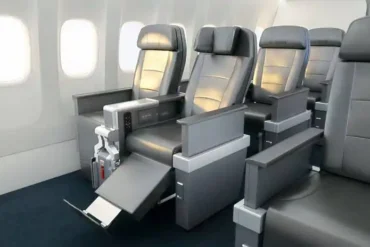
The most visible part of American’s strategy is already happening. The airline has begun retrofitting its Airbus A319 and A320 fleets with an additional row of domestic First Class seating.
The A319 previously had eight First Class seats, while retrofitted aircraft now have 12 First Class seats. The A320 is also receiving an additional row, increasing its First Class capacity from 12 to 16 seats.
That might sound like a relatively modest change, but adding premium seats to an established narrowbody configuration involves a significant trade-off. First Class seats occupy more cabin space than standard economy seats, meaning the airline is deliberately sacrificing some high-density capacity in exchange for seats that can command substantially higher fares.
The Airbus A321neo is also scheduled for a cabin reconfiguration. American’s current 196-seat A321neo has 20 First Class seats, 35 Main Cabin Extra seats and 141 standard Main Cabin seats. The carrier has confirmed that the aircraft will receive additional First Class capacity, although it has not yet disclosed the final number of premium seats.
American’s upcoming Boeing 737 MAX 10 takes the strategy even further. The aircraft will enter the fleet with 24 First Class seats, giving American a premium-focused narrowbody configuration from the moment those aircraft are delivered.
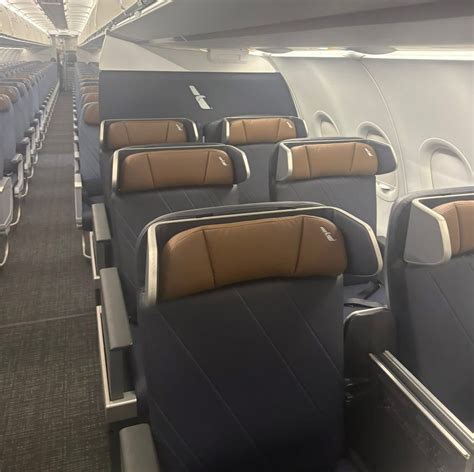
Main Cabin Extra Is Central to American’s Revenue Strategy
While the additional First Class seats attract much of the attention, Main Cabin Extra may actually be one of the most important pieces of American’s premium strategy.
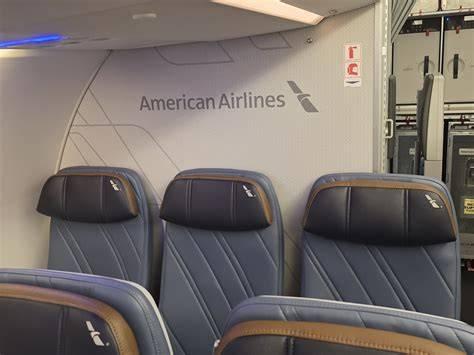
Unlike First Class, Main Cabin Extra does not require an entirely different seat. It generally uses a standard economy-style seat but provides more legroom and additional benefits, creating a product that can be sold at a premium over a basic Main Cabin ticket.
From American’s perspective, that is an attractive proposition. The airline can create a meaningful distinction between its lowest-priced economy product and a higher-value option without sacrificing as much cabin capacity as it would by replacing multiple economy seats with First Class seats.
Main Cabin Extra can also support American’s AAdvantage loyalty program. Some eligible elite members can select qualifying extra-legroom seats as part of their benefits, while other customers may pay an additional fee. That means the product has value beyond the immediate seat charge because it can make the airline’s loyalty program more attractive to frequent travelers.
This is particularly important as airlines increasingly compete for customers based on their ability to monetize different levels of service. Instead of offering only economy and First Class, American can create multiple pricing opportunities within the same aircraft. A passenger who does not want to pay for First Class may still be willing to spend more for additional legroom, priority benefits or a better overall experience.
American Is Still Behind Delta and United on Some Narrowbody Cabins
American’s 40% premium target sounds aggressive until its aircraft are placed beside those of its biggest U.S. competitors.
On the Airbus A321neo, for example, American currently has 20 First Class seats and 35 extra-legroom economy seats among 196 total seats. That puts its broad premium seating share at approximately 28%.
Delta’s A321neo has 20 First Class seats and 60 extra-legroom economy seats among 194 seats, producing a premium share of roughly 41%. United’s A321neo has 20 First Class seats and 57 extra-legroom economy seats among 200 seats, putting its figure at about 39%.
Under American’s broader definition of premium seating, its 40% target therefore does not look unusually high. Instead, it suggests that American is attempting to move its narrowbody cabins toward a configuration that is already closer to the norm at Delta and United.
This is a crucial point because American is not simply pursuing luxury for its own sake. It is attempting to close a product gap that has become increasingly important as travelers have demonstrated a willingness to pay for more space and better service.
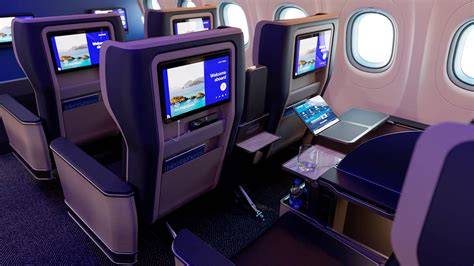
American Is Reversing Its Seatback Screen Strategy
The premium-seat expansion is only one part of American’s narrowbody transformation. The airline is also reversing another major decision from its recent history: the removal of seatback entertainment screens.
In 2017, American announced that its new Boeing 737 MAX aircraft would arrive without seatback screens. The airline argued that more than 90% of passengers were already bringing a personal electronic device onboard, making permanent screens less compelling. American instead focused on Wi-Fi, power outlets and entertainment streamed directly to passengers’ phones, tablets and laptops.
Nearly a decade later, the airline has changed course.
All new Airbus and Boeing aircraft deliveries beginning in 2028 are expected to feature seatback screens, while existing narrowbody aircraft will progressively receive them through retrofit programs. American expects the broader installation effort to continue into the early part of the next decade.
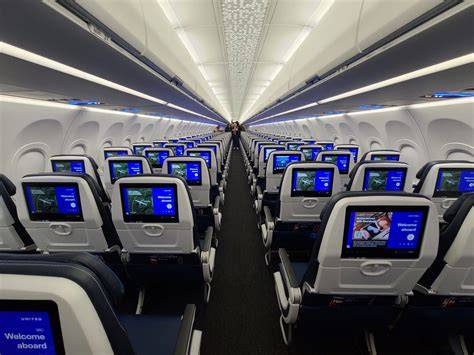
These will not simply be the basic screens that might have been installed in 2017. American is promising 4K displays, Bluetooth audio connectivity, USB-C fast charging, personalized recommendations and interactive flight maps. Premium passengers will receive particularly large screens, which the airline says will rank among the largest installed on narrowbody aircraft in North America.
The decision also demonstrates how airline technology strategies can change quickly. American originally believed personal devices would make seatback screens unnecessary. The company now appears to believe passengers want both choices: reliable connectivity for their own devices and a high-quality integrated entertainment system.
Starlink Will Add Another Layer to the New Cabin Experience
American is not abandoning its connectivity strategy while reinstalling seatback screens. Instead, it is combining the two.
Starlink installations across the narrowbody fleet are scheduled to begin in 2027, giving passengers another major upgrade before the full seatback entertainment rollout is complete.
The combination could become particularly valuable on domestic flights. A traveler may use Bluetooth headphones and a seatback screen for entertainment, connect a laptop to high-speed Wi-Fi for work, and keep a phone charged through USB-C without having to choose one option over another.
For American, that creates a much more comprehensive onboard proposition. The aircraft becomes not simply a way to transport passengers between airports, but a platform capable of generating additional revenue through premium seats while simultaneously improving the basic experience for everyone onboard.
Premium Passenger Revenue Is Driving the Timing
The timing of American’s strategy is especially revealing because its recent financial performance shows strong growth among the very passengers these cabin investments are intended to attract.
In the second quarter, premium passenger unit revenue increased 13.4% year over year, compared with an 8.8% increase in Main Cabin passenger unit revenue. At the same time, managed corporate revenue increased 26%, marking a fifth consecutive quarter of double-digit growth.
Those figures provide a strong commercial rationale for adding premium capacity. If demand for premium products is growing faster than demand for standard economy, keeping too much cabin space dedicated to the lowest-yield seats could leave money on the table.
American is therefore making a calculated bet. It is giving up some capacity in exchange for a greater proportion of seats that can produce higher revenue.
The Strategy Extends Beyond American’s Narrowbody Fleet
The narrowbody transformation also fits into American’s wider effort to strengthen its premium proposition.
The airline’s latest Boeing 787-9 configuration includes 51 lie-flat Flagship Suite seats, compared with 30 Business Class seats in the older configuration, even though the newer aircraft carries fewer passengers overall. American’s Airbus A321XLR similarly provides a premium-heavy platform for long-haul routes where larger widebody aircraft may not be commercially practical.
The narrowbody strategy is essentially bringing that same philosophy into American’s domestic network. Since narrowbody aircraft carry enormous numbers of passengers and frequently feed international flights, improving their premium offering can influence the entire customer journey.
A traveler flying domestically to connect with an international long-haul flight may now encounter a more consistent premium proposition from the first segment of the journey. That matters for corporate travelers and frequent flyers who can choose between competing airline networks based not only on schedules but also on the quality of the overall experience.
American Is Betting Against Maximum Capacity
Perhaps the most significant aspect of the transformation is what American is choosing not to do.
Instead of treating every available inch of cabin space as an opportunity to add another economy seat, the airline is accepting a lower-density configuration in selected aircraft to create more premium inventory. That is a fundamental change in the economics of its narrowbody fleet.
The strategy carries risks. Premium seats are valuable only when enough customers are willing to pay for them. If demand weakens, American could find itself carrying fewer passengers than a higher-density competitor. The airline therefore needs premium demand to remain strong enough to justify the capacity trade-off.
For now, however, American’s revenue trends suggest the bet has a reasonable foundation. Corporate revenue is growing strongly, premium passenger revenue is outperforming the Main Cabin, and competitors have already demonstrated that a substantial premium cabin can work on high-volume narrowbody aircraft.
The move from 25% to 40% premium seating is consequently much more than a seat-count adjustment. It signals a broader transformation in how American Airlines intends to compete. More First Class, more Main Cabin Extra, larger entertainment screens, faster connectivity and a stronger loyalty proposition are being assembled into one strategy.
American is trying to move away from the idea that the best narrowbody aircraft is simply the one carrying the most people. Instead, it increasingly wants the aircraft carrying the right mix of passengers, products and revenue opportunities. Whether that strategy ultimately closes the profitability gap with Delta and United will depend on execution, but the direction is unmistakable: American believes the future of its domestic fleet is not maximum capacity, but maximum value per seat.