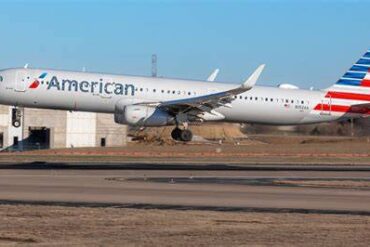
American Airlines has officially expanded its Airbus A321XLR operations with the introduction of two strategic nonstop routes connecting key transcontinental destinations. The announcement marks a pivotal move in the airline’s modernization strategy, phasing out the older A321T models while leveraging the capabilities of its new extra-long-range narrowbody fleet.
American Airlines Accelerates A321XLR Deployment Across the U.S.
With the latest schedule release, American Airlines has confirmed that its next-generation Airbus A321XLR aircraft will take over major domestic transcontinental flights. These are not minor schedule tweaks — they represent a fundamental transformation in how the airline approaches premium coast-to-coast travel.
The two new A321XLR routes are:
- New York (JFK) to San Francisco (SFO) starting May 7
- Boston (BOS) to Los Angeles (LAX) beginning July 2
Both routes are high-yield markets typically dominated by aircraft with rich premium configurations. Until now, American deployed its premium-heavy 102-seat Airbus A321T on these routes, which featured lie-flat first class, business, and a limited economy cabin. However, with customer satisfaction falling short of expectations and operational efficiencies in question, the carrier has opted for a more balanced and modern approach.
A New Era: JFK to San Francisco on the A321XLR
The transition begins with daily service between JFK and SFO on May 7, under flight number AA179 from New York and AA166 on the return from California. American has aggressive plans to scale this route quickly:
- From June 4 to July 1, four daily flights
- From July 2 to September 8, reduced slightly to three
- Then ramping up to five daily flights between October 5 and October 24
This route’s evolution signals American’s confidence in the A321XLR as a suitable replacement for the outgoing A321T, which will gradually decrease in frequency as the XLR expands its presence.
The A321XLR’s introduction means a shift in the passenger experience. Although first class will be eliminated, American compensates with a revamped business class offering 20 lie-flat 1-1 seats, more premium economy (12 seats at 38” pitch), and greater main cabin capacity, especially with Main Cabin Extra (34” pitch). Total seat count rises to 155, significantly increasing overall capacity per flight without sacrificing comfort.
Boston to Los Angeles: A High-Capacity Premium Push
The second phase of the rollout will see the Boston to Los Angeles corridor outfitted with the A321XLR from July 2 through August 4 at three daily frequencies. From August 5 through October 24, American will raise the frequency to four daily roundtrips, marking a total overhaul of this major domestic route.
When at full deployment, the BOS-LAX route will be served exclusively by the A321XLR, retiring the A321T temporarily. While schedules are subject to change, American’s reliance on the XLR for this route reflects its long-term fleet vision.
The BOS-LAX daily schedule between August 5-11 will be:
- BOS to LAX: 7:00 am, 10:30 am, 5:45 pm, 8:35 pm
- LAX to BOS: 8:00 am, 11:00 am, 3:05 pm, 10:45 pm (arriving next day)
This time-slot diversity ensures coverage throughout the day, catering to business travelers, leisure flyers, and international connectors.
Inside the A321XLR: Configuration and Cabin Upgrades
The Airbus A321XLR’s cabin design represents a bold upgrade from the A321T. With 155 total seats, it supports higher passenger throughput while maintaining a competitive premium offering. The configuration includes:
- 20 Business Class lie-flat seats in a 1-1 layout, offering aisle access and high privacy.
- 12 Premium Economy seats with 2-2 seating and extended pitch.
- 12 Main Cabin Extra seats, offering additional legroom.
- 111 Standard Economy seats in a 3-3 layout with a 32-inch pitch.
The layout is tailored for routes over 6 hours, ensuring comfort without compromising capacity. This makes it ideal for long domestic flights and select transatlantic routes.
Future Outlook: Strategic Expansion on the Horizon
While these two new domestic routes make headlines, American Airlines’ ambitions with the A321XLR extend far beyond the continental U.S. According to current fleet and route data, American plans to operate up to 12 daily departures with the A321XLR from JFK and BOS combined by 2026, potentially transforming its transatlantic strategy.
Among the international routes, American will begin operating New York JFK to Edinburgh with the A321XLR starting March 8, marking the aircraft’s first long-haul deployment. It’ll be the only narrowbody transatlantic flight in American’s network, running daily through October 23.
This is a significant milestone, representing the airline’s return to the Scottish capital, a route last served in 2018 with the now-retired Boeing 757-200. The switch to the A321XLR ensures efficiency, environmental gains, and modern passenger amenities.
Additionally, strong industry speculation suggests Philadelphia to Porto may be the next international addition. If realized, it would be American’s debut service to Portugal’s second-largest city, showcasing the flexibility and market potential unlocked by the XLR.
The Strategic Retirement of the A321T
American Airlines’ decision to scale back the A321T reflects a broader reassessment of ultra-premium domestic travel. Originally designed to serve high-end business travelers with an exclusive 102-seat configuration — including real first class cabins — the A321T was increasingly seen as an operational outlier.
The move to the A321XLR introduces consistency, efficiency, and scalability. More seats mean lower unit costs, and the broader appeal of lie-flat business seats without a dedicated first class enables American to serve both premium and economy markets more effectively.
This shift also aligns with customer preferences, as demand rises for premium economy and affordable comfort options over luxury first-class exclusivity. As such, American’s network and fleet strategy is being recalibrated to focus on versatility rather than niche offerings.
Conclusion: A Game-Changer for American’s Domestic and Long-Haul Plans
With these new nonstop routes, American Airlines is taking decisive steps to reshape its domestic and transatlantic services. The A321XLR — with its superior range, efficient layout, and customer-focused cabin design — is emerging as a backbone aircraft for key long-haul narrowbody routes.
The addition of JFK to San Francisco and Boston to Los Angeles as XLR routes sends a clear message: American is doubling down on operational flexibility, cabin modernization, and route optimization.
As more XLR units join the fleet throughout 2026, passengers can expect a continued rollout of new routes, increased frequencies, and modernized flying experiences. While the A321T era fades into memory, a leaner, smarter, and more connected American Airlines is taking flight on both sides of the Atlantic.