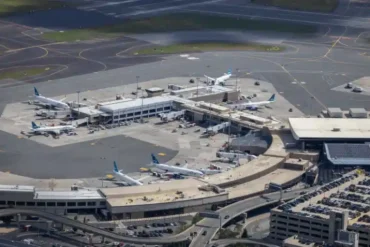
Buffalo Niagara International Airport (BUF) temporarily lost its ability to fuel aircraft for more than 14 hours on Monday, August 24, after a failure in the electrical circuit serving the airport’s fuel farm. The disruption did not mean Buffalo had run out of aviation fuel. Instead, a technical failure prevented fuel from being transferred normally from the airport’s storage and distribution system to aircraft.
According to a Notice to Air Missions (NOTAM), airport fuel was listed as unavailable from approximately 2:30 AM until 4:00 PM local time. During that window, airlines operating from Buffalo had to account for the temporary loss of normal fueling capability. Some flights reportedly required alternative refueling arrangements, while others were diverted, but the airport itself remained operational.
The incident highlighted an important distinction in airport operations: an airport can have an adequate supply of aviation fuel and still be unable to provide it to aircraft. In Buffalo’s case, the problem was concentrated in the infrastructure responsible for moving fuel, rather than a shortage of the fuel itself.

What Caused the Buffalo Airport Fuel Disruption?
The failure centered on the electrical circuit system supporting Buffalo’s fuel farm. Emergency repair work began late Sunday and continued into Monday as crews worked to restore the equipment needed for normal aircraft fueling.
The Niagara Frontier Transportation Authority (NFTA), which operates Buffalo Niagara International Airport, emphasized that aviation fuel remained available. The difficulty was that the system could not transfer that fuel to aircraft through its normal infrastructure. This distinction became particularly important as reports circulated online suggesting that the airport had experienced a fuel shortage.
The technical problem created a temporary operational restriction rather than a complete airport shutdown. Aircraft arriving with enough fuel could continue their journeys, while departures requiring additional fuel had to be evaluated individually. Airlines therefore had to consider fuel levels, route requirements, aircraft performance, and available alternatives before each affected departure.

Some Buffalo Flights Needed Alternative Fuel Stops
The most visible impact was felt by flights that needed to refuel before departure. Local reporting indicated that some aircraft stopped at other airports for fuel, while other flights were diverted as airlines adjusted their operations around the temporary restriction.
Importantly, Buffalo’s runways remained open and normal airport activity continued. The fuel-system failure did not automatically prevent aircraft from landing or taking off. Instead, it introduced an additional operational constraint that individual airlines had to manage.
By early Monday afternoon, the airport’s flight information showed only two diverted flights, illustrating that the overall impact was more limited than some early social-media reports suggested. Many flights continued operating normally because their aircraft either carried sufficient fuel or had already been supplied elsewhere.
For passengers, however, the consequences could vary considerably. An aircraft with adequate fuel could potentially depart without a major change, while another aircraft requiring additional fuel might need a stop at a different airport. That could introduce delays, schedule changes, or additional operational complexity for later flights.
Why a Fuel System Failure Can Disrupt Airlines
Commercial aircraft operate under carefully calculated fuel requirements, making reliable airport fueling infrastructure essential. Airlines do not simply add fuel whenever convenient. Fuel planning considers the planned route, weather, alternate airports, holding requirements, aircraft weight, and regulatory reserves.
When a major airport temporarily cannot provide fuel, airlines may need to carry additional fuel from a previous airport or arrange a stop elsewhere. Carrying more fuel can itself affect aircraft weight and operating economics, while an additional refueling stop can consume valuable time and disrupt aircraft rotations.
This is why a localized infrastructure failure can have consequences beyond the fuel farm itself. An aircraft delayed in Buffalo can arrive late at its next destination, potentially affecting another scheduled flight using the same aircraft. Crews, gate assignments, connecting passengers, and airport slots can also become part of the operational equation.
NFTA Said Repairs Were Under Control
The NFTA characterized the situation as a temporary technical problem and said emergency crews were working to restore the fuel system. NFTA spokesperson Kelly Khatib also told local radio station WBEN that the situation was under control and that the airport remained in good condition while repairs continued.
The published NOTAM provided airlines with a defined period in which the fueling restriction was expected to remain in effect. That gave carriers an operational window in which to make contingency plans rather than dealing with an indefinite loss of fueling capability.
The episode also demonstrated why official information matters during airport disruptions. Claims that Buffalo had simply “run out of fuel” could give passengers a misleading impression of what was actually happening. Fuel was present; the delivery system was temporarily unavailable.
What Buffalo Travelers Needed to Know
Passengers traveling through Buffalo during the disruption were advised to check directly with their airlines for flight-specific information. The impact depended on the aircraft’s existing fuel load, its origin, destination, scheduled departure time, and the carrier’s contingency planning.
For some travelers, the failure may have produced little or no visible effect. For others, it could mean a delay, diversion, or unexpected refueling stop. That difference explains why an airport can remain open while individual flights experience significant operational changes.
The immediate priority was the completion of emergency repairs and the restoration of normal fueling service. If the electrical circuit failure remained isolated, Buffalo’s disruption was expected to be short-lived rather than a prolonged airport-wide shutdown. The incident nonetheless underscored the critical role of fuel infrastructure in modern aviation—and how a single failed circuit can temporarily complicate an entire network of carefully coordinated flights.