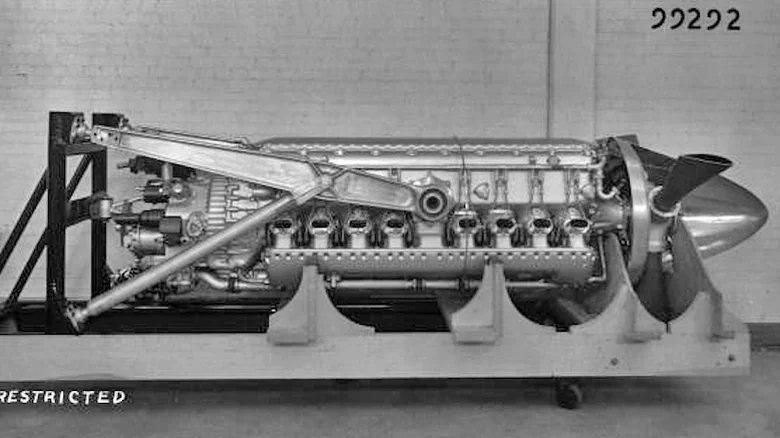
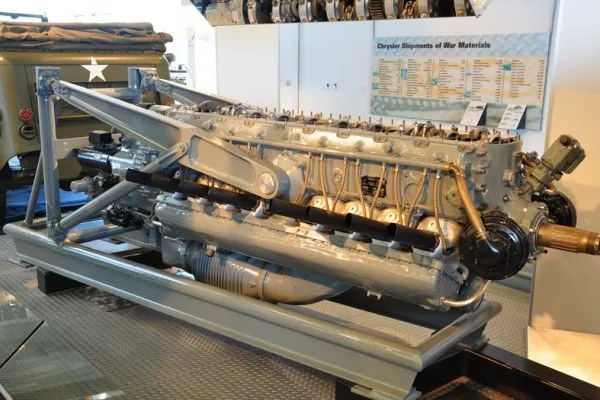
During the intense industrial mobilization of World War II, American automakers were compelled to channel their engineering expertise into military innovation. When the Army Air Corps sought a new high-speed pursuit aircraft engine and awarded a 1941 contract for what was designated the IV-2220, Chrysler responded with bold confidence. The project soon evolved into the XI-2220, a powerplant envisioned to deliver an extraordinary 2,000 horsepower directly at the output shaft while maintaining the lowest possible frontal profile and generating remarkably low vibration. Chrysler aimed for an engine that was not simply powerful, but aerodynamically respectful—a mechanical giant dressed in sleek proportions.
A V16 Architecture Ahead of Its Time
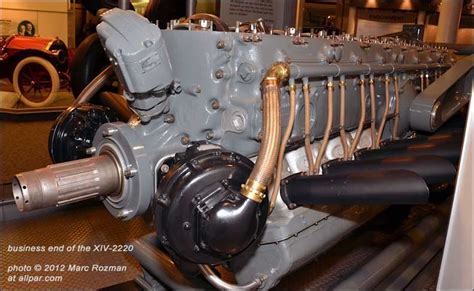
To achieve such formidable performance, Chrysler engineered a liquid-cooled V16 unlike anything the company had attempted before. The configuration effectively merged two inverted V8s, each feeding power toward a central drive that connected to a front-mounted gearbox. Every cylinder featured hemispherical combustion chambers—marking the birth of Chrysler’s first true HEMI architecture—and employed two valves to optimize airflow and combustion efficiency. With 139 cubic inches of displacement per cylinder, the collective engine displaced approximately 2,220 cubic inches. This immense volume, combined with a GE turbocharger and efficient intercoolers, enabled power surges reaching nearly 2,500 horsepower during takeoff.
Testing the Beast in the XP-47H Thunderbolt
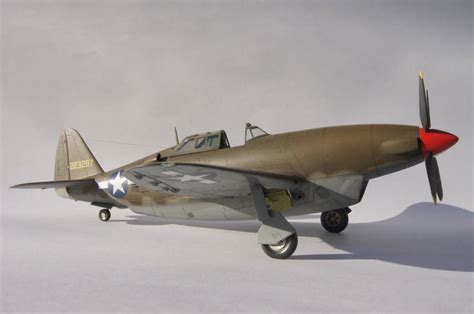
This monstrous engine did not remain confined to test benches. It took to the skies in two heavily modified Republic XP-47H variants of the P-47 Thunderbolt—a fighter already known for ruggedness and remarkable combat endurance. The XI-2220 granted these prototypes dramatically cleaner aerodynamics compared to the original radial-powered P-47 models. Its long, narrowed nose reduced drag, enabling the aircraft to slice through the air with a sleekness previously unimaginable for the Thunderbolt. The first successful flight occurred on July 27, 1945, and flight testing continued until October 31, 1945.
The Fate of the Engine in a Post-War, Jet-Age World
Despite its promising performance, history shifted against the XI-2220. By the time testing concluded, World War II had ended. The pressing need for advanced piston-engine fighters had evaporated, and aviation’s momentum had already begun pivoting toward jet propulsion. The new era demanded turbines, not supercharged piston giants, and even the most advanced propeller-driven engines found themselves technologically outpaced. Chrysler’s V16, once a beacon of wartime ingenuity, became a mechanical monument to the final chapter of piston-engine military aviation.
Survivors of a Forgotten Engineering Marvel
Only three examples of the XI-2220 survive today, each a silent testament to Chrysler’s wartime engineering audacity. One, bearing serial number D-000001, resides at the New England Air Museum in Windsor Locks, Connecticut. Another, serial number D-000005, is housed within the Chrysler Foundation in Auburn Hills, Michigan, preserving the company’s engineering legacy. The third, serial number D-000006, remains especially significant because it includes the firewall from the XP-47H in which it flew. This rare combination resides in the Smithsonian National Air & Space Museum in Chantilly, Virginia, where visitors can witness a genuine fragment of aviation’s transitional era.
A Legacy of Innovation Larger Than Its Lifespan
Although the Chrysler XI-2220 never reached mass production or wartime deployment, its existence signified a pinnacle of piston-engine ambition. It demonstrated how far American engineering could push conventional combustion technology, even as the jet age rapidly approached. The engine’s hemispherical chamber design would later echo across automotive history, becoming a signature of Chrysler muscle. Its story remains an evocative snapshot of the moment when piston power reached its ultimate evolutionary limit, just before aviation embraced the revolution of turbine thrust.”