The deployment and performance of the F-35A Lightning II in Alaska represent a focal point in the United States’ Arctic military strategy. As one of the most technologically sophisticated fifth-generation fighters, the F-35A is central to maintaining U.S. aerial dominance, especially along critical borders near Russia. However, a recent crash in early 2025 has drawn global scrutiny over the aircraft’s reliability, resilience in extreme climates, and future deployment viability.
2025 Eielson Air Force Base F-35A Crash
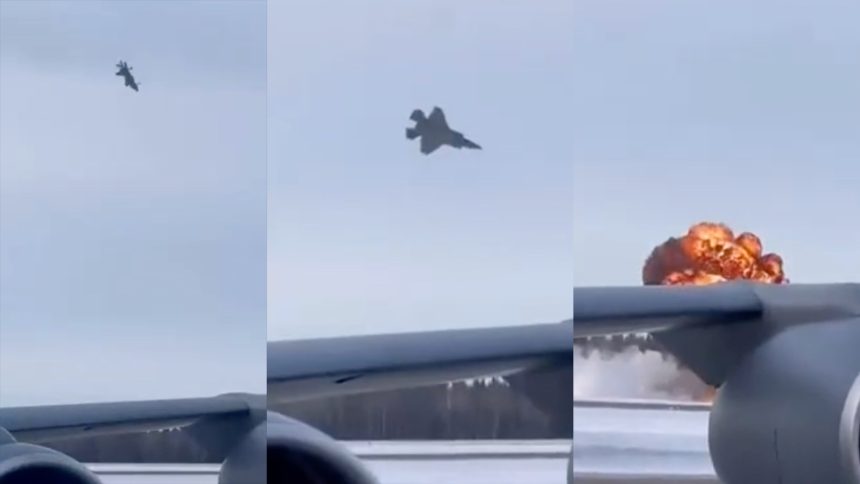
On January 28, 2025, a catastrophic incident occurred at Eielson Air Force Base, Alaska, when an F-35A fighter jet crashed during landing, triggering a massive explosion on the runway. Fortunately, the pilot ejected successfully and remains in stable condition.
Footage circulating on social media depicted the fighter spinning uncontrollably upon descent before slamming into the runway, resulting in a fiery explosion. The event, while tragic, highlights broader concerns surrounding the operational robustness of the F-35 platform, especially in extreme Arctic environments.
This incident marked the third F-35 crash within a single year:
- May 2024: An F-35A crashed in New Mexico.
- September 2023: An F-35B crashed in South Carolina.
These incidents have intensified scrutiny from both U.S. Congress and international partners, raising serious concerns about the aircraft’s operational reliability and prompting a deeper investigation into systemic flaws.
Investigated Causes and Technical Analysis
Multiple contributing factors are currently under investigation regarding the 2025 Eielson crash. These include:
Extreme Arctic Climate
Alaska’s sub-zero winter temperatures, frequently plunging below -34°C, exert significant stress on military aviation technology. While the F-35 program underwent environmental certification, past issues—like a 2018 battery malfunction due to low temperatures—suggest that further adaptation is needed. The cold may impact avionics, sensors, and materials, leading to performance degradation.
Complex Avionics and Sensor Fusion
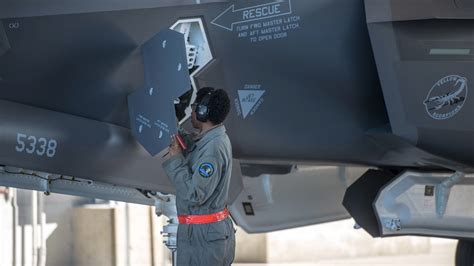
The F-35’s advanced cockpit interface and sensor fusion systems, while revolutionary, introduce layers of complexity that can hinder rapid decision-making in emergency scenarios. In the 2023 South Carolina crash, adverse weather interfered with the pilot’s helmet-mounted display, causing misinterpretation of data.
These digital systems, although powerful, must operate flawlessly under extreme weather stress—a condition not always guaranteed in Alaska’s Arctic terrain.
Pilot-Related Factors
Human error remains a possible factor. Rapid shifts in runway wind patterns, inadequate visibility, or split-second misjudgments during critical moments of approach are being considered. The U.S. Air Force continues to evaluate flight data recorders, wreckage, and weather logs to isolate the exact cause.
Strategic Military Value of Alaska
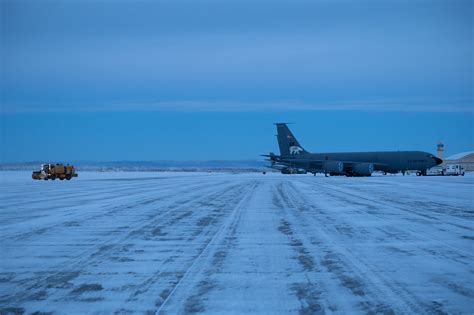
Alaska is more than a logistical location—it is a strategic command post for U.S. Arctic operations. The state houses:
- 54 F-35A jets at Eielson AFB
- Two squadrons of F-22 Raptors at Joint Base Elmendorf-Richardson
Geopolitical Significance
Alaska lies adjacent to Russia’s Far East, placing it in proximity to regions of rising tension. The state’s Air Defense Identification Zone (ADIZ) is one of the earliest and most active in the U.S., acting as the first line of detection and deterrence against potential incursions into North American airspace.
Arctic Warfare Adaptability
While the F-35A remains the cornerstone of U.S. fifth-generation air power, its performance in Arctic operations has been mixed. Comparatively, the Russian MiG-31, with its steel-alloy fuselage and triple-beam design, has demonstrated superior high-altitude stability in polar missions. This underscores the technological challenges the U.S. faces in adapting stealth platforms for low-stratosphere, cold-weather combat.
Technical Specifications and Aircraft Variants
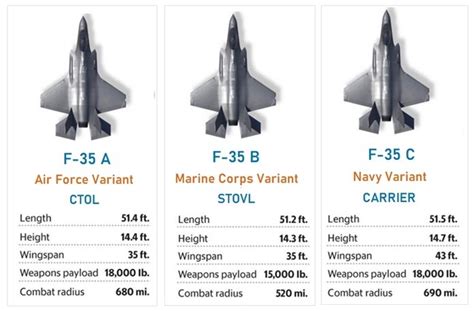
The F-35 program, spearheaded by Lockheed Martin, features three main variants:
- F-35A: Conventional takeoff and landing (CTOL) for airbases like Eielson. Armed with an internal 25mm cannon.
- F-35B: Short Takeoff and Vertical Landing (STOVL), designed for amphibious assault ships.
- F-35C: Carrier-based variant with foldable wings and enhanced fuel range for naval operations.
Each model addresses unique mission profiles, but only the F-35A is actively deployed in Arctic conditions, making its performance data especially critical.
Rising Concerns Over Reliability and Costs
Despite its unmatched stealth capabilities, the F-35 faces intense scrutiny due to its:
- High acquisition cost: An F-35A unit costs approximately $82.5 million.
- Massive program budget: The overall lifecycle cost is projected at $1.7 trillion.
- Operational mishaps: Frequent mechanical failures, from engine faults to peeling stealth coatings, continue to raise doubts among U.S. lawmakers.
In 2025, the U.S. Congress paused the delivery of 20 new F-35s, citing the need for technical reassessment. Lockheed Martin has been directed to propose reliability enhancements, emphasizing modular upgrades and software revisions.

Global Implications and Competitive Pressure
Erosion of Allied Confidence
The growing crash statistics of the F-35 program have alarmed international stakeholders. Nations such as the United Kingdom and Italy, who operate the F-35B, have demanded stronger support mechanisms, logistical assurances, and field repair capabilities.
Geopolitical Technology Race
While the F-35 continues to dominate in terms of international sales and interoperability, its accident rate undermines credibility. Conversely: China’s J-20 and Russia’s Su-57 have maintained zero publicly reported crashes as of early 2025. Although these records may lack transparency, they pressure the U.S. to accelerate development of sixth-generation aircraft, such as the Next Generation Air Dominance (NGAD) platform.
Crash Investigations and Future Actions
Following the Alaska crash, the U.S. Air Force initiated a comprehensive investigation involving the analysis of black box flight data, a forensic review of the wreckage components, and detailed meteorological reconstructions from the time of the incident to determine the exact sequence of events and contributing factors.
Meanwhile, Lockheed Martin received a $238 million contract to secure long-lead materials for the 20th production lot, indicating continued program investment despite setbacks.
Deployment schedules may see short-term revisions, but Alaska remains irreplaceable within the U.S. Northern Command’s Arctic strategy.
Conclusion: A Balancing Act of Power, Cost, and Environment
The F-35’s journey in Alaska exemplifies the intersection of cutting-edge aerospace engineering and geopolitical reality. While the aircraft’s stealth, lethality, and sensor fusion are unparalleled, it must overcome operational weaknesses—particularly in Arctic environments—to justify its strategic centrality and financial scale.
Rebuilding trust—both domestically and among international allies—will require a combination of transparent incident analyses, accelerated reliability upgrades, and context-specific engineering adaptations designed to enhance the F-35’s operational resilience across diverse and extreme environments.
As the U.S. navigates a multipolar threat landscape, the Arctic will remain a litmus test for air superiority, and the F-35’s evolution in Alaska may well shape the future doctrine of northern hemisphere air combat.
Frequently Asked Questions
What caused the F-35A crash in Alaska in 2025?
Preliminary findings suggest a combination of extreme cold-weather stress, potential avionics malfunction, and possible pilot miscalculation during landing. A full investigation is ongoing, with data from flight recorders and environmental logs under review.
Why is Alaska strategically important for F-35 deployment?
Alaska’s geographic location places it adjacent to Russia and within the Arctic Circle, making it an ideal platform for early detection, rapid response, and deterrence operations. Its harsh environment also serves as a proving ground for fifth-generation aircraft under real-world polar conditions.
Are other countries reconsidering their F-35 programs?
Yes. Nations like the UK, Italy, and Japan have expressed concern about accident rates and maintenance demands, prompting calls for enhanced logistical support and software resilience from Lockheed Martin and the U.S. Department of Defense.