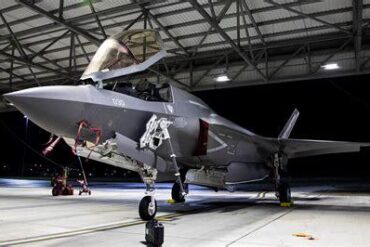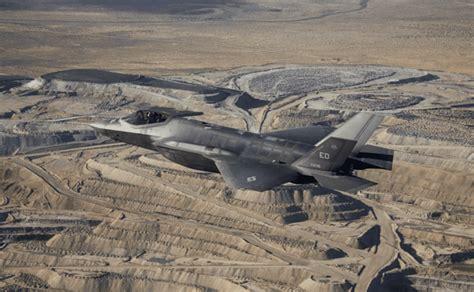
The Lockheed Martin F-35 Lightning II was designed to dominate 21st-century warfare. Built as a stealthy multirole aircraft capable of fusing sensor data, coordinating allied forces, and surviving in heavily contested airspace, the fighter became the centerpiece of American and allied airpower strategy. For years, military planners described the jet as more than a fighter aircraft. It was supposed to function as an airborne battlefield network, capable of seeing threats first, sharing information instantly, and striking targets before enemies even realized they had been detected.
That vision now faces one of the most serious setbacks in the history of the Joint Strike Fighter program.
The Pentagon’s latest operational testing assessment concluded that the F-35’s Technology Refresh 3 upgrade package, commonly known as TR-3, remained “predominantly unusable” through much of 2025. The finding was extraordinary because TR-3 is not a minor enhancement or optional software patch. It is the foundation upon which the aircraft’s future combat capabilities depend. Without it, the F-35 cannot fully access the highly anticipated Block 4 modernization package that was supposed to transform the aircraft into a far more capable combat platform.
Instead of unlocking the next generation of radar performance, electronic warfare, infrared tracking, and weapons integration, the upgrade has become synonymous with crashes, instability, overheating, delayed testing, and restricted operational capability.
The consequences are now rippling through the Pentagon, allied militaries, and the global defense industry.
After years of escalating costs and delays, confidence in the F-35 program is beginning to erode at precisely the moment the United States is racing toward sixth-generation air combat systems.
Why TR-3 Was Supposed To Transform The F-35
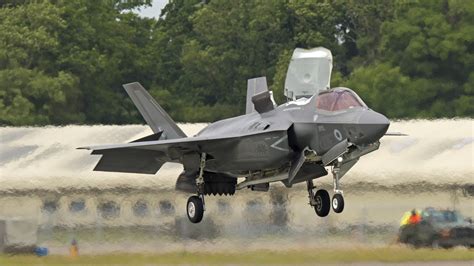
The F-35’s TR-3 package was intended to deliver a massive leap in computational performance. Lockheed Martin promised roughly 37 times more processing power and 20 times more memory compared to previous configurations. Those improvements were not merely technical statistics designed for marketing presentations. They were absolutely essential to enabling the aircraft’s future mission set.
Modern combat aircraft generate astonishing amounts of information every second. Radar systems scan for targets, infrared sensors monitor heat signatures, electronic warfare systems analyze hostile emissions, and onboard computers fuse all that data into a coherent tactical picture for the pilot. The F-35 was designed around this concept of sensor fusion more aggressively than any previous fighter aircraft.
TR-3 was supposed to supercharge that architecture.
The upgrade introduced a new integrated core processor intended to support advanced algorithms, expanded weapons integration, and future autonomous coordination with Collaborative Combat Aircraft, often referred to as loyal wingman drones. In theory, the F-35 would become the digital “quarterback” of future air combat operations.
Instead, the Pentagon found itself dealing with a software environment so unstable that operational testing repeatedly stalled.
The Director of Operational Test and Evaluation report for 2025 described severe software instability, chronic system crashes, and deficiencies that prevented meaningful combat capability assessments. According to the evaluation, the TR-3 software builds delivered throughout 2025 failed to provide any meaningful new combat capability.
That detail alone was devastating.
The entire purpose of the TR-3 rollout was to unlock Block 4 capabilities. Yet after years of development, the aircraft fleet effectively gained no usable combat enhancement.
The Block 4 Modernization Program Is Stuck In Limbo
The F-35’s Block 4 modernization effort has been marketed as the aircraft’s defining evolution. Without Block 4, the fighter risks becoming technologically stagnant in a rapidly changing battlespace increasingly shaped by artificial intelligence, advanced electronic warfare, and long-range precision weapons.
Block 4 was expected to improve nearly every critical mission area.
The aircraft’s AN/APG-85 active electronically scanned array radar would gain enhanced tracking performance and compatibility with a broader family of precision-guided weapons. Future hypersonic weapon integration was also tied to the upgrade path. Simultaneously, the Next Generation Distributed Aperture System would provide dramatically improved infrared detection and targeting capability.
These systems already physically exist on the aircraft. The hardware is largely installed.
The problem is software.
Without stable TR-3 functionality, the advanced features remain locked behind a dysfunctional operating environment.
This has created a surreal situation where one of the world’s most expensive fighter aircraft fleets possesses sophisticated onboard hardware that cannot reliably perform its intended mission.
Pilots can still fly and train. Basic operational functions remain intact. But many of the advanced capabilities that justified the aircraft’s enormous cost remain unavailable or heavily restricted.
Critical Combat Systems Are Being Severely Limited
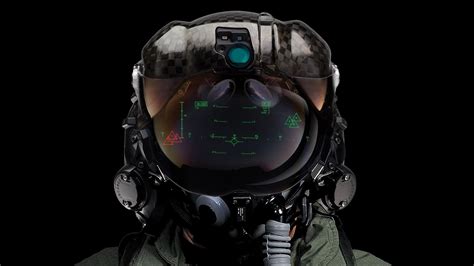
Among the most heavily affected systems is the F-35’s famed Distributed Aperture System, or DAS. This 360-degree electro-optical network allows pilots to effectively “see through” the aircraft using helmet-mounted displays. The system stitches together multiple sensor feeds into a seamless panoramic battlefield image.
The concept sounded revolutionary because it was revolutionary.
Pilots wearing the HMDS III helmet could theoretically detect missile launches, identify aircraft, and maintain full situational awareness without relying solely on cockpit displays. The aircraft itself would become an extension of the pilot’s senses.
Yet reports indicate the DAS system has suffered freezing, flagging, and reliability problems under TR-3. In practice, the technology has remained limited largely to training functionality rather than dependable frontline combat operations.
Electronic warfare capabilities have also suffered significantly.
The AN/ASQ-239 electronic warfare suite was designed to function as a digital shield capable of detecting hostile emissions, jamming enemy sensors, and enabling advanced electronic attack operations. Instead, current limitations reportedly reduce the system to comparatively basic threat warning functionality.
That matters enormously in modern warfare.
The ability to dominate the electromagnetic spectrum increasingly determines survival in contested environments. A stealth fighter unable to fully exploit its electronic warfare architecture loses one of its most important battlefield advantages.
Weapons integration delays are creating additional headaches. One particularly notable setback involves the “sidekick” missile rack upgrade intended to increase internal air-to-air missile capacity from four to six AIM-120 missiles while preserving stealth characteristics.
That upgrade remains unavailable because of TR-3 limitations.
At a time when China continues rapidly expanding advanced air combat capabilities and Russia adapts lessons from modern conflict environments, the inability to fully operationalize core combat enhancements raises serious strategic concerns.
The Pentagon Is Quietly Redirecting Attention Toward NGAD
The fallout from the TR-3 debacle is already reshaping American defense priorities.
The United States Air Force originally planned to procure 48 F-35A fighters during fiscal year 2026. That number has now reportedly been cut in half to just 24 aircraft.
Such a dramatic reduction signals far more than temporary budgetary caution.
It reflects growing frustration within parts of the Pentagon regarding the program’s reliability, affordability, and long-term strategic value. Critics increasingly argue that continued investment risks becoming a classic sunk-cost dilemma, particularly as next-generation technologies begin emerging.
At the same time, funding for the Next Generation Air Dominance program is expanding aggressively. Estimates suggest the Pentagon could allocate as much as $5 billion toward NGAD development efforts.
That shift is revealing.
The Air Force increasingly appears determined to avoid repeating some of the structural problems that have haunted the F-35 program for decades. Rather than relying on a single universal aircraft concept serving multiple branches and international customers, NGAD is being approached with greater modularity and flexibility.
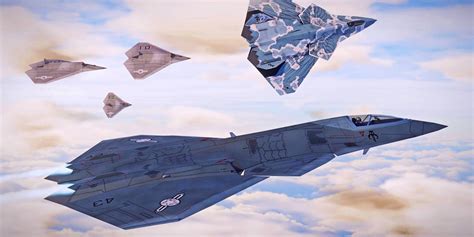
Boeing’s selection for the F-47 sixth-generation fighter contract accelerated this transition dramatically.
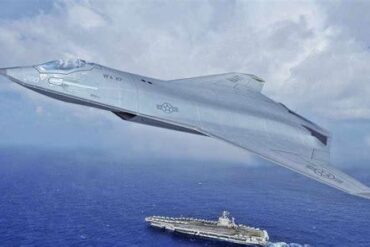
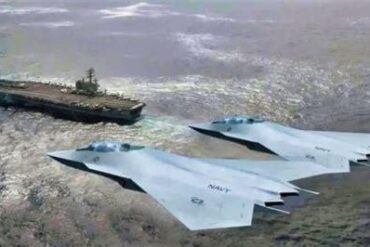
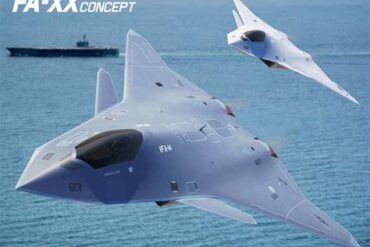
Although the first operational sixth-generation platform is not expected before 2030, Pentagon planners increasingly view NGAD and autonomous drone teaming concepts as the future center of American air superiority strategy.
Ironically, the F-35 itself was supposed to serve as the bridge into that future.
Instead, its software modernization crisis is helping justify the urgency of moving beyond it.
Allied Nations Are Losing Confidence In The Program
The F-35 is not merely an American fighter aircraft. It is the backbone of allied tactical aviation planning across Europe, the Middle East, and the Pacific.
More than 1,300 aircraft have already been produced for the United States and partner nations. Entire air force modernization strategies were built around the assumption that the F-35 would mature into a stable and dominant combat platform.
That assumption is now under strain.
Countries including Canada, Switzerland, and the United Kingdom have reportedly begun reassessing procurement plans. Proposed sales to Spain and Portugal have also faced increasing uncertainty.
The problem extends beyond delayed deliveries.
Several allied nations retired older fourth-generation aircraft earlier than planned in anticipation of full F-35 operational capability. As TR-3 delays continue, those countries now face readiness gaps, training complications, and fleet management crises.
Denmark provides one of the clearest examples.
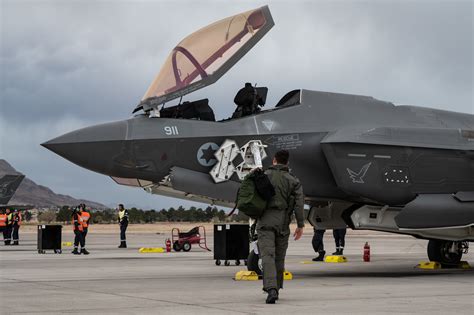
After donating older F-16 aircraft to Ukraine, Copenhagen expected incoming F-35s to assume frontline responsibilities. Instead, delays and training limitations forced Denmark to recall older TR-2 aircraft from Luke Air Force Base simply to maintain baseline pilot readiness.
Belgium faces similar complications.
The wider geopolitical implications are substantial because NATO modernization timelines increasingly depend upon synchronized fifth-generation interoperability. Delays affecting one nation can create cascading operational complications across coalition planning structures.
Israel Has Managed The Crisis Differently
Among global F-35 operators, Israel occupies a unique position.
The Israeli Air Force operates the F-35I Adir variant under special agreements allowing extensive domestic modification of software and hardware systems. That flexibility has provided Israel with options unavailable to most partner nations.
Rather than fully embracing unstable TR-3 builds, Israeli operators reportedly continue relying heavily on older TR-2 software configurations because of their greater stability and predictability.
Israel has also adapted tactically.
Instead of waiting for delayed software integrations tied to newer weapons systems, the Israeli Air Force has reportedly employed legacy ordnance configurations using external hardpoints when necessary. While that approach sacrifices some stealth advantages, it preserves operational flexibility during ongoing modernization uncertainty.
This pragmatic workaround highlights a broader truth about the F-35 crisis.
The aircraft itself is not fundamentally incapable. Its stealth design, sensor architecture, and flight performance remain formidable. The problem lies in the increasingly overwhelming software complexity required to fully unlock its intended capabilities.
Modern combat aircraft are no longer merely machines. They are flying software ecosystems.
And software failure can cripple even the most advanced hardware platform on Earth.
The Engine Problem Could Become Even More Serious
Beyond software instability, another looming issue threatens the long-term viability of the Block 4 roadmap.
The F-35’s Pratt & Whitney F135 engine already struggles with the immense electrical and thermal demands generated by advanced onboard systems. As more processing power and sensor functionality are added, heat management becomes increasingly difficult.
The originally planned Engine Core Upgrade was intended to solve much of this problem by improving cooling capacity and power generation.
That upgrade has now been delayed until at least 2030.
The implications are severe because advanced avionics, radar systems, and electronic warfare suites generate enormous heat loads. Without sufficient cooling infrastructure, performance degradation and reliability problems become increasingly difficult to manage.
Reports already indicate overheating concerns linked to the new integrated core processor.
This creates a dangerous cycle. More advanced software requires more processing capability. More processing capability demands more electrical power and cooling. Yet delays to engine modernization prevent the aircraft from comfortably supporting the very systems it was designed to carry.
The result is a fighter aircraft caught between ambitious technological evolution and practical engineering limitations.
The F-35 Still Matters — But The Aura Of Invincibility Is Gone
Despite the growing criticism, writing off the F-35 entirely would be a mistake.
Even in its constrained state, the aircraft remains one of the most sophisticated stealth fighters ever fielded. Its low observable design, sensor fusion architecture, and multinational interoperability still provide advantages that many competitors cannot replicate easily.
However, the mythology surrounding the aircraft has changed dramatically.
For years, the F-35 was marketed as the definitive future of air combat — an aircraft capable of seamlessly integrating advanced weapons, electronic warfare dominance, network-centric operations, and battlefield command functions into a single platform.
TR-3 exposed how fragile that vision can become when software complexity spirals beyond manageable limits.
The Pentagon now hopes fully combat-capable software will arrive later in 2026, while broader Block 4 modernization goals may not be fully achieved until 2031 or later.
That timeline matters because threats are evolving now.
China’s military modernization continues accelerating. Autonomous combat drones are maturing rapidly. Electronic warfare environments are becoming more hostile and sophisticated every year.
The F-35 was supposed to lead this new era.
Instead, America’s flagship fighter program now finds itself fighting a different kind of war entirely — a battle against software instability, procurement fatigue, and rising doubts about whether the world’s most expensive fighter program can truly deliver on its revolutionary promises.