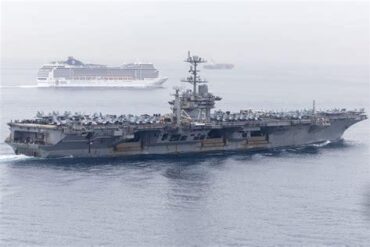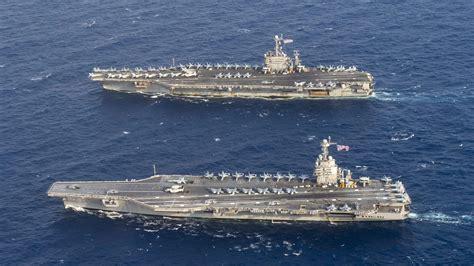
An aircraft carrier is often described as a floating city, but that metaphor understates the reality. A nuclear-powered supercarrier like the USS Harry S. Truman can operate for years without refueling its reactor, yet its 5,000-plus crew members still need food, aviation fuel, spare parts, precision-guided munitions, and even morale-boosting comforts. Steel and uranium may keep the ship moving, but logistics keeps it alive. And delivering that lifeline in open ocean is among the most hazardous peacetime and wartime evolutions the U.S. Navy performs.
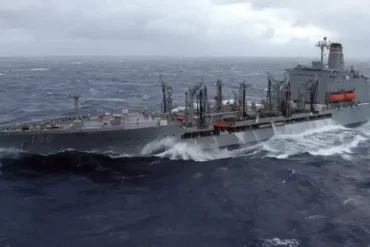
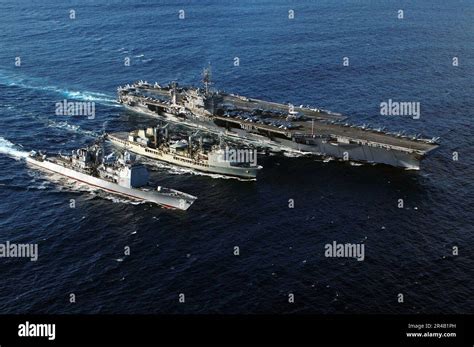
The procedure is known as underway replenishment, and when conducted alongside, it relies heavily on the Standard Tensioned Replenishment Alongside Method (STREAM). Two enormous ships—each displacing tens of thousands of tons—must steam parallel at the same speed, often between 12 and 16 knots, separated by roughly 100 to 300 feet. That distance sounds generous until you imagine both vessels pitching and rolling in heaving seas, linked by steel cables and fuel hoses under massive tension.
Physics is the invisible adversary. As the hulls push through water, they generate hydrodynamic forces that create suction between them. The closer they are, the more that effect intensifies. A one-degree deviation in heading can become catastrophic, pulling hull toward hull with brutal inevitability. Ram-tensioner systems automatically adjust cable tension, but no automation can repeal Newton’s laws. Helm officers must anticipate, correct, and sometimes counterintuitively steer away from safety to maintain equilibrium.
Even with emergency breakaway procedures drilled into muscle memory, accidents happen. In 2026, the USS Truxtun, an Arleigh Burke-class destroyer, collided with the fleet oiler USNS Supply during a replenishment evolution. The damage was contained and injuries limited, but the incident underscored how razor-thin the margin for error truly is. A destroyer is roughly a tenth the displacement of a Nimitz-class carrier. Scale that risk upward and the potential consequences become sobering. Steel hulls do not forgive misjudgment.
Hydrodynamic Forces and Human Precision in Close-Quarters Maneuvering
Resupplying a carrier is less like docking and more like synchronized choreography on a moving, unstable stage. Both ships must match course and speed precisely. The carrier’s massive island superstructure catches wind differently than the sleeker oiler. Ocean swells may strike from oblique angles, shifting momentum unpredictably. Each bridge team continuously recalculates vectors—wind, current, swell direction—making micro-adjustments that determine whether the operation remains routine or spirals into emergency.
Meanwhile, sailors on deck work within feet of taut lines capable of snapping with lethal force. A parted highline can recoil like a steel whip, severing equipment or limbs. Fuel hoses—pumping thousands of gallons per minute—are suspended above open water. A rupture risks fire, pollution, and immediate operational jeopardy. Every sailor understands the paradox: the routine nature of the task is precisely what makes complacency deadly.
Bad Weather Multiplies the Risk
The ocean does not schedule its storms around fleet logistics. Rain reduces visibility. Fog obscures visual references essential for maintaining parallel alignment. Crosswinds strain highlines already under tension. In heavy seas, the vertical movement of each ship may become asynchronous—one cresting while the other dips—introducing slack and surge forces that stress equipment beyond design tolerances.
Hurricanes force postponement, but lesser storms often do not. Operational necessity can override comfort. As climate volatility increases the frequency of extreme weather events, the statistical exposure to hazardous replenishment conditions grows. Steel decks become slick. Commands are harder to hear. The choreography tightens further.
Resupplying Under Fire: Combat Logistics in the Red Sea
Danger escalates dramatically in contested waters. From late 2024 into mid-2025, the USS Harry S. Truman operated in the Red Sea while regional tensions simmered. During that deployment, the fleet replenishment oiler USNS Arctic conducted resupply missions reportedly under threat from Houthi missiles and one-way attack drones.
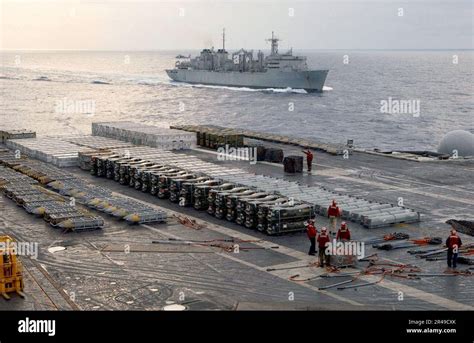
Imagine the layered tension: two massive ships lashed together by cables, maneuvering delicately, while radar screens scan for inbound threats. Defensive systems remain on alert. Flight decks prepare for possible launches. Yet fuel still flows. Pallets of ordnance, spare aircraft parts, and even ice cream are transferred across the gap. Combat power depends on it. The headlines often celebrate the carrier, but the replenishment ship is the unsung artery sustaining the fleet’s heartbeat.
Aerial Resupply: Helicopters and Emerging Drones
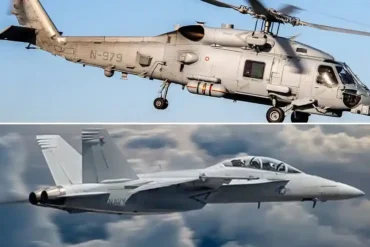
To reduce some risks, the Navy supplements alongside replenishment with vertical delivery. Helicopters such as the MH-60S Seahawk sling-load cargo directly onto carrier decks, bypassing the need for ships to steam in close formation. These aircraft can transport several thousand pounds per sortie, providing flexibility when sea states complicate highline transfers.
Yet aviation introduces its own hazards. High winds buffet rotorcraft. Salt spray corrodes components. Low visibility challenges pilots already navigating a pitching flight deck. The margin for error remains thin; the variables merely change dimension.
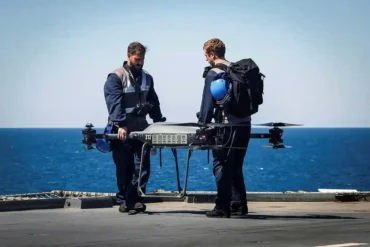
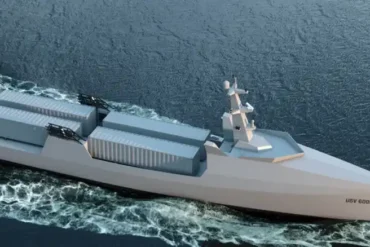
Unmanned systems promise incremental safety improvements. The Navy has begun exploring autonomous refueling technologies, particularly for unmanned surface vehicles. In 2025, Louisville-based Stratom secured a contract to develop automated refueling solutions for smaller unmanned craft. The leap from servicing drones to servicing supercarriers is immense, but every technological evolution begins with modest prototypes. Autonomy may one day reduce the number of sailors exposed to tensioned cables and snapping steel.
Why the Risk Is Unavoidable
Aircraft carriers project power precisely because they can remain forward-deployed for extended periods. That endurance depends not on glamour but on logistics. Every sortie launched, every radar sweep conducted, every meal served depends on fuel, ammunition, and supplies delivered in open ocean. The danger is not an unfortunate side effect; it is the cost of sustained maritime presence.
Resupplying a Navy aircraft carrier at sea is dangerous because it compresses massive physical forces, unpredictable environmental conditions, and strategic urgency into a narrow corridor of error. It demands engineering mastery and human precision operating in harmony against the entropy of wind and wave. The choreography looks calm from afar. Up close, it is a contest with physics itself—and physics never blinks.