Modern commercial aviation is built on global interdependence. Aircraft may carry a national flag, but the systems that keep them flying rely on an international web of manufacturers, software providers, insurers, leasing firms, and maintenance organizations. The moment sanctions sever those connections, an airline can begin collapsing long before its aircraft stop leaving the runway. In many cases, the destruction happens quietly at first: a missing spare part, a canceled insurance policy, a delayed maintenance check. Then the failures compound.
The aviation industry is uniquely vulnerable because airlines operate on narrow margins and depend on uninterrupted technical support. Unlike many industries, carriers cannot simply stockpile years of supplies and continue normally. Modern aircraft require certified replacement components, continuous software updates, engine overhauls, navigation database subscriptions, and access to highly specialized repair facilities. Once sanctions disrupt those systems, fleets age rapidly, reliability declines, schedules shrink, and passengers lose confidence.
For governments imposing sanctions, aviation has become one of the most effective pressure points available. Restricting air transport isolates economies, damages tourism, weakens business connectivity, and creates visible symbols of national decline. For the airlines caught in the middle, the result is often operational paralysis.
The global aviation system has witnessed this pattern repeatedly over the last six decades, from Cuba’s Cold War isolation to Iran’s decades-long struggle for fleet survival and Belarus’s sudden disconnection from European airspace. Each case demonstrates how quickly modern airlines can unravel when international supply chains disappear.
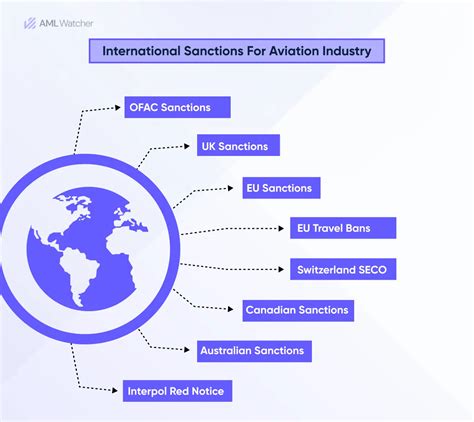
Why Aviation Sanctions Hit Airlines Faster Than Other Industries
Most passengers assume sanctions primarily block new aircraft purchases. In reality, the damage extends far deeper. A commercial jet is not a self-contained machine that can operate independently for decades. Every aircraft depends on a continuous stream of certified maintenance, spare parts, engineering inspections, and manufacturer support.
The United States holds enormous leverage in aviation because nearly every modern airliner contains significant American-made components. Even European-built Airbus aircraft rely heavily on US avionics, engines, and flight systems. Under American export regulations, aircraft containing more than ten percent US-origin components fall under US jurisdiction. That rule effectively gives Washington influence over much of the global commercial fleet.
The consequences are immediate once sanctions take effect. Leasing companies terminate contracts. Maintenance providers suspend support agreements. Insurance firms withdraw coverage. Aircraft manufacturers freeze spare-parts deliveries. Banks stop financing transactions involving sanctioned carriers. Even digital infrastructure becomes inaccessible, including navigation software updates required for regulatory compliance.
For airlines built around leased fleets, the danger is existential. Leasing dominates modern aviation because purchasing aircraft outright is extraordinarily expensive. Irish and American lessors control much of the global market, meaning sanctions can instantly strip carriers of aircraft they do not technically own.
When aircraft repossessions begin, airlines often respond through desperate measures. Grounded jets become spare-parts reservoirs. Maintenance schedules stretch beyond recommended limits. Engineers improvise repairs using salvaged components. Networks shrink to politically friendly destinations where sanctions enforcement is weaker. What remains is a shadow of a functioning airline industry.
Iran’s Endless Battle To Keep Aircraft Flying
No country better illustrates aviation under sanctions than Iran. For more than four decades, Iranian airlines have operated under some of the harshest aviation restrictions in modern history. The consequences are visible everywhere across the country’s fleet.
Iran Air, once one of the Middle East’s most prestigious carriers, now operates aircraft with an average age approaching thirty years. Some jets still flying entered service during the 1980s. Out of roughly 330 registered commercial aircraft in Iran, only around half remain consistently operational. Aircraft shortages have pushed fares sharply upward while reducing connectivity across a country of nearly 90 million people.
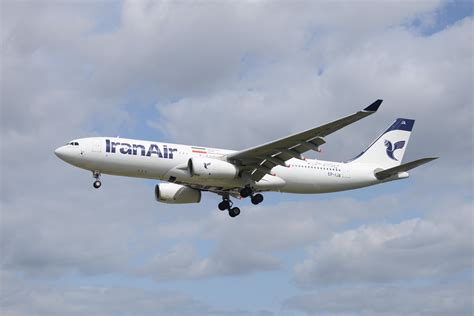
The problems extend far beyond old cabins or outdated interiors. Aging aircraft become increasingly difficult to maintain when sanctioned airlines cannot legally acquire certified replacement parts. Engine overhauls become logistical nightmares. Advanced avionics cannot receive official upgrades. Even basic consumable components become difficult to source.
Iran briefly appeared poised for recovery after the 2015 nuclear agreement temporarily eased sanctions. Iran Air announced massive fleet modernization plans, signing deals with Airbus for 118 aircraft and Boeing for 80 more. The agreements promised to transform one of the world’s oldest fleets into one of the region’s newest.
That revival collapsed almost immediately after the United States withdrew from the agreement in 2018. Deliveries stopped. Contracts were canceled. Billions of dollars in planned modernization evaporated overnight.
Private Iranian carrier Mahan Air pursued a far more aggressive survival strategy. Through complex international networks involving intermediaries and shell companies, the airline managed to acquire several Boeing 777s despite sanctions. Aircraft reportedly passed through multiple countries across Asia and Oceania before eventually reaching Iran. The operation demonstrated how sanctioned carriers increasingly rely on opaque global supply chains to sustain operations.
Yet even these workarounds cannot fully restore a functioning aviation ecosystem. Sanctions transformed Iranian aviation into a permanent exercise in improvisation, where survival replaces growth and maintenance becomes a constant crisis-management operation.
Belarus And The Collapse Of An International Network
While Iran’s sanctions evolved gradually over decades, Belarus experienced aviation isolation almost overnight. The turning point came in 2021 after a Ryanair flight traveling between two European Union countries was forcibly diverted to Minsk. The international backlash was swift and severe.
European authorities banned Belarusian airlines from EU airspace almost immediately. Western leasing companies moved to reclaim aircraft. International partnerships collapsed. The country’s primary airline, Belavia, suddenly lost access to much of Europe, its most valuable market.
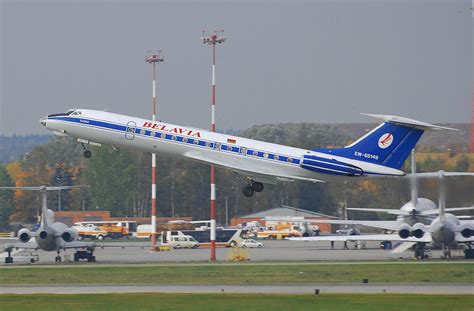
Unlike Iran, Belarus had operated a relatively modern fleet integrated into European aviation networks. That dependence became a weakness once sanctions severed those relationships. Routes disappeared overnight. Aircraft utilization collapsed. Revenue evaporated.
The broader economic consequences spread rapidly beyond aviation itself. Tourism declined sharply. Business travel contracted. International connectivity weakened across the entire country. The airline industry became both a target and a casualty of geopolitical conflict.
Belarus demonstrated how aviation sanctions have evolved into highly coordinated international tools capable of isolating nations within days rather than years. In a hyperconnected aviation market, exclusion from major airspace regions can cripple carriers faster than direct military conflict.
How Sanctions Slowly Erase National Airlines
The destruction caused by aviation sanctions rarely happens through one dramatic event. Instead, airlines deteriorate piece by piece. Fleets shrink gradually as aircraft become too expensive or impossible to maintain. Delays increase. Reliability falls. Passengers lose trust. Revenue weakens. Skilled workers leave for foreign carriers offering stability and better pay.
Eventually, airlines enter a vicious cycle where operational decline accelerates financial collapse. Older aircraft consume more fuel, require more maintenance, and suffer more breakdowns. Reduced route networks generate less revenue, making modernization impossible. International isolation further reduces passenger demand.
For national carriers, the damage is also symbolic. Airlines often represent national prestige and global connectivity. Watching a once-respected airline reduced to a handful of aging aircraft reflects far more than commercial decline. It signals a country being pushed to the margins of the global economy.
The modern airline industry depends on cooperation across borders more than perhaps any other civilian sector. Sanctions exploit that dependence with devastating efficiency. Aircraft may survive for decades physically, but airlines cut off from the international system slowly lose the ability to function as modern carriers.
In the end, sanctions do not merely punish airlines. They dismantle the entire ecosystem required to keep aviation alive.