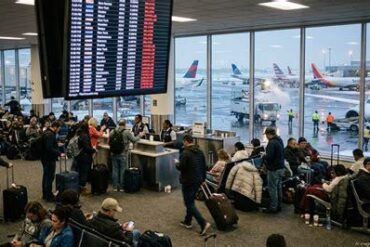
Severe weather tore through major U.S. airports on Wednesday, crippling operations at Houston, Dallas, Fort Lauderdale, and Tampa just as the summer travel season reached peak intensity. More than 1,200 flights were delayed or canceled, affecting tens of thousands of passengers and disrupting schedules across nearly every major airline operating in the region.
Houston Bush Intercontinental: United Airlines Hub Severely Impacted by Rainfall
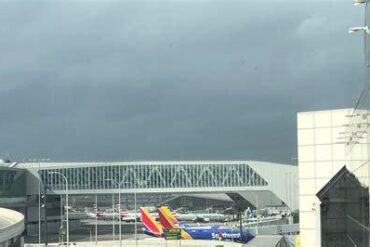
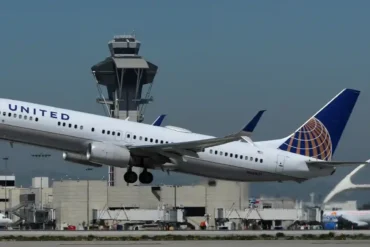
At Houston Bush Intercontinental Airport (IAH), torrential rain and low cloud ceilings triggered widespread delays and cancellations. United Airlines, which operates a primary hub at IAH, bore the brunt of the disruptions. The airline alone recorded 224 delays and 17 cancellations, while its regional partner CommuteAir was forced to cancel 20 flights and delay 45 more, impacting nearly half of its daily operations.
Other regional carriers like Mesa Airlines, SkyWest, and Envoy Air also faced heavy setbacks. Mesa canceled 16 flights and delayed 79 — a stunning 41% of its schedule. SkyWest faced 33 delays and 12 cancellations, while even long-haul international operators like Emirates, Air Canada, EVA Air, and Cathay Pacific experienced schedule disruptions, albeit at a lower frequency.
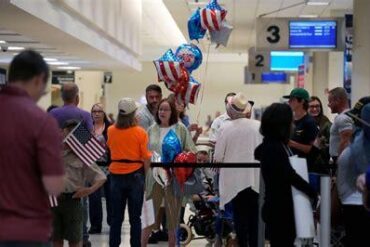
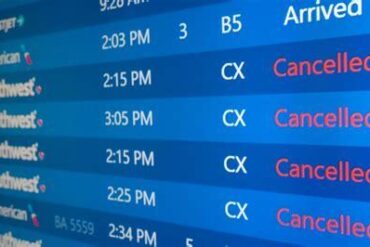
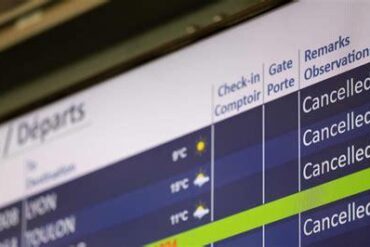
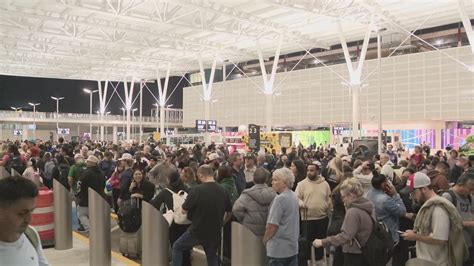
Inside the terminal, travelers encountered gridlocked lines, limited rebooking options, and confused ground staff dealing with dynamic gate changes. Digital boards lit up with red alerts, announcing delay after delay as the storm front stagnated above.
Dallas-Fort Worth International: American Airlines Suffers Deep Operational Setback
Moving north, Dallas-Fort Worth International Airport (DFW) experienced a similar weather-induced crisis. By day’s end, 518 flights were delayed and 43 canceled, largely impacting American Airlines, the airport’s anchor tenant. American’s mainline flights logged 264 delays and 33 cancellations, while its regional arm Envoy Air saw 109 delays and 6 cancellations.
The domino effect of these disruptions quickly extended across the national airspace. Connecting flights from DFW to the East Coast and Midwest were hit hard, forcing re-routes and compounding network-wide inefficiencies.
Several other carriers suffered as well:
- JetBlue and Key Lime Air faced 100% delay rates for all scheduled flights.
- Mesa Airlines, though smaller in DFW, saw 50% of its operations canceled.
- Even well-prepared legacy players like Alaska Airlines, Delta, and United recorded delays, along with international carriers like Lufthansa, Air France, and Cathay Pacific.
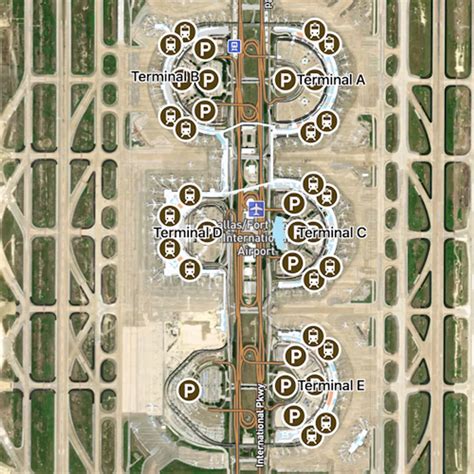
As heavy clouds hovered over North Texas, American’s vast ground network scrambled to reposition aircraft and reassign crews. Check-in desks buckled under passenger overflow, and boarding gates echoed with loudspeaker announcements of rolling delays.
Fort Lauderdale-Hollywood International: Silver Airways Shuts Down Entire Operation
Fort Lauderdale-Hollywood International Airport (FLL) saw 31 cancellations and 56 delays, with Silver Airways suffering a total operational collapse. All 28 of Silver’s flights were canceled, a rare and devastating full-day halt. As a smaller regional player, the airline lacked flexibility to recover quickly.
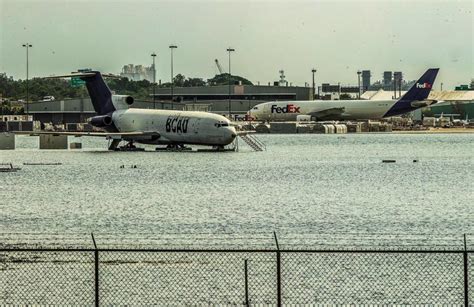
Southwest Airlines, a major carrier at FLL, recorded 10 delays and 2 cancellations. Spirit Airlines and JetBlue, both with a substantial Fort Lauderdale presence, managed to avoid cancellations but still posted 13 and 9 delays respectively. Other affected carriers included:
- Bahamasair and Avianca, each reporting isolated delays,
- Air Transat, Azul Brazilian Airlines, and United Airlines.
Passengers arriving at dawn for morning departures were met with grounded aircraft and little information. Some flights that managed to take off faced reroutes around storm cells, leading to further delays and midair course corrections.
Tampa International: Summer Thunderstorms Compound Florida Travel Woes
Further up Florida’s Gulf Coast, Tampa International Airport (TPA) was similarly battered by afternoon thunderstorms, resulting in 29 cancellations and 46 delays. Once again, Silver Airways suspended its entire flight schedule, canceling all 20 planned services.

Southwest Airlines, another major player in Tampa, registered 22 delays and 3 cancellations. United, American, and Frontier were not spared, with varying levels of operational interference. AeroMéxico and Alaska Airlines also posted isolated delays as air traffic control implemented temporary holding patterns during lightning activity.
With runway visibility reduced to near-zero at times, pilots were instructed to remain grounded even during minor weather breaks, contributing to cascading delays throughout the day.
National Impact: Over 1,200 Flights Disrupted in One Day
In total, more than 1,200 flights were affected nationwide on Wednesday as these four airports—Houston, Dallas, Fort Lauderdale, and Tampa—became epicenters of weather-induced travel chaos. The cascading delays and cancellations rippled far beyond the local airports, affecting flights across the U.S., from New York to Los Angeles.
Social media platforms were inundated with passenger frustration. Travelers posted photos of crowded terminals, empty food courts, and sleeping areas repurposed for overnight stays. Customer service desks became flashpoints, as weary travelers jockeyed for limited rebooking opportunities amid already full summer schedules.
The Federal Aviation Administration (FAA) issued multiple ground delay advisories throughout the day, and warned of further disruptions if the storm systems continue moving slowly across the Southeast.
Airlines Scramble for Recovery as Outlook Remains Unstable
With summer travel nearing capacity and few buffer aircraft or crews available, airlines now face a difficult recovery trajectory. Repositioning planes, adjusting flight crews to adhere to FAA duty limitations, and responding to passenger compensation requests are all underway.
United, American, Delta, Air Canada, and other major carriers are in emergency coordination mode, aiming to stabilize operations before the upcoming weekend surge. But industry insiders warn that continued weather instability, combined with infrastructure strain, could trigger rolling delays across the country in the coming days.
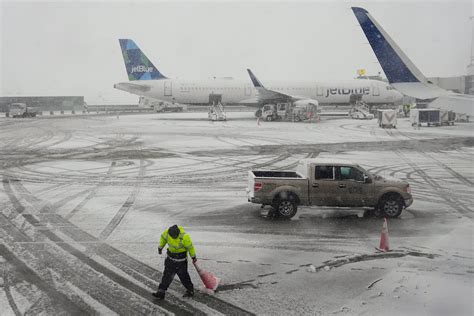
Meteorologists from the National Weather Service have forecast additional scattered thunderstorms and pockets of heavy rainfall through the weekend for parts of Texas, Louisiana, Florida, and Georgia. This volatile system, lingering across the Gulf states, threatens to prolong the travel chaos.
A Perfect Storm: Why This Disruption Was So Severe
The intensity of Wednesday’s disruptions stemmed from several compounding factors:
- Peak summer travel demand meant flights were already operating near capacity, leaving little room to rebook.
- Storms stalled directly over major airline hubs, not peripheral airports, creating choke points in the national air network.
- Feeder airlines, which operate critical regional connections, were heavily impacted, breaking linkages in the broader scheduling chain.
- Limited recovery bandwidth from ground crews, many of whom are still dealing with post-pandemic staffing shortages.
For travelers, this serves as a stark reminder that even with perfect planning, weather remains the biggest wildcard in aviation.
What Passengers Should Do Moving Forward
Travelers affected by the ongoing delays and cancellations are advised to:
- Regularly monitor flight status via airline apps or FAA advisories,
- Arrive earlier than usual to navigate congested terminals,
- Stay flexible and prepare for unexpected overnight stays or reroutes,
- Use airline chat and apps to rebook instead of waiting in long customer service lines.
With no immediate end to the adverse weather in sight, passengers traveling through the South or Southeast over the next 72 hours should brace for continued volatility.
As the skies slowly clear, the true scale of the operational impact will become clearer, but for now, the nation’s aviation system remains under pressure—tested by rain, thunder, and the immense weight of summer travel demand.