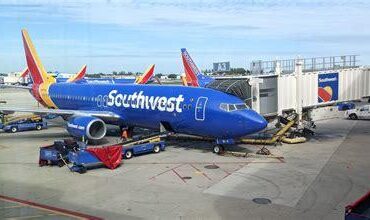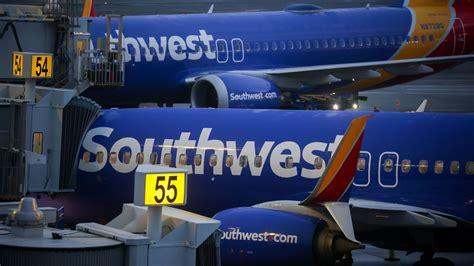
A routine domestic flight turned into a highly publicized customer service controversy after a musician alleged that Southwest Airlines wrongfully denied her boarding over a guitar that she says had traveled with her for years without incident. The confrontation, which unfolded at Sacramento International Airport (SMF), escalated to the point where law enforcement officers were called, sparking widespread criticism across social media and renewed scrutiny of airline policies regarding musical instruments.
For travelers who rely on instruments for work, consistency in airline policies is essential. In this case, Samantha Henson argues that the airline’s own published guidelines supported her position, making the events that followed even more difficult to understand.
After years of flying with the same guitar case, Henson arrived at Sacramento expecting an uneventful trip to Portland International Airport (PDX). Instead, she found herself caught in an increasingly tense dispute with a gate agent who insisted that the instrument could not be brought onboard.
The disagreement rapidly escalated beyond a standard baggage discussion. According to videos later shared publicly, the exchange evolved into an emotionally charged confrontation that left many viewers questioning whether company policy had been properly applied.

Southwest Airlines Policy Appears to Support Cabin Transport
One of the most striking aspects of the incident is the apparent contradiction between what occurred at the boarding gate and Southwest Airlines’ publicly available baggage policy.
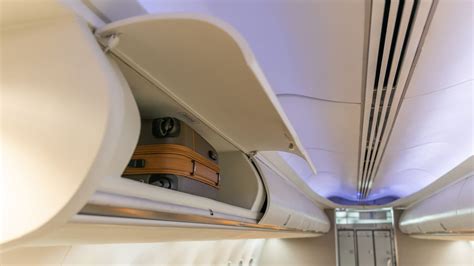
The airline explains that while standard carry-on dimensions are limited to 24 x 16 x 10 inches, musical instruments exceeding those measurements may still be transported inside the aircraft cabin if they can be safely stored in an overhead compartment or beneath a seat once passengers have boarded. Customers also retain the option of checking instruments or purchasing an additional seat for larger, valuable items.
Henson maintains that her guitar bag had accompanied her on numerous Southwest flights over the past five years without creating any issues. That travel history made the sudden refusal particularly surprising, especially because she believed the instrument qualified under the airline’s published guidance.
Rather than reaching a compromise regarding available overhead space, the disagreement reportedly became increasingly confrontational before boarding could be completed.
Viral Video Captures Heated Exchange With Gate Agent
Video footage shared by Henson on Instagram quickly attracted widespread attention, largely because of the tone adopted during the interaction.
The gate agent can be heard telling Henson, “You should be ashamed of yourself,” while insisting that the guitar would not be permitted onto the aircraft. The employee also warned that additional attempts to board later departures could result in further delays, suggesting Henson might not travel until the following day.
For many viewers, the exchange shifted the discussion beyond baggage rules and toward customer service standards. Instead of focusing solely on whether the guitar met carry-on requirements, attention centered on the manner in which the disagreement was handled.
The incident rapidly spread across social media platforms, where musicians and frequent travelers shared similar stories involving inconsistent enforcement of airline policies.
Police Become Involved After Second Boarding Attempt
The confrontation did not end after the initial denied boarding.
Following her first unsuccessful attempt to fly, Henson reportedly contacted Southwest customer service and says she was informed that compensation and travel assistance would be considered after she completed her journey. Believing the misunderstanding had been addressed, she returned several hours later to board another scheduled departure.
According to Henson, the same gate agent approached her before boarding even began, allegedly informing her that she would not be allowed onto that flight either.
Shortly afterward, deputies from the Sacramento County Sheriff’s Office arrived. Henson said she was told that the gate agent had claimed she had interfered with the boarding process for other passengers—an allegation she disputes.
Although police involvement did not result in criminal accusations against Henson, the experience significantly intensified what had begun as a disagreement over carry-on luggage.
Missing a Wedding and Spending the Night at the Airport
The prolonged dispute had consequences extending well beyond travel inconvenience.
Henson was attempting to reach Portland in time for a friend’s wedding the following day. As repeated boarding attempts failed, she ultimately spent the night inside the airport before finally securing transportation on a flight the next morning.
What could have been resolved within minutes instead became a delay lasting nearly an entire day, creating additional stress, uncertainty, and disruption to her personal plans.
The story resonated with travelers because it demonstrated how inconsistent policy enforcement can produce cascading consequences that extend far beyond a missed flight.
Musicians Say the Problem Is Larger Than One Passenger
Following the video’s viral success, numerous professional and amateur musicians commented that similar experiences have occurred across multiple airlines.
Transporting guitars, violins, cellos, and other valuable instruments has long presented challenges because aircraft overhead storage varies by aircraft type, passenger load, and crew discretion. While most airlines publish formal policies governing musical instruments, travelers frequently report inconsistent interpretation from airport to airport.
Henson herself acknowledged that she had previously flown successfully with the same guitar but added that conflicts involving instruments are unfortunately familiar within the music community.
That broader context transformed the incident from an isolated customer complaint into part of a wider discussion regarding consistency, employee training, and clear communication.
Southwest Loyalty Tested After High-Profile Incident
The controversy has proven especially significant because Henson describes herself as a loyal Southwest customer. She has reportedly held a Rapid Rewards credit card since 2021 and regularly chose the airline for domestic travel.
Despite that history, she later admitted feeling anxious about an upcoming return flight, expressing uncertainty about whether she wanted to continue flying with the carrier following the confrontation.
Equally notable is her claim that, despite the widespread attention generated by the incident, she had not yet received a satisfactory resolution or direct outreach addressing her experience.
For Southwest, the episode illustrates how a single gate interaction can quickly evolve into a national public relations challenge. In today’s social media environment, customer encounters are no longer confined to airport terminals. Videos can spread globally within hours, prompting intense public scrutiny of employee conduct and corporate policy alike.
Whether additional action follows, the incident has already reignited debate over how airlines balance operational discretion with consistent policy enforcement. For musicians whose instruments are both valuable possessions and professional necessities, the expectation remains simple: if published rules permit an item onboard, passengers expect those rules to be applied fairly, consistently, and respectfully.