In 2025, the Airbus A350-1000 has become a flagship of long-haul mobility, shaping the world’s most competitive intercontinental corridors. Across continents, carriers deploy the aircraft not merely for capacity or efficiency, but to reinforce global business ties, nurture diaspora links, elevate tourism flows, and strengthen nation-spanning transport lifelines. The world’s busiest A350-1000 routes reveal a detailed portrait of modern aviation demand—one where economic centers, cultural anchors, and geographically remote regions are bound together by a new generation of aircraft capable of flying further, cleaner, and more comfortably than their predecessors.
These top ten routes demonstrate the scale at which the aircraft now operates: transatlantic power corridors, transpacific bridges, Gulf-to-Asia leisure chains, and the uniquely vast domestic long-haul market that only France possesses. Each carries its own economic rhythms and human stories, but together they reveal a shared truth: the A350-1000 has become the vessel of global mobility for 2025.
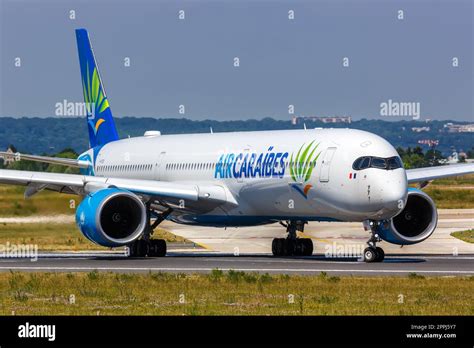
Pointe-à-Pitre–Paris Orly: A French Domestic Giant Built on Cultural and Economic Bonds
The corridor between Pointe-à-Pitre (PTP) in Guadeloupe and Paris Orly (ORY) stands as a powerful reminder that long-haul aviation is not always international. With 927 flights in 2025, Air Caraïbes uses the A350-1000 to sustain one of the world’s longest domestic sectors—linking Caribbean identity with mainland French institutions, universities, and economic life.
This route thrives on shear consistency. Demand remains stable even in months when tourism would ordinarily dip. Families commute between France and the islands, students move to the mainland for academic cycles, and public-sector workers rotate through contracts in health, education, and administration. The approximately 4,198-mile (6,756-km) journey forms a connective artery of the French Republic stretching across oceans and cultures.
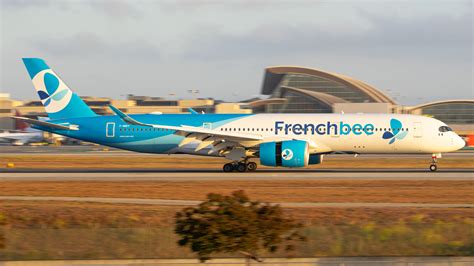
Paris Orly–Réunion: A Long-Haul Lifeline Toward the Indian Ocean
Clocking 933 flights in 2025, the Orly–Réunion corridor links Paris to one of its most distant territories, covering 5,802 miles (9,330 km). Operated largely by French bee, the route is not simply a leisure shuttle—it is a lifeline carrying essential passenger movements ranging from students and medical travelers to families returning home across an enormous geographical divide.
The A350-1000’s efficiency is critical here. Réunion’s mountainous terrain and reliance on air connectivity make consistent capacity essential, and the aircraft’s long-range performance allows carriers to manage this lengthy domestic mission with security, comfort, and attractive economics. The route’s high frequency underscores the depth of connection between the Indian Ocean and the French mainland.
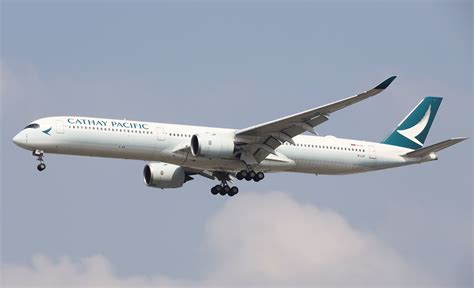
Hong Kong–New York: Cathay Pacific’s Ultra-Long-Haul East–West Bridge
With 945 flights in 2025, the link between Hong Kong (HKG) and New York JFK serves as one of the world’s iconic East-West aviation corridors. Stretching 8,070 miles (12,990 km), it brings together two global capitals of finance, diplomacy, and academic exchange.
Passengers boarding in Hong Kong step into one of Asia’s most architecturally refined airports before embarking toward the energetic pulse of New York—a shift not just in geography but in rhythm and cultural intensity. The A350-1000’s quiet cabin and improved pressurization offer meaningful comfort on a sector that routinely exceeds 15 hours, giving Cathay Pacific a competitive advantage in a market where many passengers travel regularly for business, education, or family commitments.
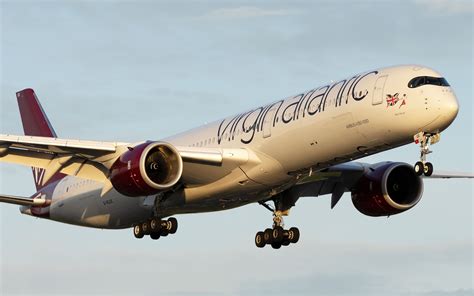
London–New Delhi: Virgin Atlantic’s Vibrant Transcontinental Connector
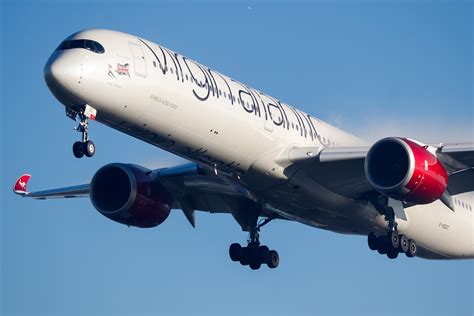
Virgin Atlantic’s 1,032 A350-1000 flights in 2025 on the London Heathrow (LHR)–New Delhi (DEL) route reflect a corridor powered by deep cultural ties and growing economic exchange. Spanning 4,190 miles (6,743 km), the route connects two population centers where heritage, business, and academic mobility intersect.
Passengers include multinational executives linking London’s financial engine with India’s technology sector, families conducting intercontinental reunions, and students moving between major academic hubs. Virgin Atlantic’s choice of the A350-1000 reinforces its strategy to pair modern cabin comfort with a premium-leaning service identity, essential on a route where returning customers appreciate consistency.
Miami–Doha: Qatar Airways’ Expansion Into the Americas
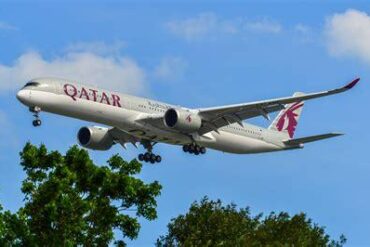
The Miami (MIA)–Doha (DOH) link saw 1,190 flights in 2025, illustrating Qatar Airways’ steady push deeper into the Americas. Miami’s emergence as an international gateway—bridging the US with Latin America, Europe, and transoceanic leisure markets—has made it a strategic entry point for Gulf carriers seeking diversified demand.
Covering 7,700 miles (12,392 km), the route brings together two very different worlds: Miami’s dynamic, tropical, rhythm-driven metropolis and Doha’s calm, curated airport environment built for seamless global connections. Here, the A350-1000 becomes a nexus for travelers bound for South Asia, Africa, or onward Gulf destinations, delivering reliability on one of Qatar Airways’ longest and most strategically important US routes.

Doha–Denpasar: A Premium Gateway to Bali’s Endless Allure
The Doha–Denpasar (Bali) corridor reached 1,107 A350-1000 flights in 2025, linking the architectural precision of Hamad International Airport with the lush, sensory world of Indonesia’s most beloved island.
Bali’s tourism appeal is remarkably stable. Unlike strongly seasonal destinations, it welcomes honeymooners, wellness travelers, surfers, spiritual visitors, and luxury clientele year-round. Qatar Airways harnesses this demand with a product designed to make the vacation begin in the sky, using the A350-1000’s spacious cabin as an extension of Bali’s promise of calm and escape.
Doha–Dallas/Fort Worth: A Power Corridor Linking Global Industries
With 1,150 flights in 2025, the Doha–Dallas/Fort Worth (DFW) route embodies a different aviation logic: one driven not by tourism but by concentrated economic influence. Its 7,930-mile (12,757-km) span connects Texas—one of the United States’ most economically diverse regions—with Doha’s position as a commercial and mobility hub for the Middle East, Africa, and South Asia.
A substantial portion of travelers belong to sectors where global collaboration is routine: energy, aviation, technology, and medical industries. In many cases, these passengers are frequent flyers who value reliability and rest more than novelty, making the A350-1000 an indispensable tool in maintaining a competitive advantage.
Tokyo–New York: Japan Airlines’ Transpacific Flagship
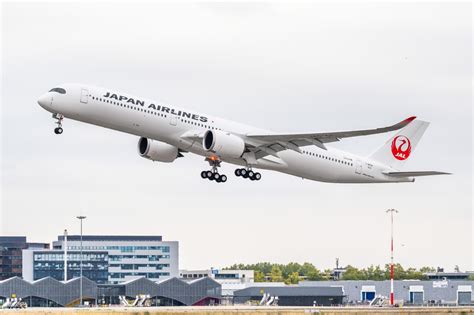
The Tokyo Haneda (HND)–New York JFK link recorded 1,460 flights in 2025, demonstrating the strength of transpacific demand as Japan continues to solidify its position as both a tourism titan and a business nexus.
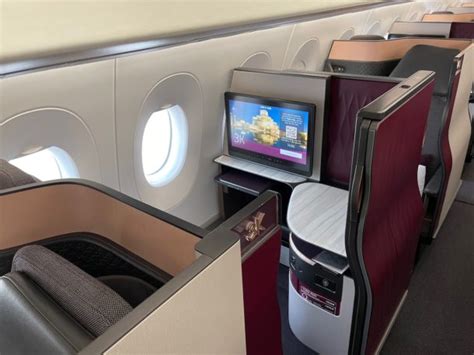
At 6,773 miles (10,900 km), the journey remains central to corporate strategy, academic exchanges, and cultural mobility. Japan Airlines deploys the A350-1000 to elevate service coherence across a market where passengers deeply value both punctuality and quiet refinement. The aircraft’s cabin design aligns closely with JAL’s minimalist, hospitality-driven philosophy, giving it a competitive edge on a route where customer loyalty is often earned through comfort and consistency rather than price alone.
Hong Kong–Toronto: A Transpacific Anchor for Families and Corporations Alike
With 1,628 flights, the Hong Kong–Toronto Pearson (YYZ) route stands as one of the busiest transpacific services operated by the A350-1000. At 7,809 miles (12,567 km), the sector is long enough to demand the aircraft’s full performance capabilities, and diverse enough to fill its cabins across seasons.
The corridor thrives on layered demand: multinational corporations maintaining supply chains between Asia and North America, families with deep cross-Pacific roots, and one of the world’s largest communities of international students. Cathay Pacific uses the A350-1000 to capture this mix with an aircraft that optimizes fuel burn while supporting a sophisticated premium cabin that resonates with high-yield travelers.
London–New York: The Defining A350-1000 Route of 2025
With 2,572 combined flights, the London Heathrow–New York JFK corridor is the busiest A350-1000 route in the world for 2025. Virgin Atlantic alone operates 1,285 flights westbound and 1,287 eastbound, forming a transatlantic bridge that remains aviation’s most prestigious long-haul battleground.
This route is more than an economic artery—it is a cultural and diplomatic superhighway linking two cities that sit at the center of global finance, media, law, and academia. The competition here is fierce. Airlines compete as much with product identity and premium-cabin refinement as with frequency. The A350-1000 provides Virgin Atlantic a decisive tool, offering a whisper-quiet cabin, contemporary design, and operational efficiency that align with the expectations of frequent transatlantic travelers.
Business travelers, entertainment industry professionals, global entrepreneurs, and families rely on this corridor as routinely as others use domestic shuttles. The route’s dominance reflects the enduring relevance of in-person collaboration across the Atlantic and reaffirms London–New York as aviation’s most iconic long-haul connection.