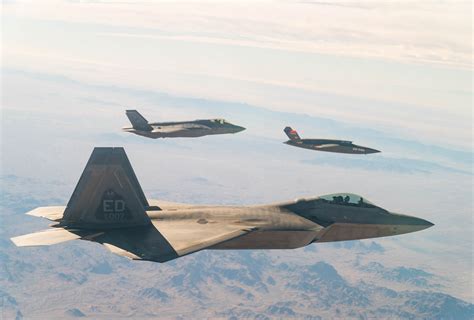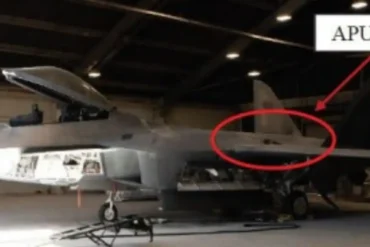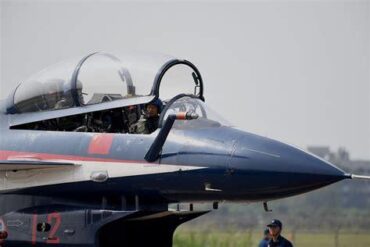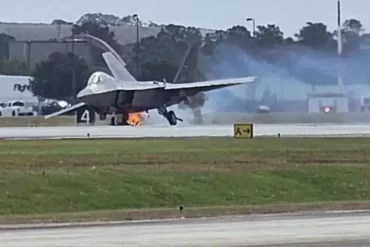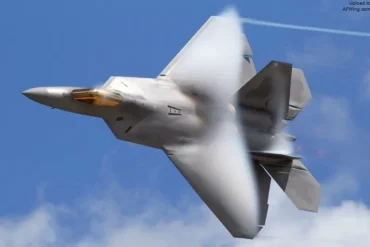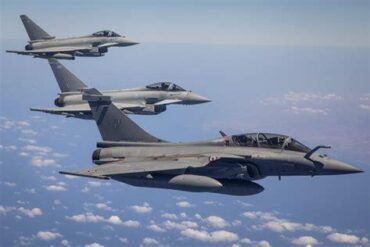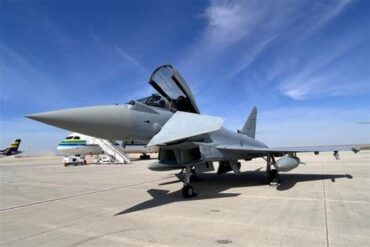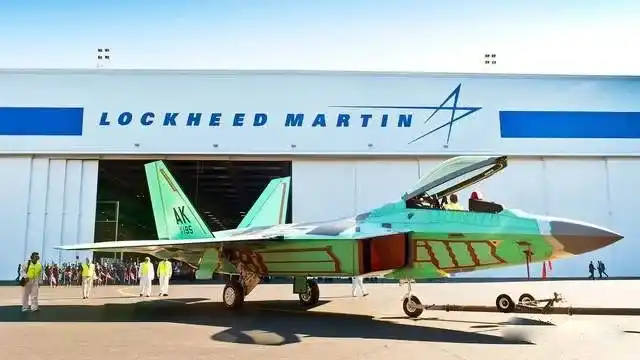
The F-22 Raptor, the world’s first operational fifth-generation stealth fighter, has remained exclusive to the United States Air Force (USAF) since its introduction. Despite interest from key allies such as Japan, Israel, and Australia, the U.S. government has consistently upheld an export prohibition on this advanced aircraft. The decision to block F-22 exports is based on a combination of legal, technological, economic, and strategic factors.
Legal and Technological Restrictions
U.S. Congressional Export Ban
One of the most significant barriers to the F-22’s export is a legal restriction imposed by the U.S. Congress. In 1998, the Defense Department Appropriations Act included a specific amendment that prohibited the sale of the F-22 to foreign nations. This legislative measure was designed to safeguard America’s military technology edge and prevent adversaries from acquiring its capabilities through third parties.
Highly Classified Technologies
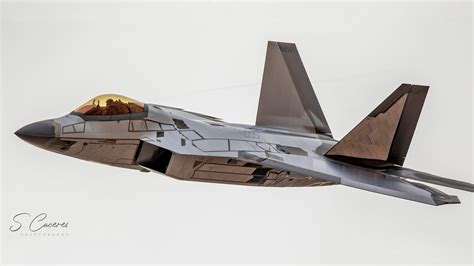
The F-22 Raptor incorporates cutting-edge technologies that remain classified and are critical to U.S. air superiority. These include:
- Stealth Coatings and Radar Cross-Section (RCS) Reduction: The F-22 features an advanced stealth design, making it nearly undetectable to enemy radar.
- AN/APG-77 Radar: This Active Electronically Scanned Array (AESA) radar can detect and track multiple targets at extreme distances.
- Thrust Vectoring Engines: Its Pratt & Whitney F119-PW-100 engines provide unparalleled maneuverability.
- Supercruise Capability: Unlike traditional fighters, the F-22 can sustain supersonic speeds without afterburners, enhancing its efficiency in combat.
These technologies give the U.S. military an edge, and exporting the F-22—even to trusted allies—would risk potential reverse engineering and technology leaks.
Economic Constraints: Production Line Closure and High Costs
Shutdown of the F-22 Production Line
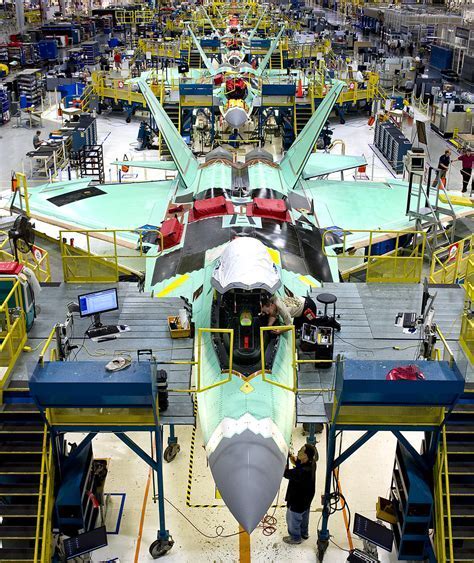
The Lockheed Martin F-22 production line was officially shut down in 2011 after the final unit was delivered to the USAF. Restarting production would be extremely costly due to:
- The need to reestablish the supply chain
- Rebuilding specialized manufacturing infrastructure
- Training a new workforce with expertise in stealth materials and avionics
A 2010 report estimated that restarting production for a limited export run (approximately 40 aircraft) would result in a unit cost of $2.59 billion per plane (adjusted to 2021 dollars), making it far more expensive than even the F-35 Lightning II.
Operating and Maintenance Costs
Beyond procurement, the F-22’s operating costs further diminish its feasibility for export. Compared to the F-35, the F-22 is significantly more expensive to operate:
- F-22 cost per flight hour: $68,000
- F-35 cost per flight hour: $36,000
Given the limited defense budgets of U.S. allies, many nations have opted for the F-35 program, which offers similar stealth capabilities at a lower cost.
Strategic Considerations and Geopolitical Ramifications
Exporting the F-22 Could Disrupt Global Military Balance
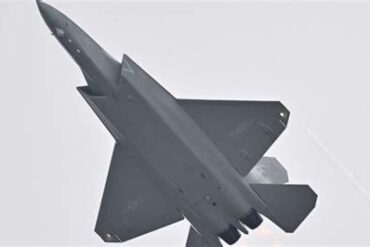
The U.S. defense strategy is heavily influenced by regional security dynamics. If the F-22 were exported to key allies such as Japan, it could trigger a regional arms race in Asia, particularly with nations like China and Russia developing their own fifth-generation fighters (J-20, Su-57). Similarly, providing the F-22 to Israel could alter Middle Eastern military parity.
Preference for the F-35 as a Multinational Platform
Instead of exporting the F-22, the U.S. has focused on international sales of the F-35, which serves a broader strategic purpose:
- Lower cost and scalable production
- Multi-role versatility (air-to-air, air-to-ground, electronic warfare)
- Interoperability among NATO and allied forces
The F-35’s open export policy has made it the preferred stealth aircraft for U.S. allies, effectively substituting the F-22 in coalition air forces.
Attempts to Revive the F-22 for Export
2020 Reports on Potential Israeli Acquisition
In 2020, reports surfaced suggesting that the U.S. was considering allowing Israel to purchase the F-22 due to its unique security concerns. However, multiple obstacles remained:
- Congressional approval was still required
- The production line remained closed
- The U.S. military prioritized Next-Generation Air Dominance (NGAD) over reviving the F-22
Ultimately, these barriers prevented any progress toward exporting the aircraft.
Future Prospects: Will the F-22 Ever Be Exported?
The likelihood of the F-22 being exported in the future is extremely low. With the U.S. Air Force shifting focus toward the sixth-generation fighter program (NGAD), the F-22 is gradually being phased out. Instead of reopening its production line, the Pentagon is allocating resources to develop the next evolution of air combat technology.
NGAD: The Next Evolution of Air Superiority
- Enhanced stealth and sensor fusion
- Artificial intelligence-assisted combat operations
- Unmanned and optionally manned configurations
With these advancements, the F-22’s role is expected to diminish, making any export increasingly unlikely.

Conclusion
The F-22 Raptor remains an exclusive asset of the U.S. Air Force, protected by legal barriers, technological secrecy, and strategic priorities. Despite interest from allied nations, the high cost of production and operation, as well as the shift toward the F-35 and NGAD, have made its export infeasible. While the F-22’s contributions to air superiority are undeniable, its future remains solely within U.S. military control.
FAQ
1. Why did the U.S. ban the export of the F-22?
The U.S. Congress passed a law in 1998 prohibiting the sale of the F-22 Raptor to foreign nations to prevent the leakage of classified stealth and avionics technologies.
2. Could the F-22 still be exported in the future?
It is highly unlikely due to the closure of its production line, the high cost of restarting manufacturing, and the U.S. Air Force’s focus on developing sixth-generation aircraft.
3. How does the F-22 compare to the F-35 in terms of exportability?
The F-35 Lightning II is designed for multinational deployment, with over a dozen allied countries purchasing it. In contrast, the F-22 remains a specialized air superiority fighter reserved for U.S. forces.