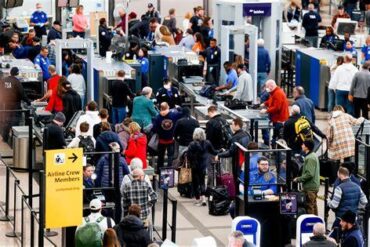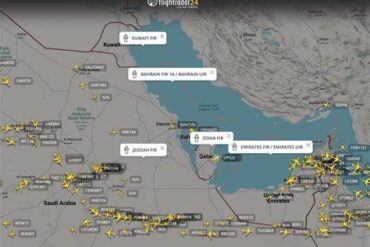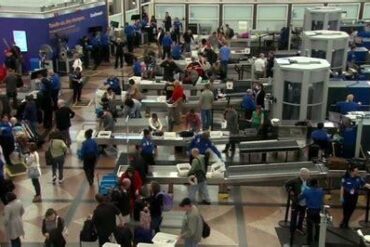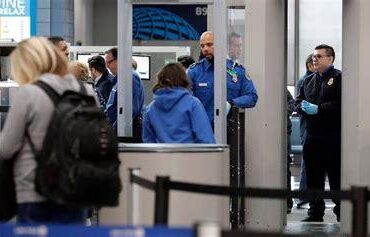
The United States aviation system is facing a mounting operational emergency as TSA staffing shortages intensify under the weight of a prolonged government shutdown. Across the country, airports are struggling to maintain basic security operations as thousands of Transportation Security Administration officers—working without pay—are increasingly choosing not to report for duty. What began as a political stalemate has rapidly evolved into a national infrastructure risk, with consequences that ripple far beyond delayed flights and long security lines.
At the heart of the issue lies a fundamental contradiction: TSA officers are classified as essential federal employees, meaning they are legally required to work during a shutdown. Yet without pay, the financial strain has become unsustainable for many. The result is a sharp spike in absenteeism, exposing vulnerabilities in a system that depends heavily on consistent staffing to function safely and efficiently.
As the week progresses, even with weather-related disruptions easing, the situation has worsened rather than improved. Airports that typically operate with precision are now grappling with operational uncertainty, and the longer the shutdown continues, the more fragile the system becomes.
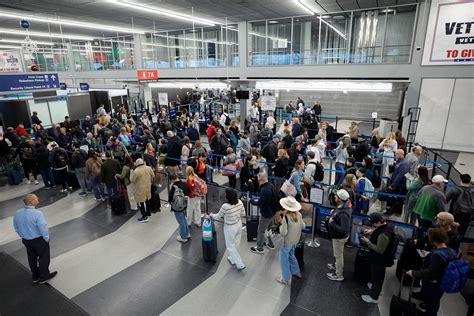
Absenteeism Surges to Unprecedented Levels Across Major Airports
The scale of the staffing crisis is both striking and alarming. Reports indicate that approximately 10% of the TSA’s 50,000-strong workforce has been absent daily—five times higher than normal levels. This is not a marginal fluctuation; it represents a systemic breakdown in workforce reliability driven by financial hardship and growing frustration.
Certain airports are bearing the brunt of the crisis more severely than others. At New York’s JFK Airport, absentee rates have reportedly reached 25%, while Houston’s George Bush Intercontinental Airport (IAH) has seen figures climb as high as 38%. These are not isolated incidents but indicators of a broader pattern that threatens to overwhelm even the most robust airport operations.
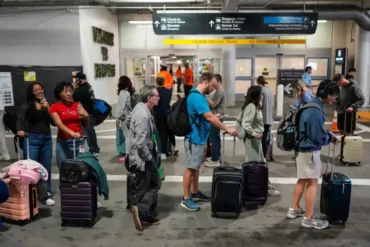
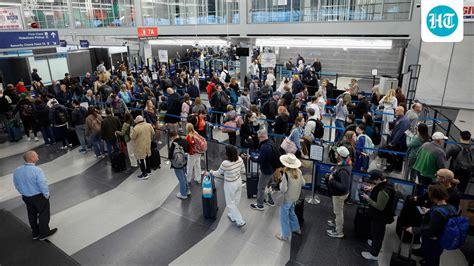
The consequences are immediate and visible. Security checkpoints are becoming chokepoints, with passengers waiting hours to clear screening. Missed flights, overcrowded terminals, and heightened tensions are now part of the daily travel experience. For TSA officers who continue to report for duty, the pressure is immense, as they must compensate for absent colleagues while maintaining strict security standards.
Smaller Airports Face the Risk of Complete Shutdown
While major hubs struggle under pressure, regional and smaller airports are facing an even more existential threat. According to U.S. Transportation Secretary Sean Duffy, continued staffing shortages could force some facilities to suspend operations entirely. Unlike larger airports, smaller hubs operate with leaner teams, leaving little room for absenteeism before operations become untenable.
These airports play a critical role in connecting remote and underserved communities to the broader national and global transportation network. A shutdown in these locations would not merely inconvenience travelers—it would effectively isolate regions, disrupting local economies and essential services.
The potential closure of even a handful of regional airports underscores the severity of the crisis. It is no longer just about delays; it is about maintaining the integrity of the national aviation grid.
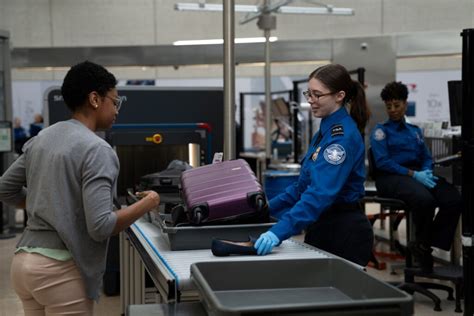
Industry Leaders Demand Immediate Congressional Action
The growing crisis has prompted a unified response from the travel industry. The U.S. Travel Association, representing a wide array of stakeholders, has issued an urgent call for Congress to act. In an open letter signed by numerous organizations, the message was clear: pay TSA officers immediately and restore stability to the system.
Geoff Freeman, the association’s President and CEO, did not mince words. He highlighted the stark disparity between lawmakers and frontline workers, pointing out that members of Congress continue to receive pay while TSA officers are left uncompensated. The optics—and the reality—have fueled frustration across the industry.
Freeman went further, warning that the situation amounts to “gambling with aviation safety.” This is not rhetorical exaggeration. Security screening is a cornerstone of aviation safety, and any compromise—whether through understaffing or overworked personnel—introduces risk.
The association has also emphasized the broader implications for travelers, noting that extended wait times and increased stress are already eroding confidence in the system. For an industry built on reliability and trust, this erosion is particularly damaging.
Passenger Volumes Collide with Reduced Security Capacity
Compounding the issue is the sheer volume of travelers moving through U.S. airports. In recent days, the TSA has processed record-breaking passenger numbers, including a single-day total exceeding 3 million travelers. This surge in demand colliding with reduced staffing creates a perfect storm of congestion and inefficiency.
The mismatch between capacity and demand is unsustainable. Security lines stretch longer, processing times increase, and the margin for error narrows. For passengers, the experience becomes increasingly unpredictable. For TSA officers, the workload becomes increasingly unmanageable.
This dynamic also raises concerns about security effectiveness. While there is no indication of compromised screening standards, the strain on personnel inevitably tests the limits of any system. Fatigue, stress, and reduced staffing are not conditions under which optimal performance thrives.
A Critical Year for U.S. Travel Hangs in the Balance
The timing of this crisis could hardly be worse. The United States is on the cusp of a landmark year for travel, with major global events such as the 2026 FIFA World Cup and America250 celebrations expected to drive unprecedented visitor numbers. Industry projections had painted 2026 as a historic year for tourism and aviation growth.
Instead, the ongoing shutdown threatens to derail those expectations. Airlines, airports, and tourism operators are already bracing for potential losses, recalling the significant financial impact of previous shutdowns. In 2025, a 43-day government closure led to nine-figure losses for major carriers, underscoring the high stakes involved.
If the current situation persists, the consequences could extend far beyond immediate disruptions. International perception of the U.S. as a reliable travel destination may suffer, and the economic ripple effects could be substantial.
The phrase “the country is at stake” is not hyperbole—it captures the reality of a system under strain, where political gridlock is translating into operational risk. The path forward requires swift resolution, not only to restore pay to TSA officers but to stabilize a critical pillar of national infrastructure before the cracks widen further.