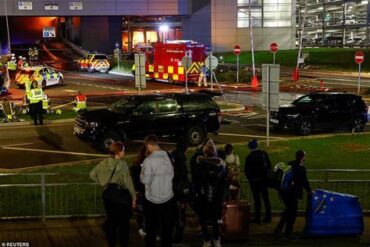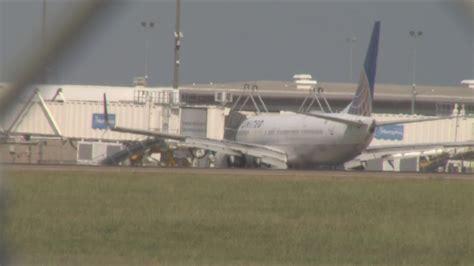
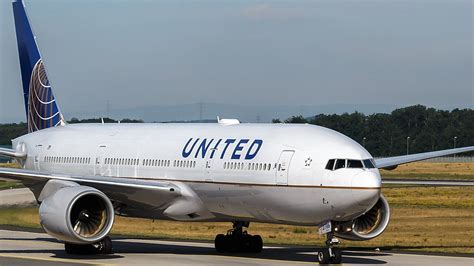
On July 23, 2025, a routine transpacific journey aboard United Airlines Flight UA876 transformed into a demonstration of aviation excellence when the aircraft experienced an in-flight engine failure en route from Tokyo Haneda (HND) to San Francisco International Airport (SFO). The Boeing 777-222(ER), tail number N229UA, executed a textbook emergency landing, thanks to the decisive action and unshakable professionalism of the flight crew, who have since earned widespread praise from aviation authorities and passengers alike.
The aircraft, a 23.4-year-old long-haul workhorse, suffered a right engine failure during its descent into San Francisco. While such incidents are rare, especially over the open Pacific, what followed was a model of modern aviation safety at its finest.
The Emergency Unfolds Over the Pacific
As the aircraft cruised over the Pacific Ocean nearing the U.S. West Coast, flight systems detected abnormal behavior in the right engine. In line with established emergency protocols, the crew promptly shut down the affected engine and declared a general emergency by squawking 7700 — a transponder code that triggers heightened visibility for air traffic controllers.
Despite being over water, the crew maintained constant communication with Air Traffic Control (ATC), keeping them informed of the situation and confirming the aircraft’s position to ensure optimal support upon approach. The decision to declare an emergency prior to reaching landfall near Fort Bragg, California, allowed ground teams at SFO to ready emergency services without delay.
A Precision Landing at San Francisco International Airport
Upon approach to runway 28R, all emergency vehicles were on standby. However, the aircraft’s final approach was notably uneventful — a reflection of the crew’s skill and the Boeing 777’s engineering. The landing was executed with surgical precision, and the aircraft taxied under its own power before being towed to the gate for post-flight inspection.
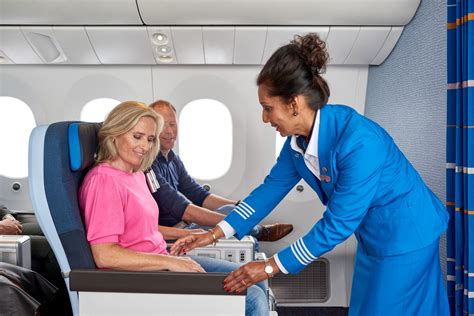
Notably, there were no injuries reported, and passenger accounts revealed a calm and composed atmosphere throughout the ordeal. Cabin crew maintained clear communication, updating passengers and maintaining order — a vital component in preserving calm during a potentially traumatic experience.
Inside the Cabin: Professionalism Without Panic
Reports from inside the aircraft confirm that passengers were informed clearly and promptly about the shutdown of the left engine, which was mistakenly identified by some, though it was actually the right engine that failed. Despite the unsettling news, there was no sense of panic. The flight attendants executed their roles flawlessly, ensuring everyone remained calm, seat-belted, and reassured.
The cabin crew’s effective crisis communication strategy highlights the importance of non-technical crew training in emergency scenarios. With zero disruptions and minimal visible stress, the event became a case study in how modern commercial aviation excels not just through engineering, but also through human performance.
The Aircraft: ETOPS and Boeing 777’s Resilience
The Boeing 777-222(ER), part of the extended-range twin-engine family, is ETOPS-certified — a designation that allows for transoceanic operations on twin-engine aircraft. ETOPS (Extended-range Twin-engine Operational Performance Standards) certification mandates that such aircraft be able to fly considerable distances safely with only one operational engine. This standard ensured that UA876 could proceed safely even with the right engine shut down, reaffirming both the model’s design integrity and the validity of long-haul twin-engine operations.
The fact that a 23-year-old aircraft could complete a transpacific flight and still land safely under duress is a testament to United Airlines’ rigorous maintenance programs, as well as the Boeing 777’s robust design.
The Squawk 7700 Decision and Its Importance
Declaring a squawk 7700 is not mandatory during every engine anomaly but serves a crucial purpose over oceanic routes: it enhances aircraft visibility to radar and air traffic controllers, especially when satellite coverage may be limited. In this case, the crew’s timely decision to initiate this emergency code facilitated rapid coordination with ground teams and confirmed the seriousness of the situation.
By the time the aircraft was in full radar contact with ATC, the emergency squawk was ceased, indicating that the plane had transitioned into a controlled and stable approach phase, with full awareness by all relevant support systems on the ground.
A Broader Look: Aviation Safety in Action
This incident recalls a similar situation earlier in 2025, when United Airlines Flight UA1828, also a Boeing 777-200ER, experienced an engine failure en route from Orlando to Chicago and diverted to Atlanta. In both cases, the flight crews managed to maintain control, reassure passengers, and land without injury or incident.
These events highlight the importance of pilot training, stringent maintenance checks, and adherence to standard operating procedures (SOPs) in aviation. More significantly, they demonstrate that emergency events do not inherently mean catastrophe. Instead, with the right systems and people in place, even worst-case scenarios can have safe outcomes.
Passengers’ Reactions and Public Trust
For the 200+ passengers aboard UA876, the emergency could have been a terrifying experience. But accounts post-landing reveal an entirely different mood. Most passengers were unaware anything serious had happened until the crew explained the precautionary engine shutdown. One traveler commented, “We felt a bump and then some announcements, but everyone stayed calm. The crew handled it like it was just another day.”
Such testimonials speak volumes about passenger confidence when airline staff behave competently. The emotional state of passengers during and after a flight crisis significantly affects public perception of air travel safety. Incidents like this reinforce the resilience of aviation safety culture.
Lessons for the Industry: Training, Design, and Preparedness
From a professional standpoint, the UA876 emergency provides three clear takeaways for aviation stakeholders:
- Crew Training Saves Lives: Simulators, procedural drills, and decision-making frameworks equip pilots and cabin crew for real-time crisis management.
- Aircraft Engineering Matters: The Boeing 777’s capability to fly hundreds of nautical miles with one engine underscores the value of design foresight.
- Crisis Communication Works: Transparent updates from the cockpit and cabin keep passengers calm and cooperative.
These components function collectively, not in isolation. In the case of UA876, it was the synthesis of machine and man, technology and training, that ensured success.
Looking Ahead: Confidence in the Skies
Incidents like this one remind travelers that air travel remains among the safest modes of transportation, precisely because of how airlines prepare for rare but dangerous scenarios. While no system can eliminate risk entirely, the combination of technology, protocols, and professional personnel dramatically reduces the likelihood of a tragic outcome.
At United Airlines, safety is not just a mission statement—it is embedded in every aspect of flight operations. The emergency landing of UA876 has become a reference point for what successful crisis mitigation looks like in commercial aviation.
As the world continues to depend on international air travel, confidence in aviation safety must be sustained not just by flawless flights but by flawless recoveries—the ultimate proof that systems work even when things go wrong.
Final Words: Applause Where It’s Due
Flight UA876’s smooth emergency landing has earned well-deserved recognition from aviation experts, passengers, and regulators. It serves as a masterclass in emergency response and will likely be studied internally by United Airlines and externally by safety organizations as a case study in operational excellence.
With no injuries, no panic, and an uneventful conclusion to what could have been a disastrous flight, this incident proves the adage: aviation is 99% boredom, 1% sheer professionalism — and that 1% makes all the difference.