Cessna stands as one of aviation’s most recognizable names, and its legacy continues under the stewardship of Textron, a global industrial leader with deep roots in aerospace and defense. The company’s story stretches from early monoplane innovation in the 1920s to its status as a dominant manufacturer of business jets and light aircraft. Understanding who owns Cessna and where its aircraft are built requires looking at both corporate evolution and the geography of American aviation manufacturing. The result is a picture of continuity, consolidation, and a home base that has never shifted far from the plains of Kansas.
The foundation of the modern organization can be traced to Textron’s acquisition of Cessna in 1992, a move that positioned Textron to expand further into business aviation. Decades later, that decision still defines the brand’s direction. Cessna now operates as a cornerstone of Textron Aviation, a segment formed after Textron acquired Beechcraft in 2014. The consolidation brought together two long-time rivals and combined their production, engineering, and service networks under a single corporate umbrella. The strategy strengthened Textron’s capacity to supply everything from piston aircraft for training to high-end business jets that serve corporate and government clients worldwide.
Textron’s Ownership And Aviation Portfolio
Textron’s ownership provides Cessna with scale and resources that influence every part of the production process. Textron is a conglomerate recognized for its expansive industrial reach, and its aerospace influence extends well beyond Cessna itself. The group includes Bell, the storied helicopter manufacturer behind models such as the UH-1 Huey and AH-1 SuperCobra, and Textron Systems, a division responsible for a wide range of military technologies including unmanned aircraft, maritime systems, and advanced armored vehicles.
Cessna’s integration into this portfolio gives it access to shared engineering knowledge, industry-leading materials research, and tested manufacturing frameworks. Even as Textron oversees this wide family of aviation brands, Cessna retains a distinct identity built on reliable design, predictable performance, and unmatched name recognition in general aviation.
From Early Monoplanes To Citation Jets
The origin of Cessna’s product line reaches back to Clyde Cessna’s 1927 monoplane, a groundbreaking design that set the template for decades of light aircraft to come. The years following World War II saw explosive interest in civilian flying, and the company responded with models that became icons of private aviation. The Cessna 172 Skyhawk and the Cessna 182 Skylane became almost synonymous with small aircraft ownership, flight schools, and recreational pilots. These aircraft turned the Cessna name into common vocabulary in the skies.
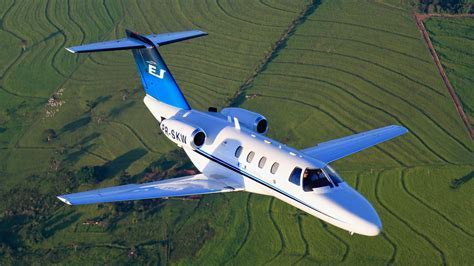
By the 1960s, the brand stepped confidently into the jet age with the launch of the Citation series. The Citation family evolved into one of the world’s most successful business jet lineups, spanning compact light jets, midsize solutions, and longer-range platforms capable of intercontinental missions. While Cessna has historically focused on civilian aircraft, it has occasionally built military models as well, including the T-37 Tweet trainer and the A-37 Dragonfly, which saw operational use during the Vietnam War. These programs expanded Cessna’s engineering portfolio and demonstrated its range beyond the general aviation market.
Where Cessna Jets And Airplanes Are Built
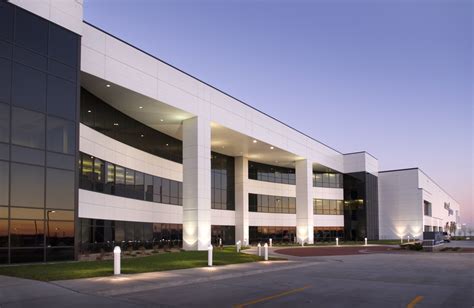
Cessna’s manufacturing identity has always been rooted firmly in Kansas. The company’s headquarters sit adjacent to Dwight D. Eisenhower National Airport in Wichita, a city long acclaimed as the Air Capital of the World. Wichita earned this title because hundreds of aerospace companies operate in the region, supported by generations of skilled workers and a sophisticated supply chain built around aircraft design and production.
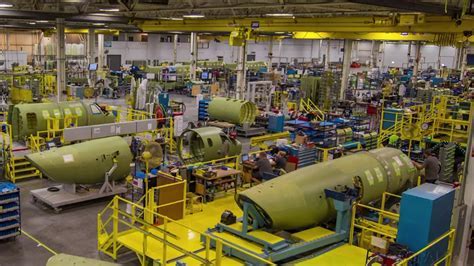
The Wichita facility remains the center of Cessna’s jet manufacturing, especially for larger Citation platforms. The site houses engineering teams, advanced composite workshops, and final assembly lines where aircraft are completed and prepared for delivery. Wichita’s concentration of talent and industry partners continues to make it one of the most important aviation hubs anywhere in the world.
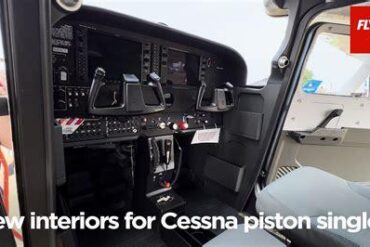
About 130 miles away, the Independence, Kansas facility handles production of many smaller single-engine Cessna models as well as the Citation M2 light jet. This factory has become essential for training and recreational aircraft that appeal to private pilots, flight schools, and organizations that need compact, capable airframes.
Cessna’s reach extends beyond U.S. borders as well. The company collaborates with Chinese partners for localized production in Asia and operates a facility in Mexico that manufactures key aircraft components. These global operations support supply chain efficiency, but the center of gravity remains unmistakably in Kansas. Even during brief expansions—such as the Bend, Oregon factory active in the late 2000s—the company consistently returned its core manufacturing focus to Wichita and Independence.
Cessna’s Present Role In Global Aviation
Today, Cessna’s product range spans everything from entry-level piston aircraft to business jets priced above $30 million, making the brand an industry bridge between aviation’s most accessible and most elite categories. Through Textron Aviation, the company benefits from shared technological innovation while maintaining its legacy of straightforward, approachable design. As Cessna approaches a century of aircraft production, its Kansas-built fleet continues to shape general aviation and business travel around the world.