The idea of Boeing “dominating” 2026 does not mean a simple scoreboard victory over Airbus in raw delivery numbers. It means something subtler, more structural, and arguably more important: control over momentum. After nearly a decade defined by crises, groundings, regulatory distrust, and financial hemorrhaging, 2026 is shaping up as the first year in which Boeing’s recovery mechanisms finally synchronize. Certification progress, delivery acceleration, cash flow normalization, supply-chain reintegration, defense program maturity, and a carefully timed winding-down of legacy freighters are converging into a single narrative arc. That arc does not point to perfection. It points to stability, and in aerospace, stability is power.
1. Certification Breakthroughs That Unlock Trapped Value
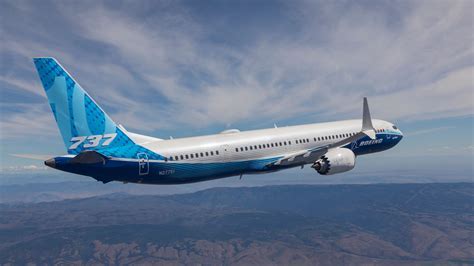
For Boeing, certification is not a bureaucratic milestone. It is a financial release valve. The 737 MAX 7 and 737 MAX 10 represent years of frozen inventory, deferred revenue, and customer frustration. Their prolonged delay after the 2018–2019 MAX crashes was less about engineering difficulty than about a collapsed trust relationship with the FAA. Rebuilding that trust has taken years of documentation reform, quality-system redesign, and cultural overhaul inside Boeing’s commercial division.
Going into 2026, expectations are aligned around mid-year certification for the MAX 7 and late-year approval for the MAX 10. If that timeline holds, Boeing gains immediate access to hundreds of parked or undeliverable aircraft already built or partially completed. Airlines that structured fleet plans around these variants—particularly high-density MAX 10 operators—can finally execute growth strategies that have been on paper since before the pandemic.
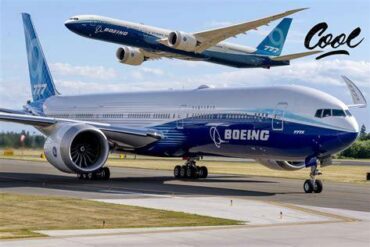
The strategic importance here goes beyond narrowbody volume. Certification success signals to regulators, lessors, and airline boards that Boeing’s compliance culture has fundamentally changed. That signal matters globally. Every subsequent approval, from minor amendments to major programs like the 777X, becomes smoother once institutional credibility is restored.
2. Delivery Acceleration Restores Industrial Credibility
Aircraft deliveries are the most honest metric in aviation. They reflect not promises, not press releases, but completed airplanes accepted by customers. Boeing’s delivery numbers collapsed after 2018 and reached a nadir in 2024 with just 348 commercial aircraft delivered. The rebound in 2025—estimated between 575 and 600 units—was the first sign that the industrial engine was restarting.
In 2026, Boeing’s trajectory points upward again. The FAA has already approved an increase in 737 production from 38 to 42 aircraft per month, with internal planning targeting 47 per month during 2026. Parallel investments in the 787 Dreamliner production system, including a new line, are designed to eliminate bottlenecks that previously constrained widebody output.
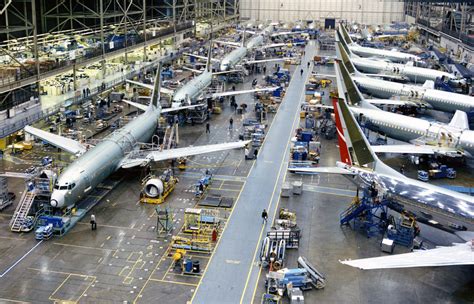
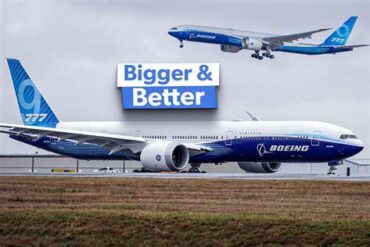
While Airbus may still out-deliver Boeing numerically, Boeing’s delivery mix carries disproportionate weight. A higher share of widebody aircraft means greater revenue per unit and stronger aftermarket implications. Deliveries in 2026 are less about beating Airbus and more about proving that Boeing can once again function as a predictable, scalable manufacturer—a prerequisite for long-term dominance.
3. Positive Cash Flow Marks the End of Survival Mode
Since 2019, Boeing has lived in financial triage. Even years that appeared profitable on paper were undermined by negative cash flow, forcing asset sales, debt accumulation, and strategic paralysis. Aircraft that cannot be delivered cannot generate cash, and undelivered aircraft became Boeing’s defining problem.
That dynamic changes in 2026. Boeing’s leadership has publicly projected $2–3 billion in positive free cash flow, even after accounting for residual certification headwinds. This matters more than delivery bragging rights. Cash flow funds everything else: workforce stability, supplier reliability, R&D discretion, and balance-sheet resilience.
Investors, lessors, and airlines all track this metric obsessively because cash flow determines whether Boeing is reacting to crises or shaping its future. A return to sustained positive cash flow marks the transition from recovery to strategic agency. Boeing no longer has to choose between fixing today’s problems and preparing for tomorrow’s market.
4. Spirit AeroSystems Reintegration Repairs the Supply Chain
Few decisions haunted Boeing more than the 2005 spin-off of Spirit AeroSystems. What was once a vertically integrated manufacturing ecosystem became a fragmented supply chain with misaligned incentives, diluted accountability, and eroding quality control. The consequences were visible in fuselage defects, production delays, and regulatory scrutiny.
The $8.3 billion reacquisition of Spirit reverses that experiment. By bringing fuselage production for the 737 MAX, along with major structures for the 767, 777, and 787, back under Boeing’s direct control, the company regains visibility into its most critical manufacturing processes.
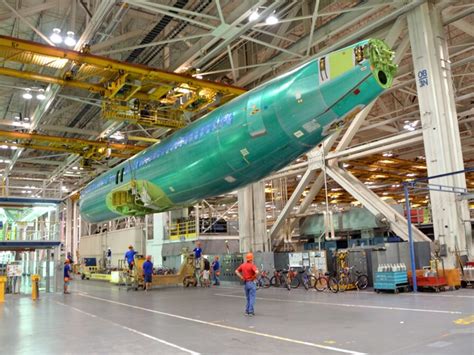
Integration will not be painless. Roughly 15,000 workers must be absorbed into Boeing’s systems, cultures, and quality frameworks. Yet the long-term payoff is substantial. Vertical integration allows Boeing to standardize tolerances, accelerate corrective actions, and align production tempo with final assembly lines. Airbus’s decision to offload Spirit’s Airbus-related operations underscores how strategically important this move is. In 2026, Boeing’s supply chain stops being a liability and starts becoming a competitive asset again.
5. Defense Programs Provide Stability and Strategic Depth
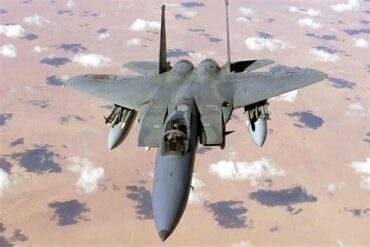
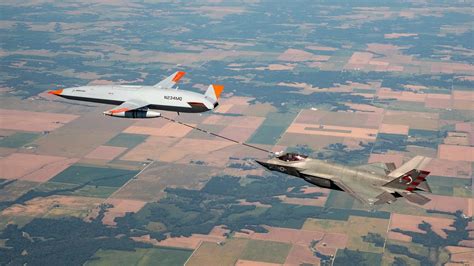
While commercial aviation absorbs headlines, Boeing’s defense portfolio quietly anchors its business. In 2026, that anchor grows heavier. The T-7A Red Hawk advanced trainer is expected to enter low-rate production after years of delay, finally moving from development purgatory into revenue-generating reality. The MQ-25 Stingray, the world’s first operational carrier-based refueling drone, is set for initial operational deliveries in late 2026.
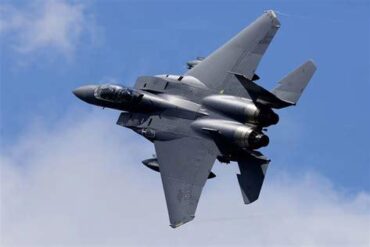
Most significant of all is Boeing’s selection as the prime contractor for the Next Generation Air Dominance (NGAD) program. While the F-47 fighter will not fly until later in the decade, 2026 marks the period when engineering, testing, and supplier ecosystems begin scaling in earnest. Defense contracts offer long timelines, predictable funding, and insulation from commercial market volatility. They provide Boeing with something invaluable during recovery: time.
6. Freighter Wind-Down Creates a Final Revenue Surge
The impending end of production for the 777F and 767-300F is often framed as a loss. In reality, it is also an opportunity. New ICAO CO₂ emissions standards coming into force in 2028 effectively cap production after 2027, creating a narrow window in which remaining orders must be delivered.
Most of those deliveries are scheduled for 2026, including dozens of 777Fs and 767Fs already in the backlog. These aircraft are fully mature programs with stable margins and well-understood production processes. They generate cash efficiently, with minimal development risk.
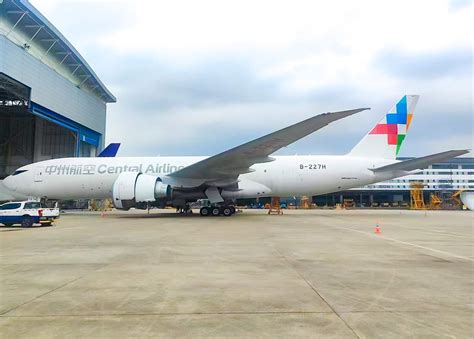
This final surge allows Boeing to monetize legacy platforms one last time while transitioning customers toward future freighter solutions. It is a controlled sunset, not a collapse, and it contributes meaningfully to the positive cash flow picture projected for 2026.
A Year of Structural, Not Symbolic, Dominance
Boeing’s potential dominance in 2026 is not theatrical. There is no moonshot aircraft, no surprise market takeover, no sudden erasure of Airbus’s scale advantage. Instead, there is something more durable: alignment. Certification progress unlocks inventory. Deliveries convert inventory into cash. Cash stabilizes the balance sheet. Supply-chain reintegration improves quality. Defense programs smooth volatility. Legacy freighters deliver a final payoff.
Each element reinforces the others. Remove one, and the structure weakens. Together, they form the first coherent, forward-looking Boeing strategy since before the MAX crisis. Dominance, in this context, means emerging from a lost decade with credibility restored, finances normalized, and strategic options reopened. In 2026, Boeing does not need to be the biggest manufacturer in the world. It only needs to prove that it is whole again.