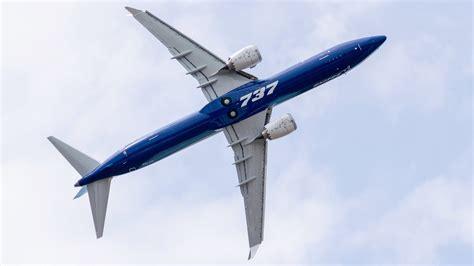
In an era when narrowbody aircraft are routinely crossing oceans and linking distant continents, the Boeing 737 MAX has become one of the aviation industry’s most transformative aircraft families. Designed as the successor to the Boeing 737 Next Generation series, the MAX introduced significant improvements in fuel efficiency, aerodynamics, and operational economics. Most importantly, it extended the practical range of the world’s most popular airliner by hundreds of nautical miles, allowing airlines to launch routes that previously required larger and more expensive widebody aircraft.
While the Boeing 737 MAX family includes the MAX 7, MAX 8, MAX 9, and MAX 10 variants, only the MAX 8 and MAX 9 have entered commercial service. The MAX 8, in particular, has emerged as the workhorse of long-haul narrowbody operations thanks to its advertised range of approximately 3,500 nautical miles (6,480 kilometers). Airlines around the world are leveraging this capability to connect destinations separated by vast oceans, deserts, and remote regions.
The result is a growing list of routes that push the Boeing 737 MAX close to its operational limits. From transatlantic services linking North America and Iceland to leisure flights connecting Northern Europe with Atlantic island destinations, these routes showcase how modern narrowbody aircraft are reshaping global aviation networks.
The following airlines operate the world’s longest scheduled Boeing 737 MAX flights in 2026, demonstrating both the versatility of the aircraft and the changing economics of long-distance air travel.
The Boeing 737 MAX and the Rise of Long-Haul Narrowbody Flying
The Boeing 737 MAX was developed to meet airlines’ demands for greater efficiency while maintaining compatibility with existing Boeing 737 infrastructure. Powered by advanced CFM International LEAP-1B engines and featuring aerodynamic enhancements such as split-tip winglets, the aircraft significantly reduces fuel consumption compared with earlier generations.
These improvements have enabled airlines to operate routes exceeding 3,500 miles with a single-aisle aircraft carrying fewer passengers than traditional long-haul widebodies. For airlines, this creates opportunities to serve thinner markets profitably while offering passengers direct flights that eliminate inconvenient connections.
As fuel efficiency becomes increasingly important and passenger demand shifts toward nonstop travel, the Boeing 737 MAX continues to open new possibilities across multiple continents.

7. Mauritania Airlines: Nouakchott to Medina
Mauritania Airlines secures seventh place with a route connecting Nouakchott, the capital of Mauritania, to Medina in Saudi Arabia. Covering approximately 3,592 miles (5,780 kilometers), this service highlights how the Boeing 737 MAX can support specialized travel markets that extend beyond conventional tourism.
As Mauritania’s national airline, Mauritania Airlines operates a relatively small fleet and serves a network concentrated across Africa and the Middle East. Despite its modest size, the carrier plays a vital role in connecting Mauritanian travelers with key religious and commercial destinations.
The Nouakchott–Medina route is particularly significant because it serves religious pilgrims traveling to Islam’s holy sites. Medina functions as a major gateway for worshippers heading toward Mecca and other important destinations within Saudi Arabia. The Boeing 737 MAX allows the airline to operate this long-distance service efficiently without requiring larger aircraft.
Although flight frequencies remain limited, the route demonstrates how even smaller carriers can benefit from the extended range capabilities of modern narrowbody aircraft.
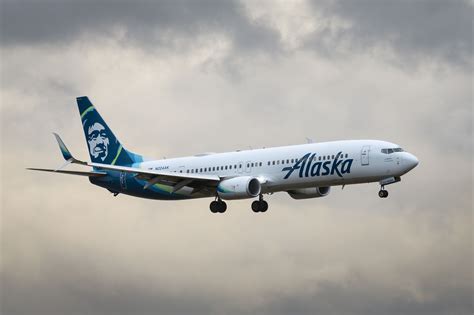
6. Alaska Airlines: Seattle to Reykjavík
Alaska Airlines has steadily expanded beyond its traditional North American focus, and its Seattle-to-Reykjavík service represents one of the carrier’s most ambitious Boeing 737 MAX routes.
Stretching approximately 3,622 miles (5,829 kilometers), the flight links the Pacific Northwest with Iceland, creating a unique transatlantic connection operated by a narrowbody aircraft.
Alaska Airlines maintains one of the world’s largest Boeing 737 fleets and continues investing heavily in the MAX program. Its modern MAX 8 fleet has become an important tool for expanding international operations while maintaining cost efficiency.
The Seattle–Reykjavík route showcases the aircraft’s ability to connect secondary transatlantic markets that might not generate enough demand for larger widebody aircraft. By using the MAX 8, Alaska can offer nonstop service while maintaining lower operating costs and improved profitability.
5. Icelandair: Reykjavík to Seattle
Sharing the same route distance as Alaska Airlines, Icelandair’s Reykjavík-to-Seattle operation ranks among the longest Boeing 737 MAX services in the world.
Icelandair has become one of the strongest advocates for long-range narrowbody operations. The airline’s geographic position between North America and Europe naturally supports connecting traffic, making efficiency and flexibility critical to its business model.
The carrier operates a substantial fleet of Boeing 737 MAX aircraft alongside its remaining Boeing 757s. The MAX fleet has enabled Icelandair to modernize operations while reducing fuel consumption and environmental impact.
For Icelandair, Seattle serves as an important gateway into the western United States. The route covers roughly 3,622 miles yet remains economically viable thanks to the aircraft’s improved range and operating efficiency. Hundreds of annual flights on the route demonstrate the commercial success of long-haul narrowbody operations when paired with the right market conditions.
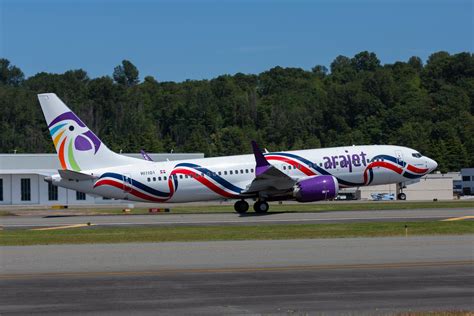
4. Arajet: Santo Domingo to Buenos Aires
One of the fastest-growing airlines in the Americas, Arajet has built its entire business model around the Boeing 737 MAX 8.
Operating from the Dominican Republic, the low-cost carrier maintains one of the youngest fleets in the aviation industry. Its longest route connects Santo Domingo with Buenos Aires, spanning approximately 3,734 miles (6,010 kilometers).
This service links the Caribbean with South America’s second-largest metropolitan area, creating a significant north-south connection that would traditionally have been served by larger aircraft.
Arajet’s strategy focuses on maximizing the capabilities of its all-MAX fleet. By using fuel-efficient narrowbody aircraft, the airline can offer competitive fares while maintaining profitability on lengthy international routes.
The Santo Domingo–Buenos Aires flight demonstrates how new-generation narrowbody aircraft are reshaping air travel throughout Latin America, allowing airlines to connect cities directly without relying on traditional hub-and-spoke networks.
3. Gol Linhas Aéreas: Brasília to Orlando
Brazilian low-cost giant Gol Linhas Aéreas operates one of the most remarkable long-distance Boeing 737 MAX routes anywhere in the world.
Connecting Brasília with Orlando, the route covers approximately 3,778 miles (6,080 kilometers), placing it among the aircraft’s longest regularly scheduled missions.
The service reflects strong travel demand between Brazil and Florida, one of the most popular international destinations for Brazilian tourists and business travelers. Orlando’s attractions, shopping centers, and extensive air connections make it a natural destination for passengers departing from Brazil’s capital.
Gol has invested heavily in the Boeing 737 MAX fleet as part of its modernization strategy. The aircraft’s enhanced fuel efficiency enables the airline to operate lengthy international sectors while maintaining the low-cost model that has driven its success domestically.
The route also illustrates how airlines increasingly rely on narrowbody aircraft to perform missions once reserved for widebody jets, reducing operational complexity while maintaining passenger convenience.
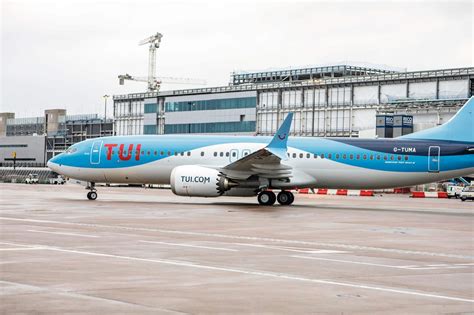
2. TUI fly Nordic: Stockholm to Sal Island
Among Europe’s leisure-focused airlines, few routes are as impressive as TUI fly Nordic’s service between Stockholm and Sal Island in Cape Verde.
At approximately 3,827 miles (6,158 kilometers), this flight pushes the Boeing 737 MAX close to its advertised operational range.
TUI fly Nordic serves holidaymakers traveling from Northern Europe to warm-weather destinations across the globe. Cape Verde has become increasingly popular among Scandinavian travelers seeking year-round sunshine, beautiful beaches, and relatively short travel times compared with destinations in Asia or the Caribbean.
Operating such a lengthy route with a Boeing 737 MAX demonstrates the aircraft’s exceptional flexibility. Despite being a single-aisle aircraft traditionally associated with short- and medium-haul operations, the MAX can efficiently transport passengers across vast stretches of the Atlantic Ocean.
1. SCAT Airlines: Yekaterinburg to Phu Quoc
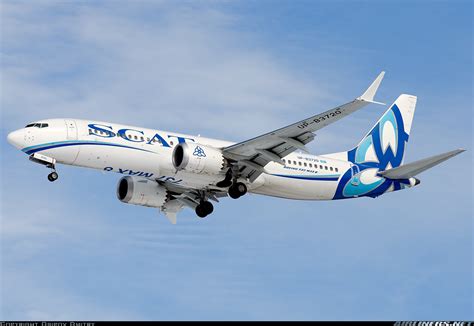
Holding the title for the world’s longest scheduled Boeing 737 MAX flight in 2026 is SCAT Airlines’ service between Yekaterinburg in Russia and Phu Quoc in Vietnam.
Covering approximately 3,947 miles (6,352 kilometers), this extraordinary route pushes the Boeing 737 MAX 8 almost to its maximum practical range.
SCAT Airlines, based in Kazakhstan, operates a diverse fleet that includes both classic and modern Boeing 737 variants. Its investment in MAX aircraft has enabled the carrier to expand into increasingly ambitious international markets.
The route connects a major Russian city with one of Southeast Asia’s fastest-growing resort destinations. Phu Quoc has emerged as a major tourism hotspot, attracting visitors from across Eurasia thanks to its beaches, luxury resorts, and tropical climate.
Flying nearly 4,000 miles with a single-aisle aircraft would have been considered extraordinary only a decade ago. Today, the Boeing 737 MAX makes such operations feasible, providing airlines with unprecedented network flexibility and lower operating costs.
How the Boeing 737 MAX Is Transforming Global Route Networks
The emergence of nearly 4,000-mile Boeing 737 MAX flights marks a significant shift in airline strategy. Rather than relying exclusively on large widebody aircraft, airlines can now deploy fuel-efficient narrowbodies on routes that were once considered impractical.
This flexibility allows carriers to enter underserved markets, launch seasonal services with reduced risk, and connect secondary cities directly. Passengers benefit from more nonstop options, while airlines enjoy lower operating costs and improved route economics.
As additional Boeing 737 MAX aircraft enter service worldwide and airlines continue exploring new network opportunities, long-haul narrowbody flying is expected to become even more common. Routes once viewed as experimental are rapidly becoming mainstream, and the Boeing 737 MAX stands at the center of this transformation.
From religious pilgrimage services across Africa and the Middle East to transatlantic crossings and nearly 4,000-mile journeys into Southeast Asia, these seven airlines demonstrate how the Boeing 737 MAX has redefined what is possible for the world’s most popular narrowbody aircraft. In 2026, the boundaries of narrowbody aviation continue to expand, and the Boeing 737 MAX remains one of the industry’s most influential tools for connecting distant corners of the globe.