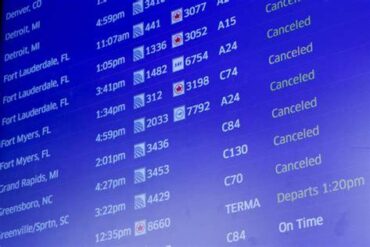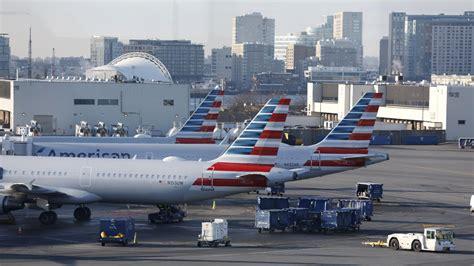
In an unprecedented escalation of national aviation disruption, American Airlines has found itself at the epicenter of a turbulent wave of flight cancellations and passenger backlash. As of mid-November 2025, tens of thousands of travelers were caught in a spiraling crisis triggered not by weather, mechanical failure, or airline mismanagement—but by a deeper, systemic breakdown within the U.S. aviation infrastructure.
FAA Emergency Order: A Drastic Response to a Deeper Crisis
On November 6, 2025, the Federal Aviation Administration (FAA) issued a sweeping emergency order targeting 40 of the nation’s busiest airports. Airlines, including American, were mandated to cut domestic scheduled operations between 6 a.m. and 10 p.m. by up to 10%, starting with a 4% reduction on November 7 and intensifying to 8%, then 10%.
The FAA’s rationale was chilling in its clarity: staffing fatigue, safety alerts from controllers, and operational risk triggered by the longest federal government shutdown in decades, which began October 1. Air-traffic controllers, forced to work without pay, had reached dangerous levels of stress. These “staffing triggers” signified a national emergency.
American Airlines: Most Visible, Most Affected
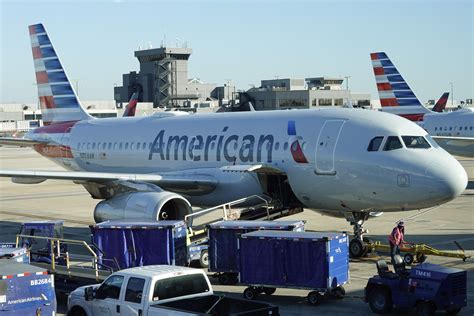
Although all carriers were impacted, American Airlines became the most high-profile victim of this mandate due to its sprawling domestic network and prominence in several of the affected hubs. Los Angeles (LAX), Chicago O’Hare (ORD), Atlanta (ATL), and New York’s JFK and LaGuardia were among the 40 named airports. As a result, thousands of American passengers experienced last-minute cancellations, limited rebooking options, and extended delays during the start of the holiday travel season.
The Department of Transportation (DOT) quickly clarified that passengers—even those affected by national system failures—retain the right to full refunds if they choose not to fly. This move added a legal lifeline for consumers but also underscored the unusual severity of the disruption.
Behind the Turbulence: How a Shutdown Grounded a Nation
This was not a typical airline meltdown. The root cause was a cascading federal shutdown that left the FAA operating in crisis mode. With air-traffic control towers understaffed, flight scheduling became an unsustainable risk. Pilots and controllers alike submitted voluntary safety reports that exposed rising delays, near-misses, and mental fatigue.
The FAA’s language in the order was blunt: continuing full-volume operations would “elevate risk beyond acceptable thresholds.” Even with American Airlines’ best efforts to maintain operations, it became clear that the problem was national, not local—and far beyond the scope of one airline’s control.
Impact on Passengers: Disrupted Lives and Shaken Trust
For the millions of Americans flying in early November, the headlines translated into a harsh reality. Flight cancellations soared overnight. Travelers missed family reunions, business meetings, and vacations. The FAA’s intervention, while necessary, laid bare the fragility of the travel ecosystem.
Imagine a family traveling to reunite for Thanksgiving—bags packed, tickets booked, boarding passes in hand—only to receive a cancellation notice hours before departure. For many, the disruption wasn’t just inconvenient, it was deeply personal. The travel industry thrives on timing and trust. Both were in short supply.
Industry Fallout: Reductions, Adjustments, and Resilience
Operationally, airlines had to submit adjusted schedules to the FAA, distributing the reduction across their regional and mainline services. The emergency order capped any single certificate’s reduction at 15%, but the ripple effect went beyond logistics. It forced carriers to rethink contingency plans just weeks ahead of peak holiday travel.
For American Airlines, this meant prioritizing key routes, reallocating aircraft, and communicating proactively with customers—all under the intense scrutiny of media, regulators, and frustrated travelers. Internally, the industry treated the episode as a stress test of systemic resilience, one which revealed just how interdependent modern aviation truly is.
Course Correction: FAA Lifts Mandate, But Not Without Scars
On November 16, the FAA and DOT announced the emergency order would be rescinded at 6 a.m. on November 17, citing improved staffing levels and lowered risk. The partial rollback to 6% reductions days earlier signaled that some relief was already underway.
But the return to “normal” is a mirage for many. Airlines face a weeks-long recovery process: rebuilding passenger confidence, reorganizing schedules, and addressing the backlog of disrupted itineraries. Moreover, the FAA has committed to surge hiring and implementing a next-generation air-traffic control system to avoid future crises.
Lessons from a Broken System: Preparing for the Next Crisis
This episode underscores a harsh truth: in a globalized travel system, no airline is an island. Even industry leaders like American Airlines are vulnerable to policy shifts, staffing shortfalls, and infrastructure fragility. For travelers, the incident is a potent reminder that flexibility, proactive planning, and travel insurance are more vital than ever.
And for the aviation industry, the mandate serves as a wake-up call. Investing in resilient systems, supporting frontline workers, and preparing for black swan events must move from boardroom talking points to operational priorities.
Final Descent: The Human Cost of Aviation Fragility
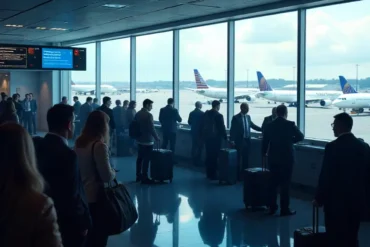
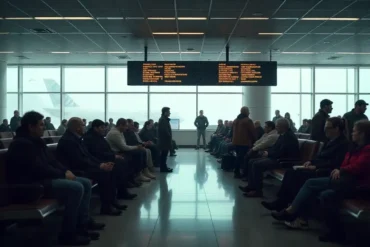
At the heart of this crisis is not just grounded planes, but grounded people. Every cancellation represents a disrupted plan, a missed moment, a broken promise. The sight of weary passengers sleeping at terminals or rushing to find alternate connections tells the real story.
American Airlines, while bearing the brunt of public frustration, is a bellwether—not a culprit. The FAA and DOT’s intervention, while necessary, exposes vulnerabilities that must be addressed urgently. Trust, once broken, takes far longer to rebuild than a flight schedule.
For now, flights may be taking off again. But the turbulence of early November 2025 has left an indelible mark—on policy, on the industry, and on the lives of travelers caught in the crosswinds of a system pushed to its limits.