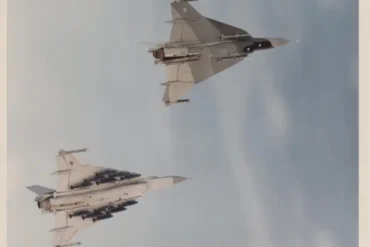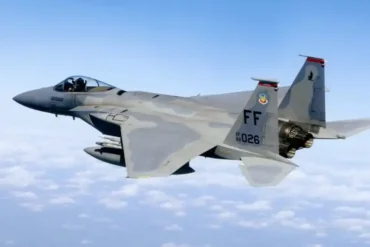
The F-15 Eagle, particularly its multirole variant, the F-15E Strike Eagle, stands as a benchmark in air-to-ground combat due to its formidable payload capacity and advanced weapons systems. Developed by McDonnell Douglas (now Boeing), this aircraft has consistently evolved to maintain its dominance on the battlefield. With its extensive bombing capabilities, the F-15E ensures precision strikes while maximizing operational flexibility.
Unmatched Payload and Weapons Configuration
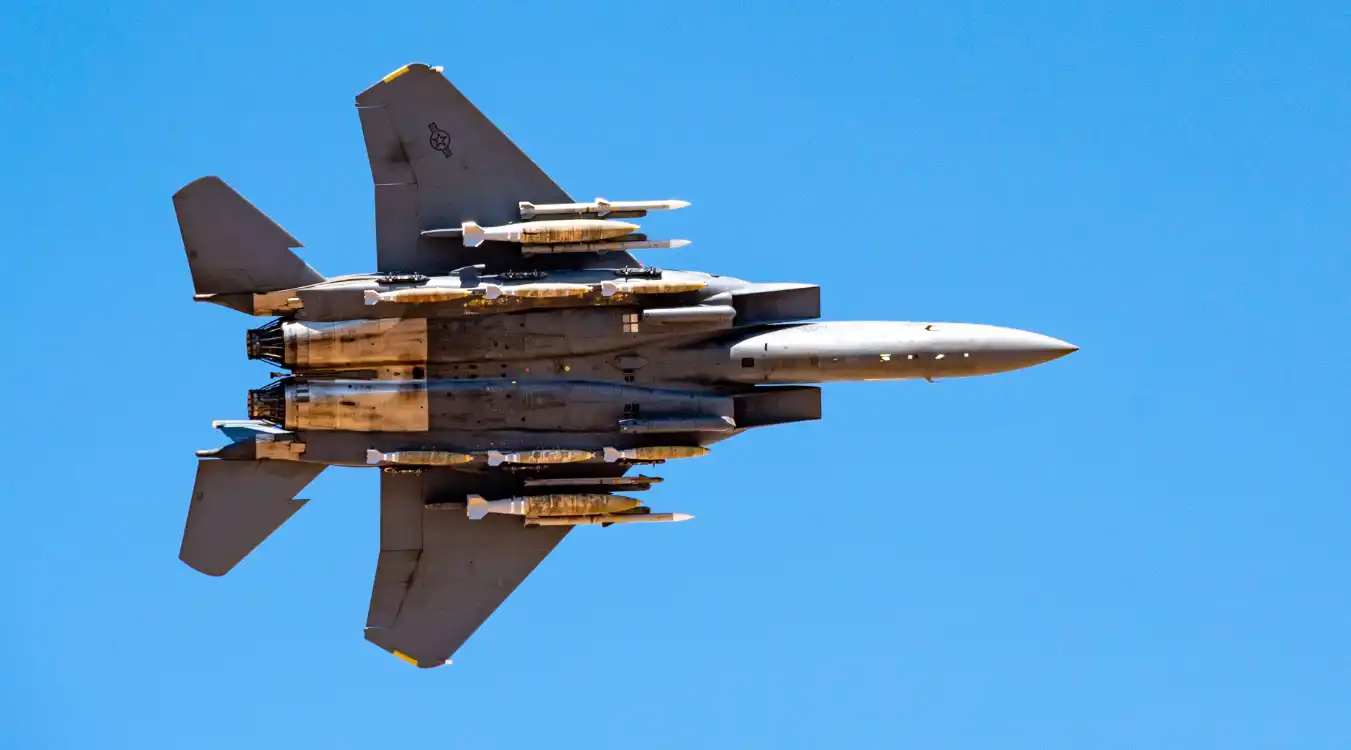
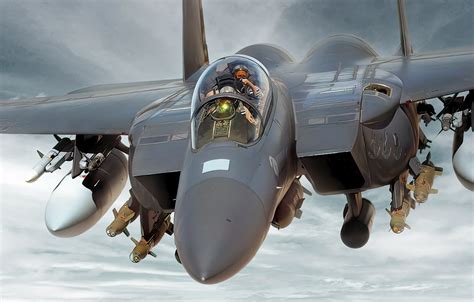
The F-15E Strike Eagle is designed for deep strike missions, boasting 11 external hardpoints capable of carrying a total weapons payload of 10,705 kg. Its typical ground-attack loadout includes:
- Eight precision-guided bombs, such as GBU-10/12 laser-guided bombs, GBU-28 bunker busters, and GBU-31/38 JDAMs.
- Four air-to-air missiles, typically AIM-120 AMRAAM or AIM-9X Sidewinders for self-defense.
- Additional fuel tanks or electronic warfare pods to extend range and enhance survivability.
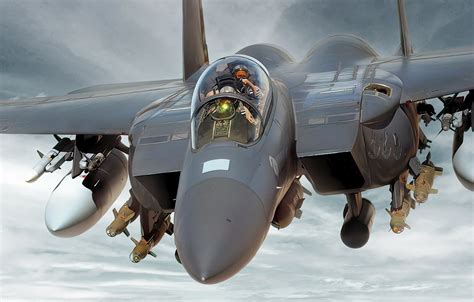
This configuration allows the F-15E to execute deep-strike missions with extreme precision and lethality while maintaining a robust air-defense capability.
Revolutionizing Air-to-Ground Warfare with Smart Bombs
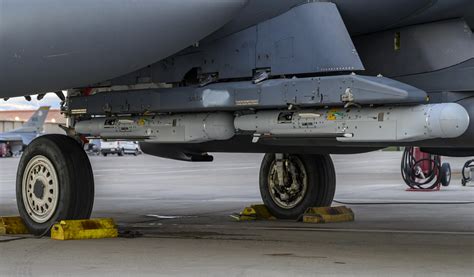
The integration of small-diameter bombs (SDBs) has significantly enhanced the F-15E’s strike potential. Since 2020, the GBU-53/B StormBreaker (SDB II) has been a game-changer in modern combat, providing:
- Multi-mode guidance: Utilizes millimeter-wave radar, infrared imaging, and semi-active laser homing, making it adaptable to adverse weather and electronic warfare conditions.
- Artificial Intelligence (AI)-based target recognition: Capable of autonomously identifying and prioritizing threats.
- High-density carriage: The F-15E can carry 28 StormBreaker bombs, enabling a single aircraft to strike 28 separate targets with a range of 111 km.
- Minimal collateral damage: Weighing 93 kg, this bomb delivers high-explosive payloads designed to neutralize enemy armor, bunkers, and mobile targets without excessive destruction.
Versatility in Bomb Selection for Mission Adaptability
The F-15E Strike Eagle is equipped to deliver a wide range of precision munitions, each tailored for specific combat scenarios:
GBU-10/12 Laser-Guided Bombs
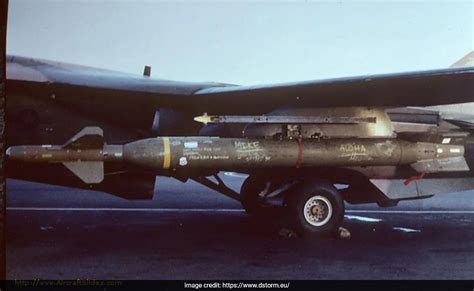
- The GBU-10 (907 kg) and GBU-12 (227 kg) were extensively used during the Gulf War, effectively neutralizing enemy fortifications and air-defense sites.
GBU-28 ‘Bunker Buster’
- Designed for deep penetration, this 2,130 kg bomb can pierce 6 meters of reinforced concrete, making it ideal for destroying underground command centers.
GBU-39 Small Diameter Bomb (SDB I)
- With a 113 kg payload, this glide bomb offers a range of 110 km, supporting multi-target engagement capabilities. An F-15E can carry up to 20 SDBs.
Nuclear Strike Capability
- The F-15E is certified to deploy the B61-12 tactical nuclear bomb, reinforcing its role in strategic deterrence missions.
Electronic Warfare and Survivability Enhancements
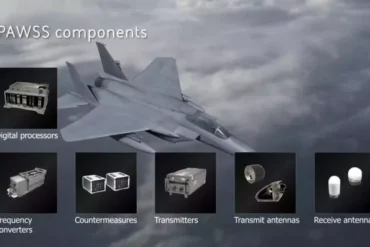
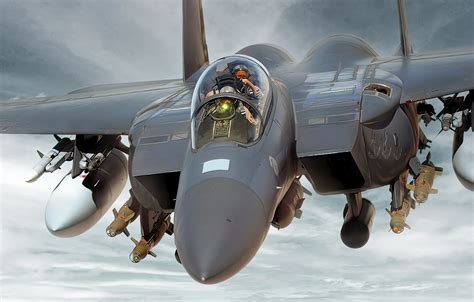
Modern air defense threats necessitate superior electronic warfare (EW) systems. The F-15E, and its successor, the F-15EX, are equipped with the EPAWSS (Eagle Passive Active Warning Survivability System), offering:
- Full-spectrum threat detection: Integrates radar warning receivers, geo-location systems, and countermeasures to disrupt enemy targeting and tracking.
- Expanded decoy capability: An increased payload of 360 countermeasure cartridges (chaff/flare) ensures greater protection against radar-guided and infrared missiles.
- Cognitive EW technologies: AI-driven adaptive jamming systems effectively counter next-generation air-defense systems, as proven during 2023 military trials.
Combat Performance and Tactical Innovation
The F-15E’s operational record underscores its effectiveness in modern warfare:
Gulf War (1991)
- Destroyed key Iraqi infrastructure using laser-guided bombs, eliminating critical command-and-control centers.
- Achieved 34 air-to-air kills, accounting for 92% of coalition air victories.
Anti-Satellite (ASAT) Capability
- In 1985, an F-15A successfully destroyed an orbiting satellite using the ASM-135 missile, demonstrating space warfare potential.
Kosovo Conflict (1999)
- Conducted low-altitude precision strikes with JDAMs and LANTIRN targeting pods, executing high-profile decapitation strikes.
Future Developments and Upgrades
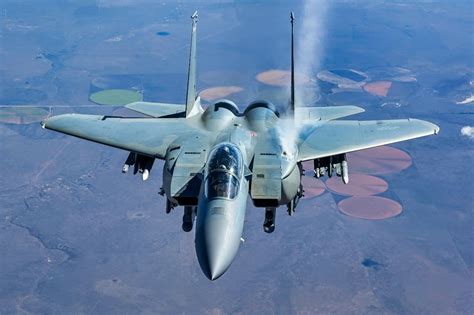
The introduction of the F-15EX Eagle II marks a new era for the platform, incorporating:
- Expanded weapons capacity: Able to carry 22 AIM-120D AMRAAMs or a mixed load of 16 missiles and 28 SDB IIs.
- Upgraded radar system: The AN/APG-82(V)1 AESA radar provides unparalleled target detection and tracking.
- Next-generation EW system: EPAWSS v2, featuring fiber-optic towed decoys and expanded electronic countermeasures, is set for deployment by 2030.
Frequently Asked Questions
How many bombs can an F-15E carry?
The F-15E Strike Eagle can carry up to 28 GBU-53/B StormBreaker bombs or a mix of heavy and light precision-guided munitions, totaling 10,705 kg of payload.
What makes the F-15E effective in ground attack missions?
Its combination of high-speed, long-range, and advanced targeting systems allows it to penetrate defended airspace, strike multiple targets, and evade enemy threats with precision-guided weapons.
Can the F-15E carry nuclear weapons?
Yes, the F-15E is certified to deploy the B61-12 tactical nuclear bomb, making it a key component of US strategic deterrence.
The F-15 Eagle series remains a dominant force in modern aerial warfare, blending raw power, adaptability, and cutting-edge technology to maintain its status as a premier strike aircraft in the U.S. Air Force arsenal.