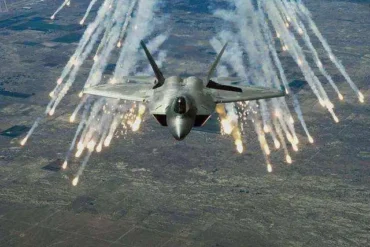
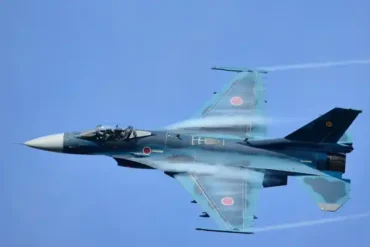
The F-16 Fighting Falcon and Su-27 Flanker represent two different philosophies in fighter aircraft design, reflecting the strategic priorities of their respective nations—the United States and Russia (formerly the Soviet Union). While the F-16 is a lightweight, highly versatile multirole fighter, the Su-27 is a heavy air superiority aircraft built for extended range and superior dogfighting capabilities. This article provides an in-depth analysis of both aircraft, examining their design philosophy, combat performance, modernization efforts, and battlefield roles.
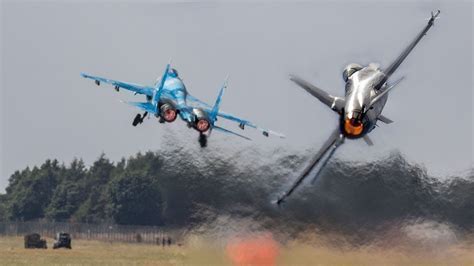
Design Philosophy and Key Differences
F-16 Fighting Falcon: Agile and Cost-Effective
The F-16, developed by General Dynamics (now Lockheed Martin), was designed as a cost-effective, highly maneuverable single-engine multirole fighter. It emphasizes agility, speed, and affordability, making it one of the most widely used fighter jets in the world.
- Engine: Single General Electric F110 or Pratt & Whitney F100
- Maximum Speed: 2,175 km/h (Mach 2.05)
- Combat Radius: 550 km (without external tanks)
- Avionics: Equipped with AN/APG-66 or AN/APG-68 radar, later models feature AESA radar
- Weaponry: AIM-9 Sidewinder, AIM-120 AMRAAM, various air-to-ground munitions
- Operational Role: Multirole (air-to-air, air-to-ground, reconnaissance, suppression of enemy defenses)
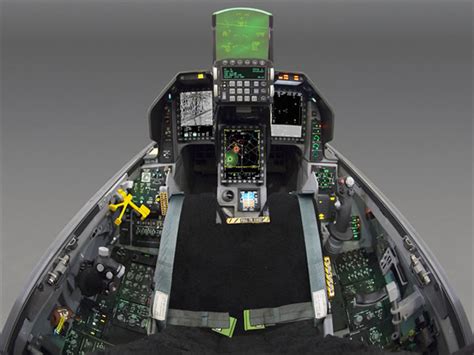
The F-16’s lightweight frame, combined with fly-by-wire controls and an advanced heads-up display (HUD), provides excellent dogfighting capabilities and high-speed maneuverability.
Su-27 Flanker: Air Superiority and Heavy Firepower
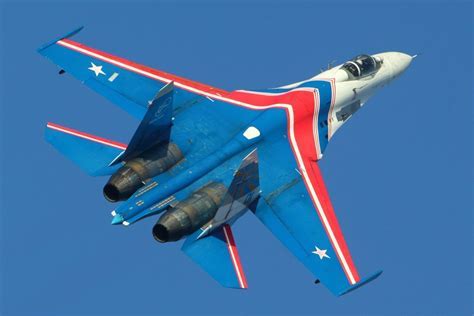
The Su-27, developed by Sukhoi, was designed to counter American fourth-generation fighters, particularly the F-15 Eagle. Unlike the F-16, it is a twin-engine, long-range air superiority fighter known for its exceptional agility and endurance.
- Engine: Twin Saturn AL-31F engines
- Maximum Speed: 2,500 km/h (Mach 2.35)
- Combat Radius: 1,500 km
- Avionics: Equipped with IRST (Infrared Search and Track) and Phazotron N001 radar
- Weaponry: R-27 BVR missiles, R-73 high-off-boresight short-range missiles, GSh-30-1 30mm cannon
- Operational Role: Air superiority, interception, escort missions
The Su-27’s thrust-vectoring capability and large wing area allow it to execute high-angle-of-attack maneuvers such as the Pugachev’s Cobra, giving it a distinct advantage in close-range dogfights.
Combat Performance and Historical Engagements
Close-Range Dogfighting
In simulated dogfights, the Su-27 has often demonstrated superior maneuverability over the F-16 due to its higher thrust-to-weight ratio and energy retention. For example, during mock engagements conducted in Area 51, the Su-27P consistently outperformed the F-16 in turning battles and post-stall maneuvers.
However, the F-16’s smaller frame and high roll rate give it an edge in quick reaction engagements, allowing skilled pilots to use boom-and-zoom tactics effectively.
Beyond Visual Range (BVR) Combat
When it comes to BVR engagements, the F-16 has a notable advantage, particularly in later variants such as the F-16C and F-16V, which are equipped with AESA radar and AIM-120 AMRAAM missiles. These provide superior fire-and-forget capabilities compared to the Su-27’s older radar systems and R-27 missiles, which require mid-course updates.
During the Russia-Ukraine conflict, Ukraine’s F-16AMs, upgraded with modern radar systems, have shown they can engage Su-27s and even Su-35s effectively when supported by AWACS and NATO intelligence networks.
Modernization and Upgrades
F-16’s Continuous Evolution
The F-16 has undergone multiple upgrades under the Mid-Life Update (MLU) and F-16V program, adding features such as:
- Active Electronically Scanned Array (AESA) radar
- Improved data link systems for real-time communication with allied aircraft
- Advanced electronic warfare (EW) capabilities
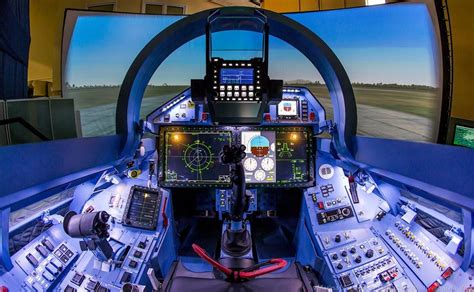
- Enhanced cockpit displays and fly-by-wire upgrades
These improvements ensure that the F-16 remains a formidable multirole fighter, even against fifth-generation aircraft.
Su-27’s Evolution into Su-35
The Su-27 has evolved into advanced variants such as the Su-30, Su-33, and Su-35, incorporating:
- N035 Irbis-E AESA radar for superior target tracking
- Enhanced avionics and cockpit displays
- Integration of R-77 beyond-visual-range missiles
- Thrust-vectoring nozzles for improved dogfighting capabilities
While the Su-35 significantly improves upon the Su-27’s weaknesses, early models of the Su-27 remain limited in BVR combat without modernization.
Battlefield Considerations and Strategic Use
F-16’s Reliance on NATO Infrastructure
The F-16 is heavily dependent on NATO’s command-and-control systems, requiring access to AWACS, satellite data, and aerial refueling to maximize its effectiveness. For example, Romanian F-16s engaging Russian aircraft rely on NATO’s intelligence-sharing network for superior situational awareness.
Su-27’s Independent Operational Capability
Unlike the F-16, the Su-27 is designed to operate independently, with a longer range and integrated IRST systems that allow for passive target acquisition. However, this comes at the cost of higher maintenance requirements and operational costs.
Conclusion
The F-16 and Su-27 each have distinct strengths and weaknesses:
- In BVR engagements, the F-16’s advanced radars and missiles provide a significant advantage.
- In close-range combat, the Su-27’s supermaneuverability makes it a deadly opponent.
- Modern warfare increasingly depends on networked capabilities, where the F-16 excels due to NATO’s support.
- The Su-27’s endurance and independent operational capability make it formidable in contested airspace.
Ultimately, which aircraft prevails depends on the battlefield conditions, pilot skill, and support infrastructure available.
FAQ
1. Which aircraft is more maneuverable, the F-16 or Su-27?
The Su-27 is more maneuverable in close-range dogfights, thanks to its higher thrust-to-weight ratio and ability to perform post-stall maneuvers. However, the F-16’s superior roll rate and smaller size make it highly responsive in quick engagements.
2. Which jet has better radar and missile systems?
Modernized F-16s with AESA radar and AIM-120 AMRAAM missiles generally outperform older Su-27 variants, but the Su-35’s Irbis-E radar and R-77 missiles close the gap.
3. Has the F-16 ever fought the Su-27 in real combat?
There are no confirmed real-world combat engagements between the two aircraft, but simulated battles and proxy conflicts have provided insight into their relative strengths and weaknesses.