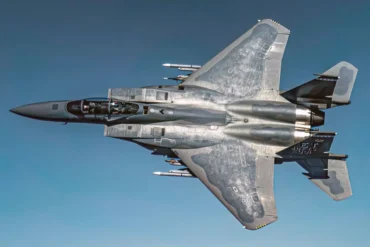
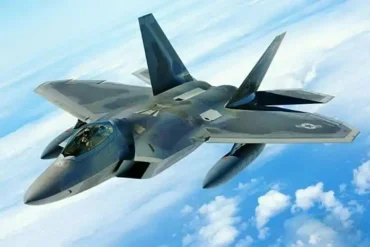
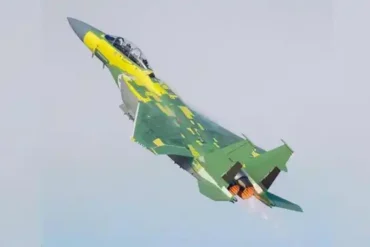
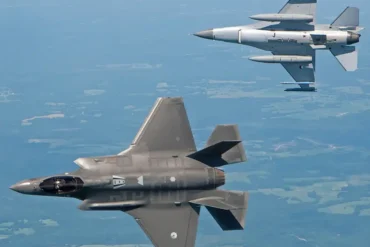
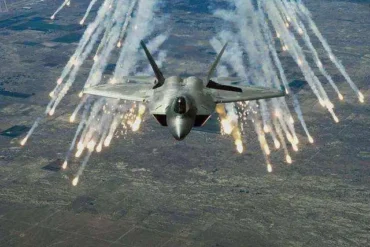
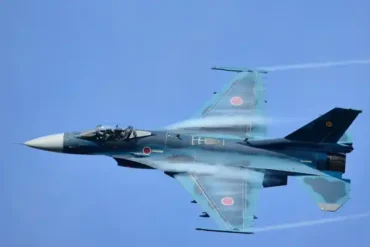
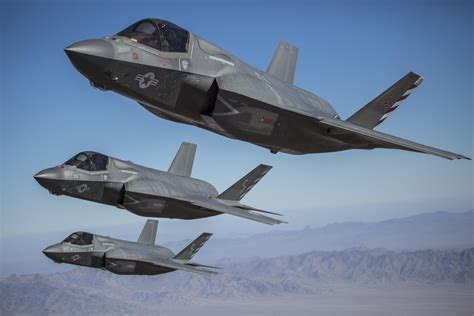
The F-22 Raptor and F-35 Lightning II are the two most advanced fifth-generation stealth fighters in the U.S. Air Force. While both aircraft incorporate cutting-edge technology, their design philosophy, mission roles, performance characteristics, and operational capabilities differ significantly. This article provides a detailed comparison between the F-22 and F-35, analyzing their stealth capabilities, maneuverability, avionics, armament, and operational costs.
Design Philosophy and Mission Roles
F-22 Raptor: Air Superiority Fighter
The F-22 Raptor was designed exclusively for air dominance and excels in engaging enemy aircraft in high-threat environments. It was developed under the Advanced Tactical Fighter (ATF) program, with an emphasis on stealth, speed, and superior dogfighting ability. The U.S. has strictly restricted its export to maintain its technological edge.
F-35 Lightning II: Multirole Stealth Fighter
The F-35 Lightning II serves as a multi-role fighter, designed to perform air-to-ground strikes, intelligence gathering, and limited air superiority missions. Unlike the F-22, it was developed under the Joint Strike Fighter (JSF) program to be widely exported and operated by multiple allied nations.
Stealth and Survivability
Radar Cross-Section (RCS) and Stealth Features
- The F-22 has superior stealth technology, with an RCS between 0.001 and 0.08 square meters, making it significantly harder to detect on radar.
- The F-35 has a larger RCS of approximately 0.1 to 1 square meter, making it less stealthy than the F-22 but still superior to fourth-generation fighters.
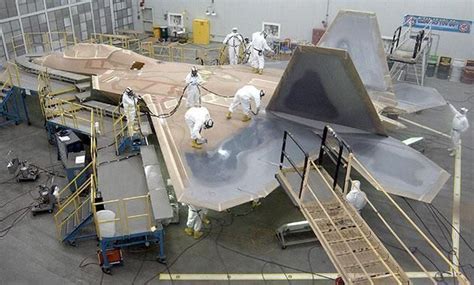
- The F-22’s stealth coating requires more intensive maintenance than the F-35’s cost-effective, easier-to-maintain radar-absorbent material.
Maneuverability and Flight Performance
F-22: Superior Speed and Agility
- Supercruise: Capable of flying at Mach 1.8 without afterburners, allowing extended high-speed operations.
- Thrust Vectoring: Equipped with thrust-vectoring nozzles, enabling extreme maneuvers like the Pugachev’s Cobra and rapid direction changes.
- Maximum Speed: Estimated at Mach 2.25.
F-35: Optimized for Stability and Strike Missions
- Limited Supercruise: Can reach Mach 1.6 but only in short bursts.
- Conventional Maneuverability: Lacks thrust-vectoring and relies on advanced avionics and sensor fusion for combat effectiveness.
- Variants with Different Performance:
- F-35A (Air Force variant): Standard fighter configuration.
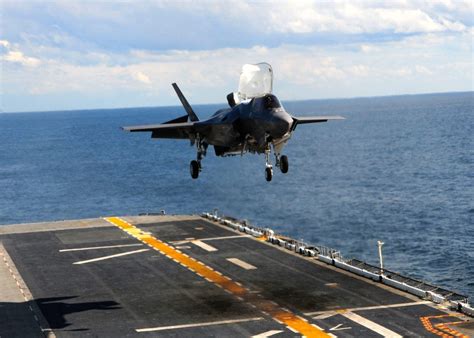
- F-35B (Marine variant): Short Takeoff and Vertical Landing (STOVL) capability.
- F-35C (Navy variant): Larger wings and reinforced landing gear for carrier operations.
Avionics and Situational Awareness
F-35: Cutting-Edge Sensor Fusion
- Distributed Aperture System (DAS): Provides a 360-degree real-time view around the aircraft, significantly enhancing situational awareness.
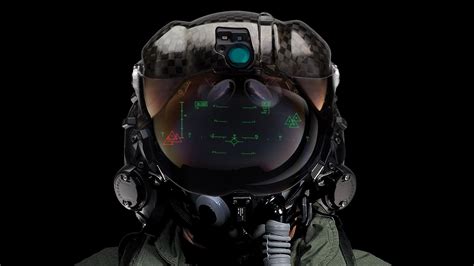
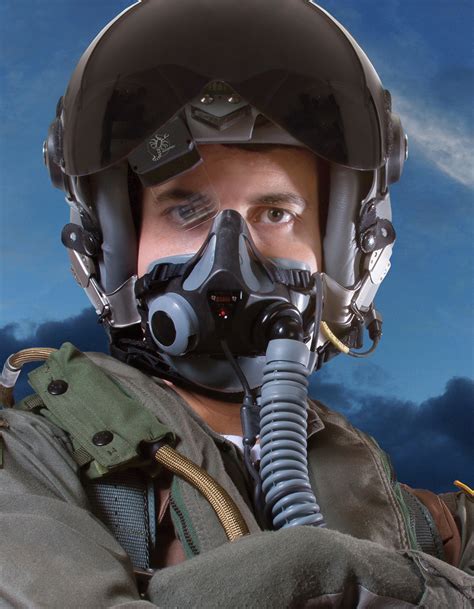
- Helmet Mounted Display System (HMD): Allows pilots to target and engage enemies simply by looking at them.
- Multifunction Advanced Data Link (MADL): Facilitates secure communication and data sharing between allied forces and other aircraft.
F-22: Still Powerful but Lacks Modern Integration
- Outdated Avionics: While effective, the F-22’s sensor suite lacks some of the networking capabilities of the F-35.
- Recently upgraded with the Scorpion Helmet-Mounted Display (ROST-HD), improving night combat capabilities.
Weapons and Combat Capabilities
F-22: Focused on Air-to-Air Combat
- Air Superiority Armament:
- 6 AIM-120D AMRAAMs (medium-range missiles)
- 2 AIM-9X Sidewinders (short-range dogfight missiles)
- 20mm M61 Vulcan cannon for close combat
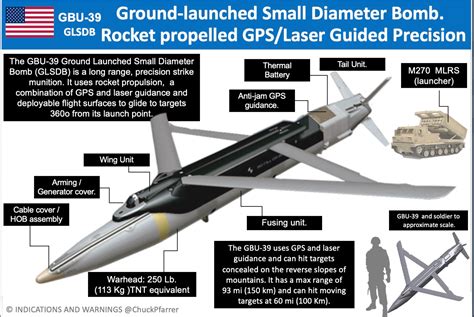
- Limited Ground Attack: Can carry GBU-39 Small Diameter Bombs (SDB) but lacks extensive strike capabilities.
F-35: Versatile Multirole Arsenal
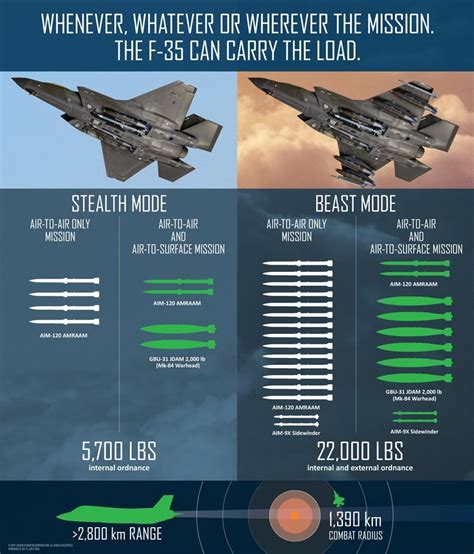
- Stealth Loadout:
- 4 AIM-120 AMRAAMs
- 2 GBU-31 JDAMs (precision-guided bombs)
- External “Beast Mode” Loadout:
- Carries up to 22,000 lbs of ordnance when stealth is not a priority.
- Includes AGM-158 JASSM, AGM-154 JSOW, and various other strike weapons.
Cost and Maintenance
F-22: High Cost, Limited Production
- Unit Cost: Over $150 million per aircraft.
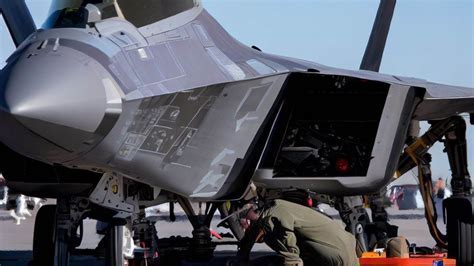
- Expensive Maintenance: Requires extensive servicing and parts replacement, limiting availability.
- Production ceased in 2010, with only 187 operational units.
F-35: More Affordable and Scalable
- F-35A unit cost: Approximately $80 million.
- Lower operational costs due to streamlined logistics and modular maintenance.
- Over 600 units deployed worldwide, forming the backbone of many allied air forces.
International Deployment and Future Prospects
F-35: Global Adoption and Interoperability
- Used by multiple U.S. allies including the UK, Japan, Israel, and NATO members.
- Interconnected fleet ensures real-time intelligence sharing.
F-22: Exclusive to U.S. Forces
- Restricted from export due to classified technologies.
- Undergoing modernization to remain effective until at least the 2040s.
Conclusion
The F-22 Raptor remains the most dominant air superiority fighter, excelling in stealth, agility, and dogfighting. However, its high maintenance costs and limited numbers prevent it from being widely deployed. The F-35 Lightning II, in contrast, is a versatile, cost-effective multirole fighter with state-of-the-art avionics and global interoperability. These aircraft complement rather than replace each other, forming the foundation of U.S. and allied air power for decades to come.
FAQ
1. Why was the F-22 production stopped?
The U.S. discontinued F-22 production in 2010 due to budget constraints, high costs, and shifting focus towards multirole fighters like the F-35.
2. Can the F-35 outmaneuver the F-22 in dogfights?
No, the F-22 is superior in close-range combat, with thrust vectoring and higher agility. The F-35 relies on stealth and advanced avionics to avoid dogfights.
3. Will the F-22 or F-35 be replaced by sixth-generation fighters?
The U.S. is developing the Next-Generation Air Dominance (NGAD) program, which could eventually replace the F-22, while the F-35 is expected to remain operational until 2070.