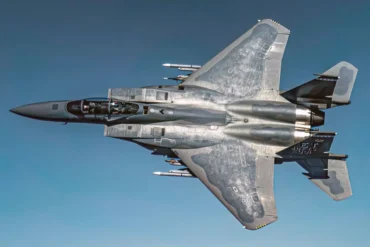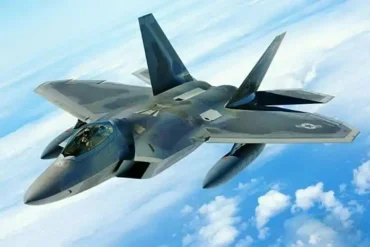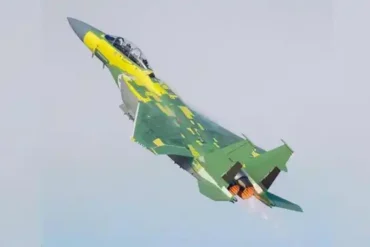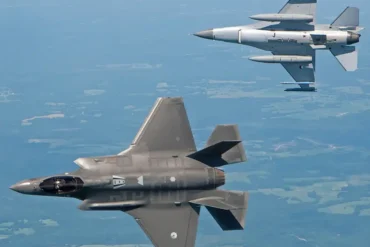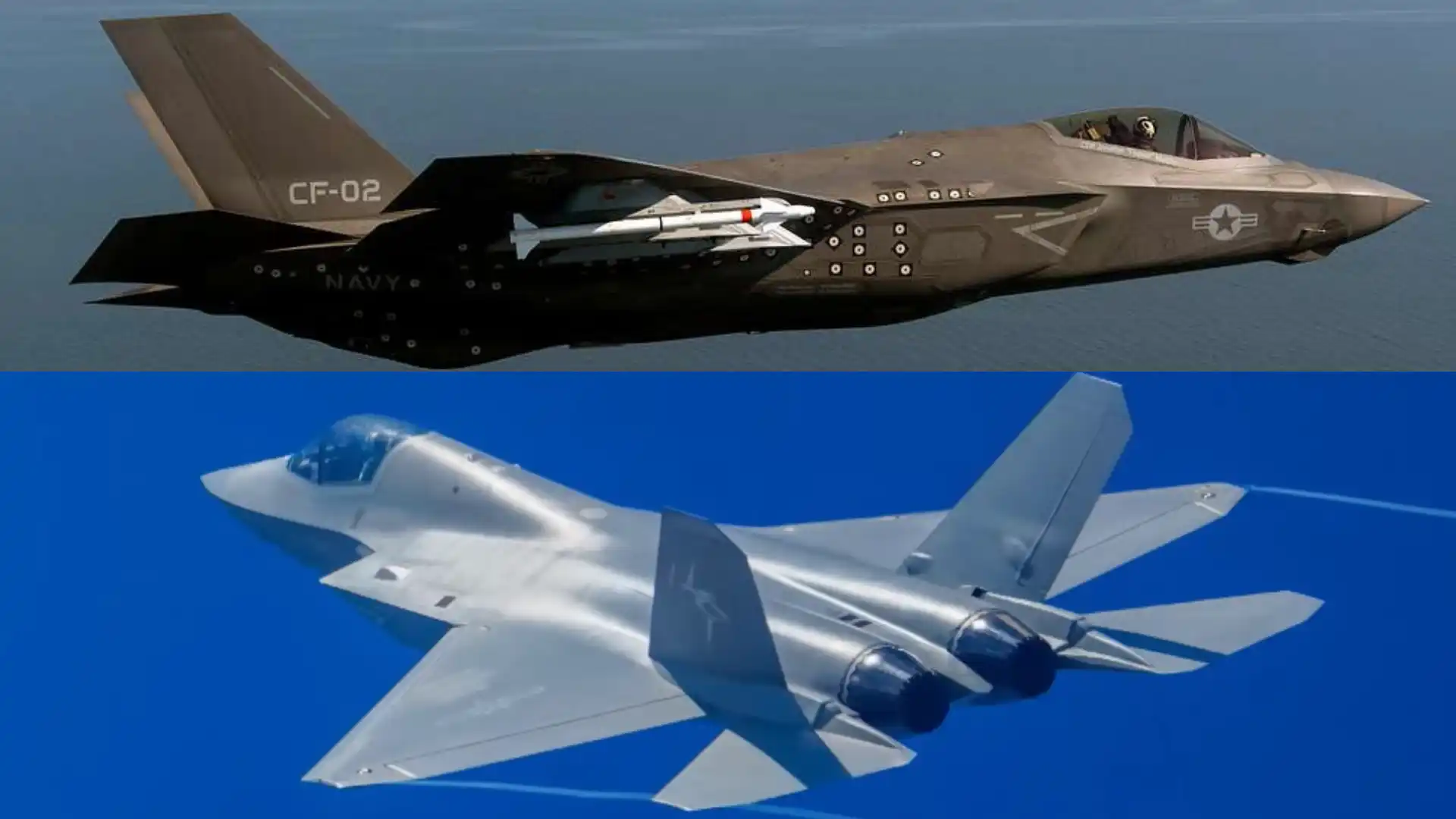
The F-35 Lightning II and J-35 (FC-31) represent the pinnacle of fifth-generation stealth fighter technology from the United States and China, respectively. While both aircraft prioritize stealth, sensor fusion, and advanced avionics, their design philosophies reflect distinct strategic goals. The F-35 is a multi-role fighter with strong global integration, while the J-35 focuses on regional defense and naval operations. This article provides an in-depth comparison of these two cutting-edge aircraft across various performance parameters.
Stealth Capabilities
F-35: Optimized for Multi-Spectrum Stealth
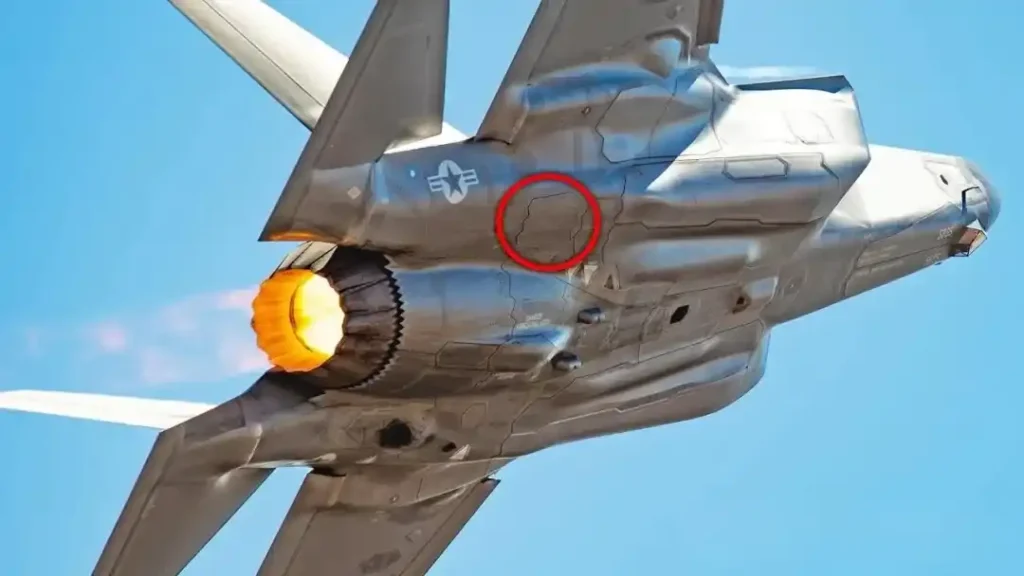
The F-35 employs an advanced composite airframe with radar-absorbing coatings, reducing its radar cross-section (RCS) to an estimated 0.001–0.5 square meters. It features a smooth aerodynamic design, minimizing radar reflection and optimizing infrared (IR) signature suppression. The exhaust system is engineered to reduce heat emissions, making it less detectable by infrared search and track (IRST) systems.
J-35: High Stealth with a Dual-Engine Tradeoff
The J-35 features a streamlined fuselage and Chinese-made GaN-based AESA radar, with a claimed front-facing RCS of approximately 0.01 square meters, comparable to the F-22 Raptor. However, its dual-engine configuration generates a higher infrared signature, potentially reducing its stealth effectiveness compared to the F-35.
Engine Power and Speed
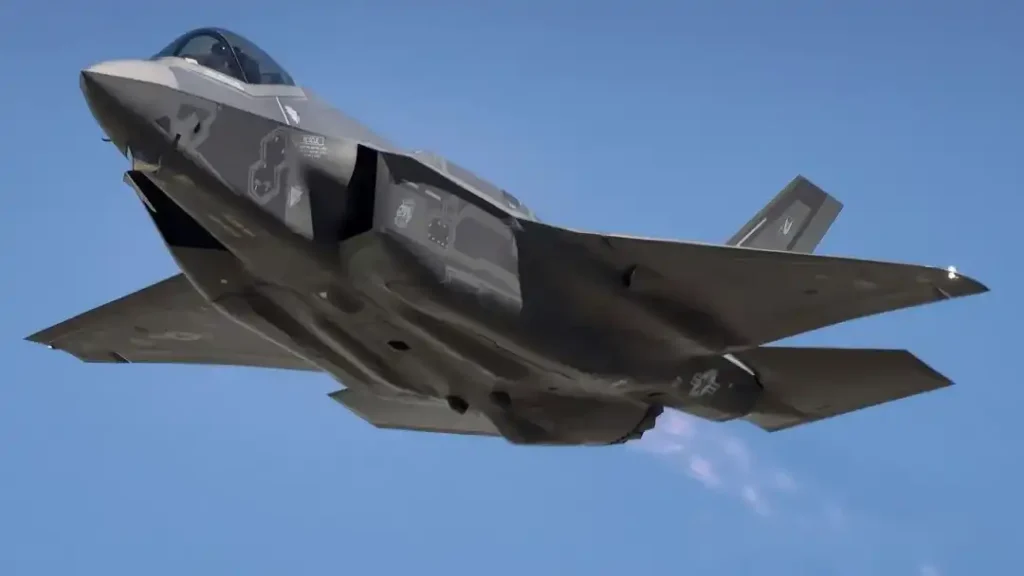
F-35: High-Thrust Single Engine
Powered by the Pratt & Whitney F135 engine, the F-35 produces 19 tons of thrust and reaches a top speed of Mach 1.6. While this allows for short takeoff and vertical landing (STOVL) capability in the F-35B variant, the aircraft’s heavier frame limits its supercruise and high-speed maneuverability.
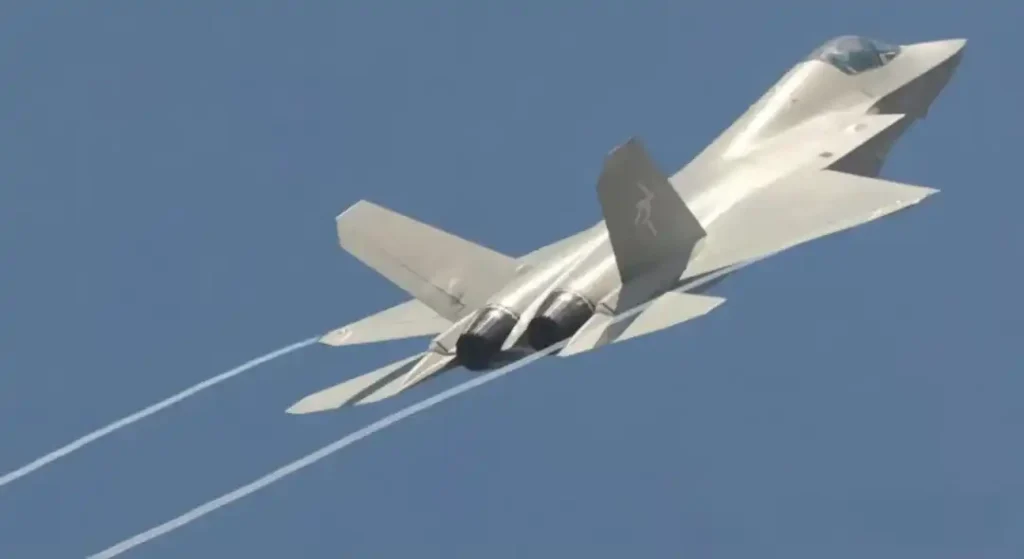
J-35: Faster Twin-Engine Design
The J-35 is equipped with twin WS-19 turbofan engines, each producing 10.5 tons of thrust, resulting in a total thrust of 21 tons. This enables a maximum speed of Mach 2.0–2.2, giving it a potential edge in high-speed interception and air superiority roles. Its twin-engine setup also enhances carrier-based operations reliability.
Combat Radius and Range
F-35: Extended Operational Reach
The F-35A has an operational radius of approximately 2,200 km, enabling deep-strike missions and global force projection. However, the carrier-based F-35C variant has a reduced combat radius of around 1,160 km.
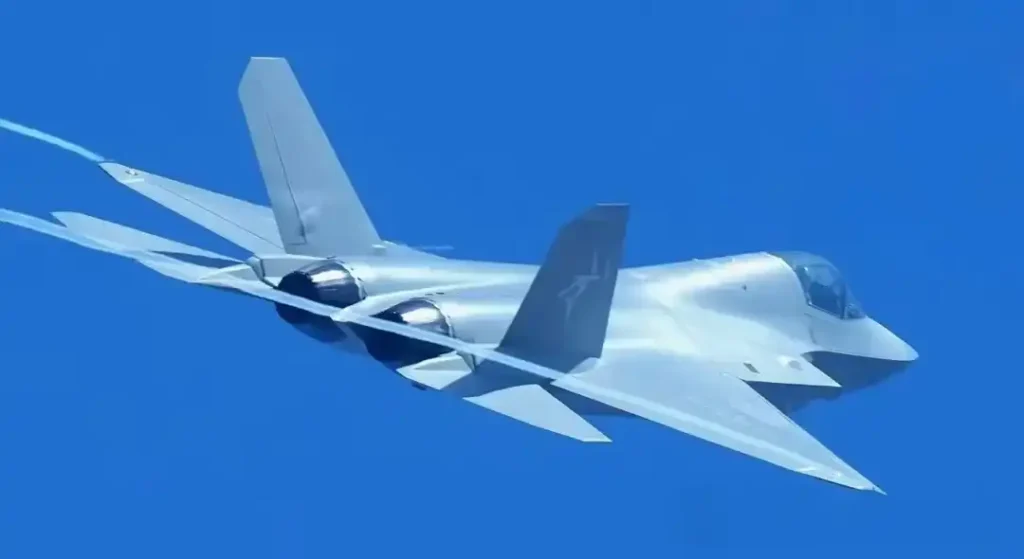
J-35: Optimized for Regional Defense
The J-35 has a combat radius of 1,200–1,500 km, making it well-suited for naval and regional defense missions. While shorter than the F-35’s range, its potential in-flight refueling capabilities could extend its operational endurance.
Weapons and Payload Capacity
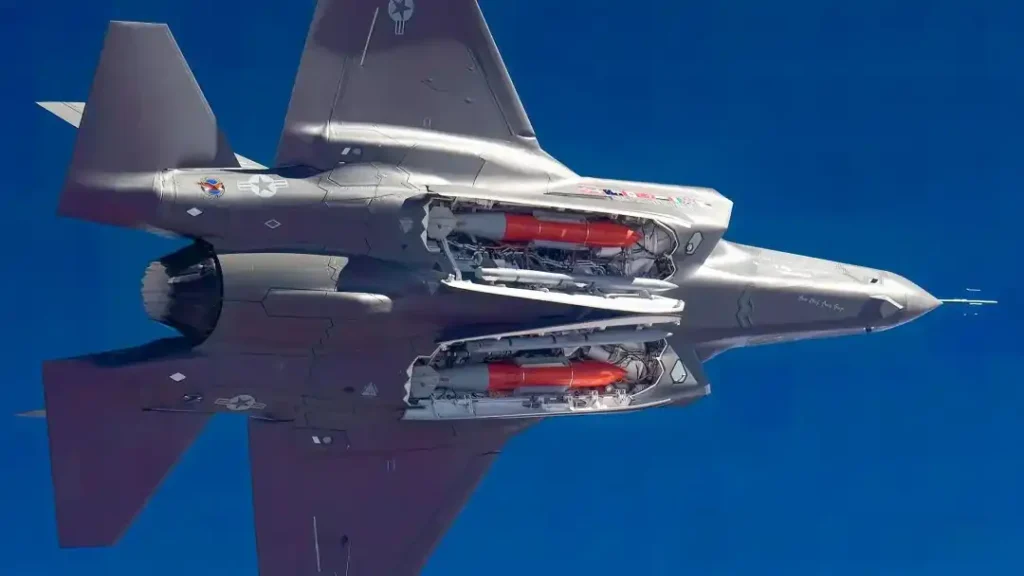
F-35: Versatile Multi-Role Arsenal
The F-35 carries up to 8.16 tons of ordnance, including:
- AIM-120 AMRAAM beyond-visual-range missiles
- JDAM precision-guided bombs
- Small Diameter Bombs (SDBs)
Its internal weapons bay ensures stealth, while external hardpoints allow for increased payload capacity when stealth is less critical.
J-35: High-Powered Air Superiority Loadout
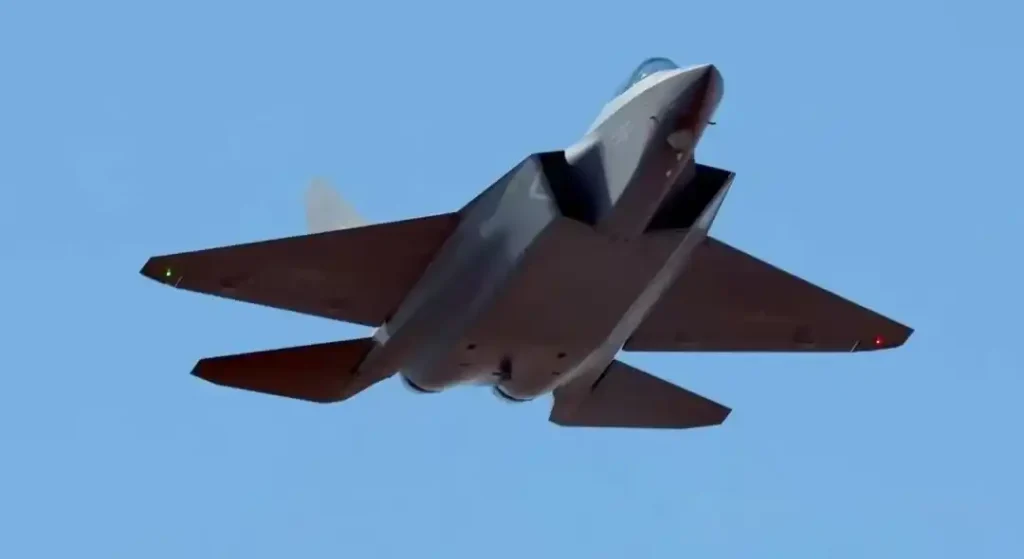
The J-35’s internal weapons bay accommodates 7 tons of munitions, including:
- PL-15 long-range air-to-air missiles (200+ km range)
- PL-10 high-maneuverability short-range missiles
- Side-mounted missile launch bays, enhancing close-range dogfighting capability
Avionics and Sensor Systems
F-35: Advanced Sensor Fusion and Electronic Warfare
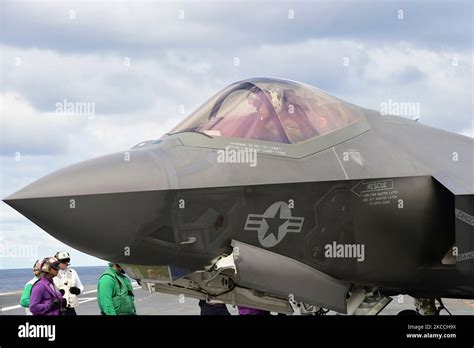
The F-35 features an AN/APG-81 AESA radar, integrated with:
- Distributed Aperture System (DAS) for 360-degree battlefield awareness
- Electronic Warfare (EW) suite for jamming and cyber warfare
- Multi-domain data fusion, enhancing network-centric warfare
J-35: Cutting-Edge Chinese Sensor Tech
The J-35 incorporates a domestically developed AESA radar, along with:
- Advanced radio-frequency sensors for improved electronic warfare
- Enhanced anti-jamming and data-link systems, offering potential advantages in electronic countermeasures
- A digital cockpit with AI-assisted battlefield analysis
Strategic Roles and Military Deployment
F-35: NATO Interoperability and Multi-Role Missions
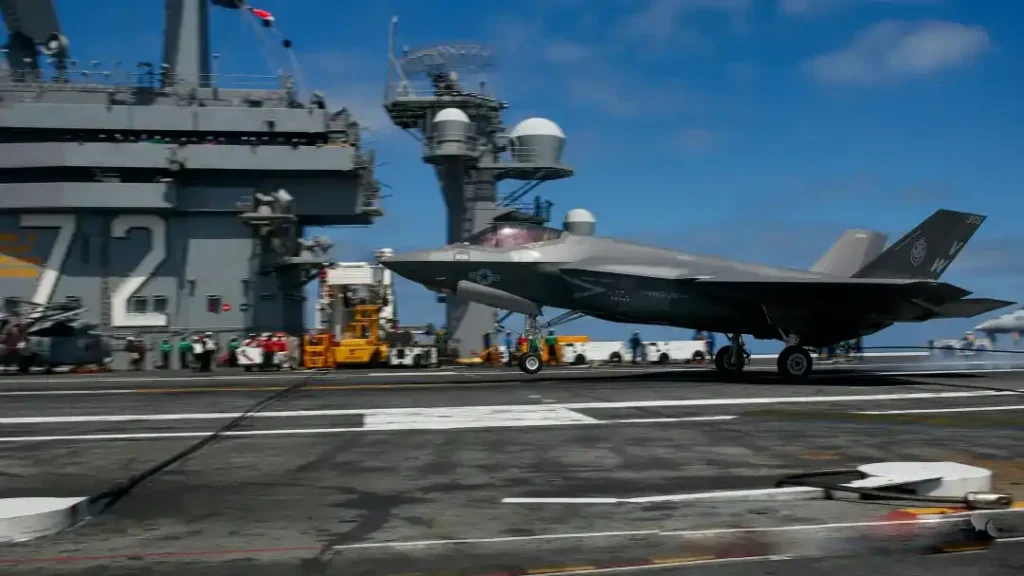
Designed for global deployment, the F-35 serves in multiple roles, including:
- Air superiority and close air support
- Strategic strike and suppression of enemy air defenses (SEAD)
- Nuclear deterrence (F-35A with B61 nuclear bomb capability)
The F-35 integrates seamlessly into NATO’s military architecture, reinforcing joint coalition operations.
J-35: Carrier Operations and A2/AD Doctrine
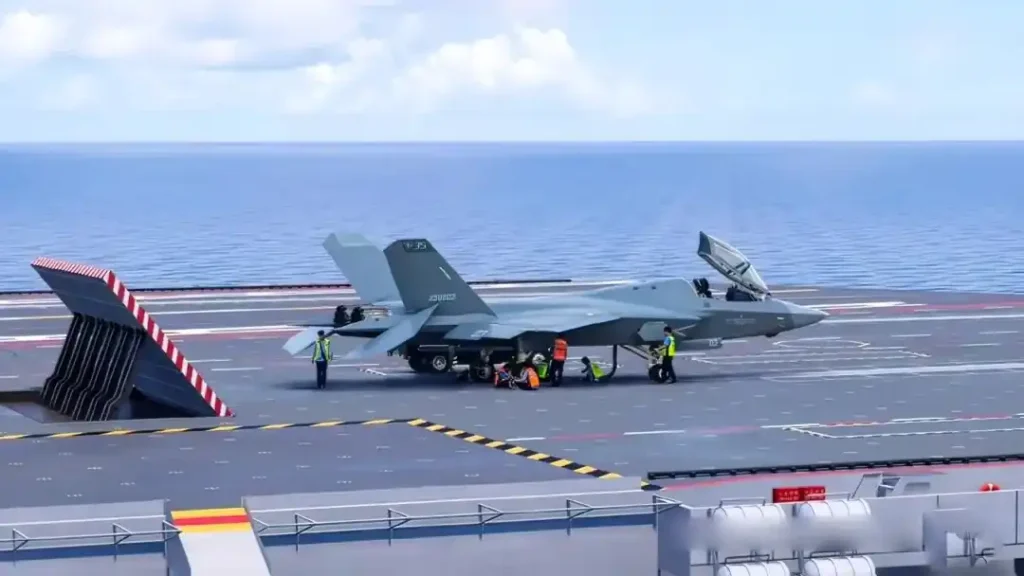
The J-35 is tailored for China’s regional defense strategy, prioritizing:
- Carrier-based operations within the PLA Navy (PLAN)
- Anti-access/area-denial (A2/AD) missions, targeting enemy assets near Chinese territorial waters
- Low-altitude penetration strikes, leveraging stealth for maritime dominance
Cost and Export Potential
F-35: High Cost but Extensive Global Adoption
With a unit cost ranging from $80–100 million, the F-35 is the most widely produced fifth-generation fighter, with over 1,000 units in service. However, its high maintenance costs and strict U.S. export controls limit its accessibility.
J-35: Competitive Pricing and Export Flexibility
The J-35 is expected to cost around $70 million per unit, making it more affordable for potential buyers. Countries like Pakistan, Iran, and Saudi Arabia have shown interest, as China’s export policies are more flexible than the U.S.
Conclusion
The F-35 remains the most versatile and widely deployed fifth-generation fighter, excelling in multi-role capabilities and global interoperability. However, the J-35 presents a formidable alternative, offering higher speed, improved electronic warfare potential, and suitability for China’s naval strategy. While the F-35 is unmatched in battlefield integration, the J-35’s advancements in stealth and avionics make it a credible challenger in the evolving aerial warfare landscape.
FAQ
1. Which aircraft is better for stealth operations?
The F-35 has superior multi-spectrum stealth, but the J-35 is catching up with reduced radar visibility and advanced electronic countermeasures.
2. Can the J-35 operate from aircraft carriers?
Yes, the J-35 is being developed for carrier-based operations as part of China’s PLAN fleet.
3. Is the J-35 a direct replacement for the F-35?
No, the J-35 is designed for regional dominance and naval operations, whereas the F-35 is a multi-role global fighter.