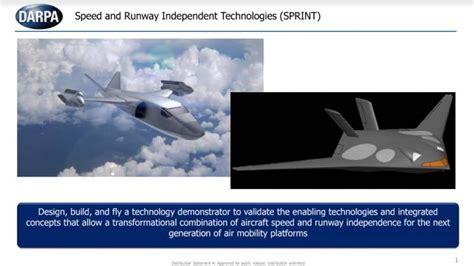
The DARPA SPRINT program—short for Speed and Runway Independent Technologies—represents one of the most ambitious and forward-leaning military aviation initiatives in recent memory. In a geopolitical climate increasingly defined by speed, reach, and vertical maneuverability, SPRINT seeks to revolutionize how aircraft operate in contested environments. Co-led by the Defense Advanced Research Projects Agency (DARPA) and U.S. Special Operations Command (SOCOM), this initiative tasks two aerospace titans—Aurora Flight Sciences and Bell Textron—with delivering next-generation X-plane prototypes that merge fighter-jet velocity with rotorcraft agility.
At the core of SPRINT is a demand for an aircraft capable of 400 to 450-knot cruise speeds while remaining runway-independent. This requirement implies not only jet propulsion capabilities but also vertical takeoff and landing (VTOL)—a unique hybrid performance envelope that has rarely been attempted at this scale. Traditional tiltrotor platforms such as the V-22 Osprey and V-280 Valor have advanced VTOL operations but max out at speeds around 305 knots. To exceed those limitations, DARPA is mandating a paradigm shift in military aircraft design.
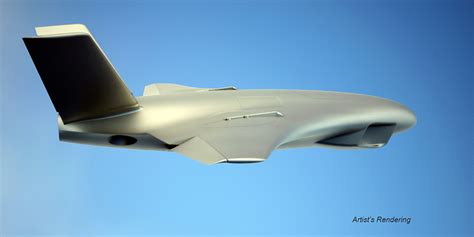
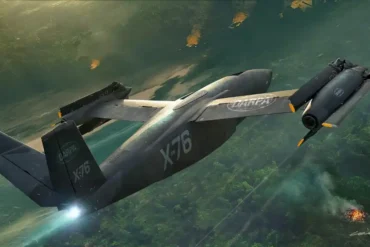
Aurora Flight Sciences, a Boeing subsidiary, is charting a bold course. Their concept emphasizes a blended-wing body using fan-in-wing (FIW) technology, reminiscent of stealth aircraft such as the Northrop Grumman B-21 Raider. This approach not only facilitates vertical lift but also enhances radar evasion, crucial for missions involving personnel recovery or supply drops behind enemy lines. The architecture enables Aurora’s aircraft to embed lift fans within the fuselage, drastically minimizing mechanical exposure and heat signatures. Aurora’s preliminary prototype will be uncrewed, built at 45 feet in length with a 1,000-pound payload—small in scale but massive in strategic implications.
Crucially, Aurora has highlighted the scalability of its FIW platform. By leveraging existing turbofan and turboshaft engines, the system can support both lightweight and heavier manned variants, paving the way for a future family of stealth-capable, runway-free military aircraft. In this vein, the design is more than a standalone demonstrator—it is a modular foundation for future airborne logistics solutions across the U.S. military.
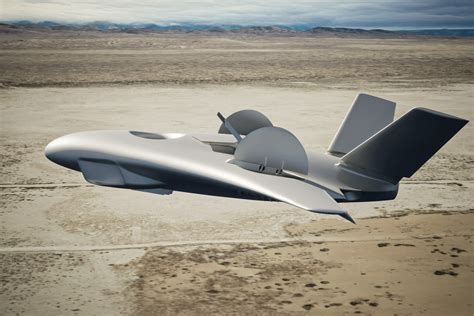
Bell Textron, conversely, draws heavily from its pedigree in rotorcraft and tiltrotor innovation. Renowned for fielding the V-22 Osprey and the Army’s FLRAA-selected V-280 Valor, Bell’s focus for SPRINT centers on its novel High-Speed Vertical Takeoff and Landing (HSVTOL) technology. The centerpiece is a Stop/Fold rotor mechanism—a breakthrough system where proprotors transition mid-flight: they rotate for lift, then feather, and finally fold and stow into aerodynamic fairings as the aircraft shifts to jet-powered cruise mode.
This hybridization grants Bell’s design the agility of a helicopter at low speeds and the thrust of a jet in forward flight, a combination not yet fielded in any existing military aircraft. Though the company has revealed fewer specifications than Aurora, the architecture leans on the proven frameworks of crew and drone-compatible tiltrotor systems. The Bell HSVTOL design is expected to serve not only SOCOM needs but also future U.S. Navy maritime strike and manned-unmanned teaming (MUM-T) programs.
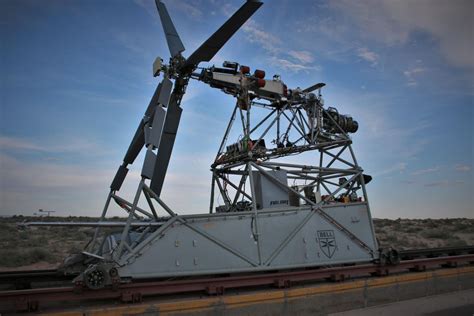
Where Aurora favors stealth and fixed-wing efficiency, Bell leans into operational continuity, ensuring that logistics, maintenance, and doctrinal knowledge accrued through decades of rotorcraft operations carry over seamlessly. This divergence reflects broader philosophies: Aurora aims for air superiority and deep-strike capability, while Bell seeks rapid deployment, shipboard flexibility, and mission adaptability.
From a strategic perspective, SPRINT is a response to emerging threats in Indo-Pacific theater scenarios, where runways may be compromised, dispersed basing is a necessity, and distances are vast. The program prioritizes not only performance metrics like speed and payload but also interoperability with current and future DOD infrastructure. In this light, Bell’s offerings may hold appeal for near-term deployment due to their alignment with existing platforms and practices.
Yet Aurora’s stealth-first strategy might prove decisive in future high-threat operations. By avoiding detection through low-observable shapes and reduced infrared signatures, their platform could operate deep within denied airspace. This aligns with potential applications beyond logistics—combat search and rescue, strategic insertion, and persistent surveillance all stand to benefit.
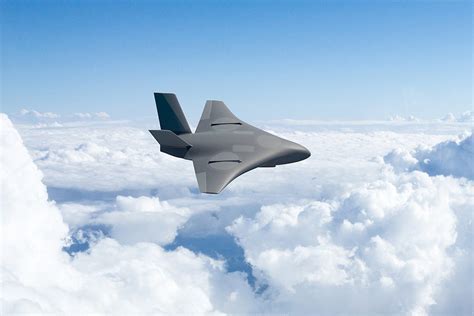
Another dimension of competition is scalability and modularity. Aurora’s model, which uses standardized propulsion units and a universal lift system, could support both large cargo lifters and nimble reconnaissance platforms, all with shared logistical footprints. Bell, while leveraging its existing V-series infrastructure, may face challenges scaling the Stop/Fold system beyond certain sizes due to mechanical constraints or control complexities at larger scales.
The timing of these developments is no accident. With all four U.S. military services now operating tiltrotor aircraft or preparing to do so, and with key programs like FLRAA nearing fielding, there is an urgent window for SPRINT prototypes to demonstrate viability. Military planners face narrowing timelines to identify solutions adaptable to distributed maritime operations, austere forward basing, and joint all-domain operations (JADO). The ability to deliver materiel and personnel across great distances without runway infrastructure is no longer a hypothetical luxury—it is a strategic imperative.
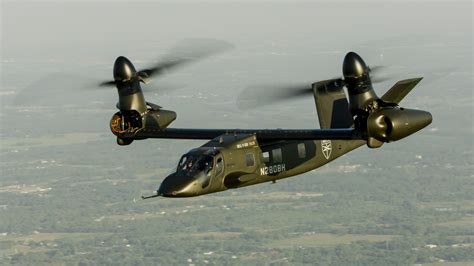
Ultimately, the decision between Aurora and Bell will likely come down to a balance of risk appetite and near-term readiness. Aurora’s stealth-forward, fixed-wing approach introduces more novel technology and potentially higher risk, but with a larger payoff in long-range, contested environments. Bell’s tiltrotor-derived model reduces the technological leap, easing integration but potentially capping top-end performance.
Regardless of the winner, the SPRINT initiative signals a tectonic shift in aerial doctrine. The age of choosing between VTOL capability and high-speed transit is ending. With warfighting concepts evolving rapidly, especially in the wake of A2/AD (Anti-Access/Area Denial) environments posed by adversaries like China, the U.S. military is making a decisive bet: the next generation of air mobility must do it all—lift vertically, cruise supersonically, and land anywhere.
The next year will be decisive. As both Aurora and Bell advance toward preliminary design review, prototypes will undergo increasing scrutiny not just from DARPA and SOCOM, but from all branches of the U.S. military and allied defense organizations watching for signals of where American aerospace is heading. If successful, the winner of SPRINT won’t just build a new aircraft—it will define an entire new class of aviation capability for decades to come.