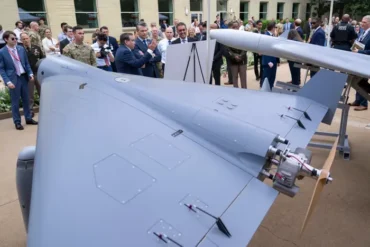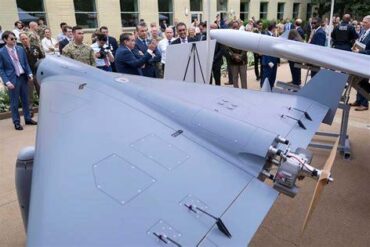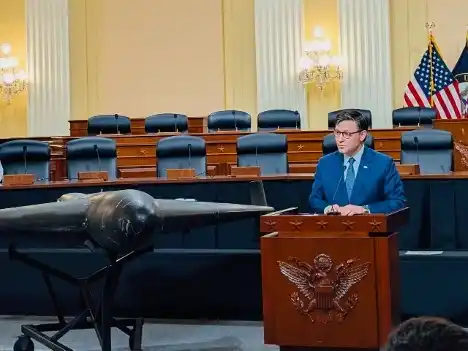
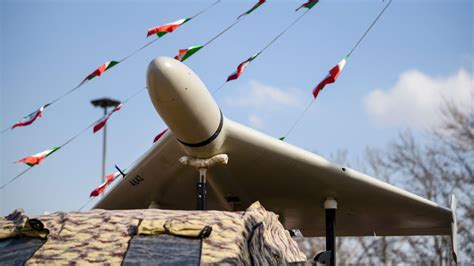
The recent display of an Iranian Shahed 136 drone within the halls of the US Congress has cast a stark spotlight on Tehran’s deepening role in global instability. This dramatic presentation, organized by United Against Nuclear Iran (UANI) at the Cannon Office Building in Washington, was a calculated message – a tangible representation of the Islamic Republic’s increasingly aggressive military reach, including its direct support for Russia’s devastating campaign in Ukraine.
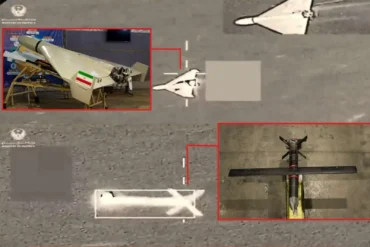
The Shahed 136, a loitering munition often referred to as a “kamikaze drone” for its explosive, single-use design, has become one of the most recognizable symbols of Iran’s asymmetric warfare strategy. These drones, used extensively by Russian forces against Ukrainian cities, represent a significant evolution in the tactics of modern warfare, leveraging advanced electronics and low-cost production to disrupt conventional defense systems. The Shahed 136 on display had been captured in Ukraine and transported to the United States via Poland – a logistical effort aimed at exposing the very real and present danger posed by Iranian arms.
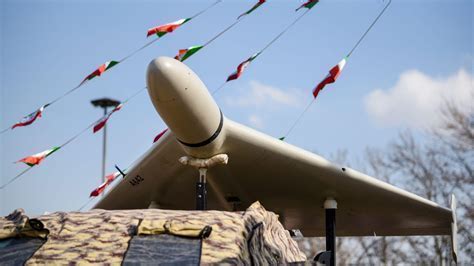
Iranian Drones and the Changing Face of Modern Warfare
House Speaker Mike Johnson underscored this point, emphasizing that loitering munitions like the Shahed have fundamentally altered the balance of power in global conflicts. “These drones are changing the economics of war,” Johnson stated, reflecting the growing concern within US defense circles that these relatively cheap yet highly effective systems have provided Russia with a significant battlefield advantage. This technological shift has sparked intense debate among military strategists, who warn that the proliferation of such weapons threatens to upend decades of Western dominance in air and missile defense.
Mark Wallace, former US Ambassador to the UN and current UANI CEO, described the Shahed 136 as “the most ubiquitous terror weapon of mass destruction in the world today.” This stark characterization captures the grim reality of Iranian drone warfare – a strategy designed to overwhelm adversaries with sheer volume and relentless pressure, often targeting civilian infrastructure to sow chaos and weaken morale.
A Direct Threat to Europe and Beyond
The implications of this growing threat were further highlighted by Bogdan Klich, former Polish Defense Minister, who addressed the gathering at the Cannon Office Building. Klich warned that Iran’s drone exports pose a direct and escalating threat to Europe, including NATO member states and their allies. The presence of the captured Shahed drone on American soil, he argued, should serve as a stark reminder of the dangers posed by Tehran’s unchecked military ambitions.
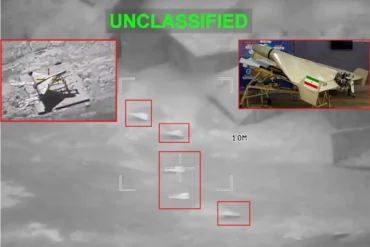
According to recent data, from August 1, 2024, to March 1, 2025, Russian forces launched over 15,000 Shahed drones – including Russian-produced copies known as the Geran 2 – against Ukrainian positions, a scale of assault that has overwhelmed air defense systems and inflicted severe damage on civilian populations. This data, confirmed by the Institute for Science and International Security, underscores the devastating impact of these drones in the ongoing conflict.
A Broader Strategic Challenge
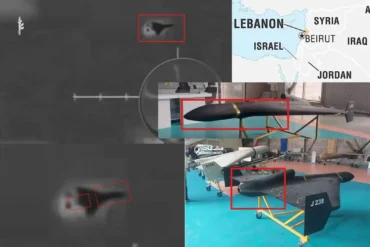
As policymakers grapple with the implications of this evolving threat, the broader strategic challenge posed by Iran’s drone program comes into sharper focus. Beyond Ukraine, Tehran’s drones have been deployed in conflicts across the Middle East, where they have been used by Iranian-backed militias to strike at US allies and American military bases, further destabilizing an already volatile region. These operations serve not only as a direct means of coercion but also as a powerful propaganda tool, reinforcing Iran’s image as a dominant regional power capable of projecting force well beyond its borders.
The presence of the Shahed 136 within the US Capitol is a powerful symbol of this broader struggle – a reminder that the battle over Ukraine’s skies is just one front in a much larger, more complex conflict, where advanced technology and strategic cunning can reshape entire regions.
Conclusion: The Urgent Need for a Coordinated Response
As the US and its allies confront the mounting threat from Iran’s drone arsenal, the stakes could not be higher. The clear message from Thursday’s event in Washington is that a coordinated, global response is essential to counter the rapid proliferation of these weapons. This means not only strengthening air defenses and disrupting supply chains but also confronting the broader geopolitical ambitions that drive Iran’s actions on the world stage.
As Senator Ted Cruz, House Foreign Affairs Chairman Brian Mast, and Senator James Lankford have all noted, the stakes extend far beyond the immediate battlefields of Ukraine. Without decisive action, the Shahed 136 and its successors may come to define a new era of asymmetric warfare – one in which the balance of power is increasingly tilted against the West.