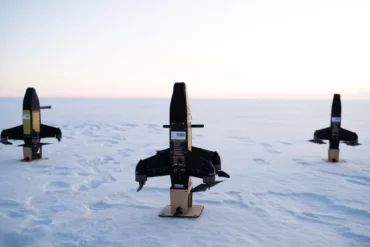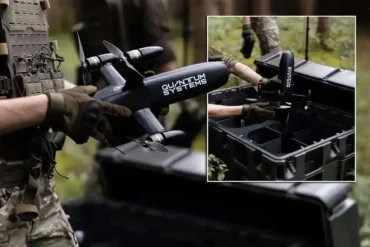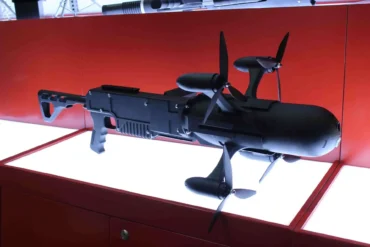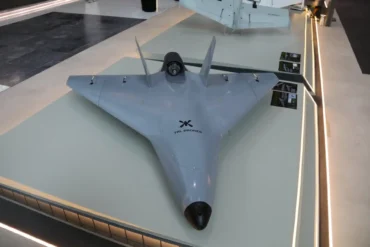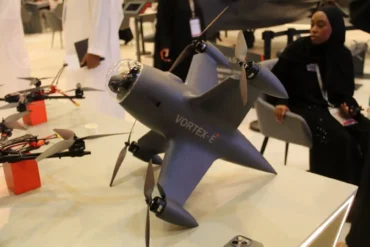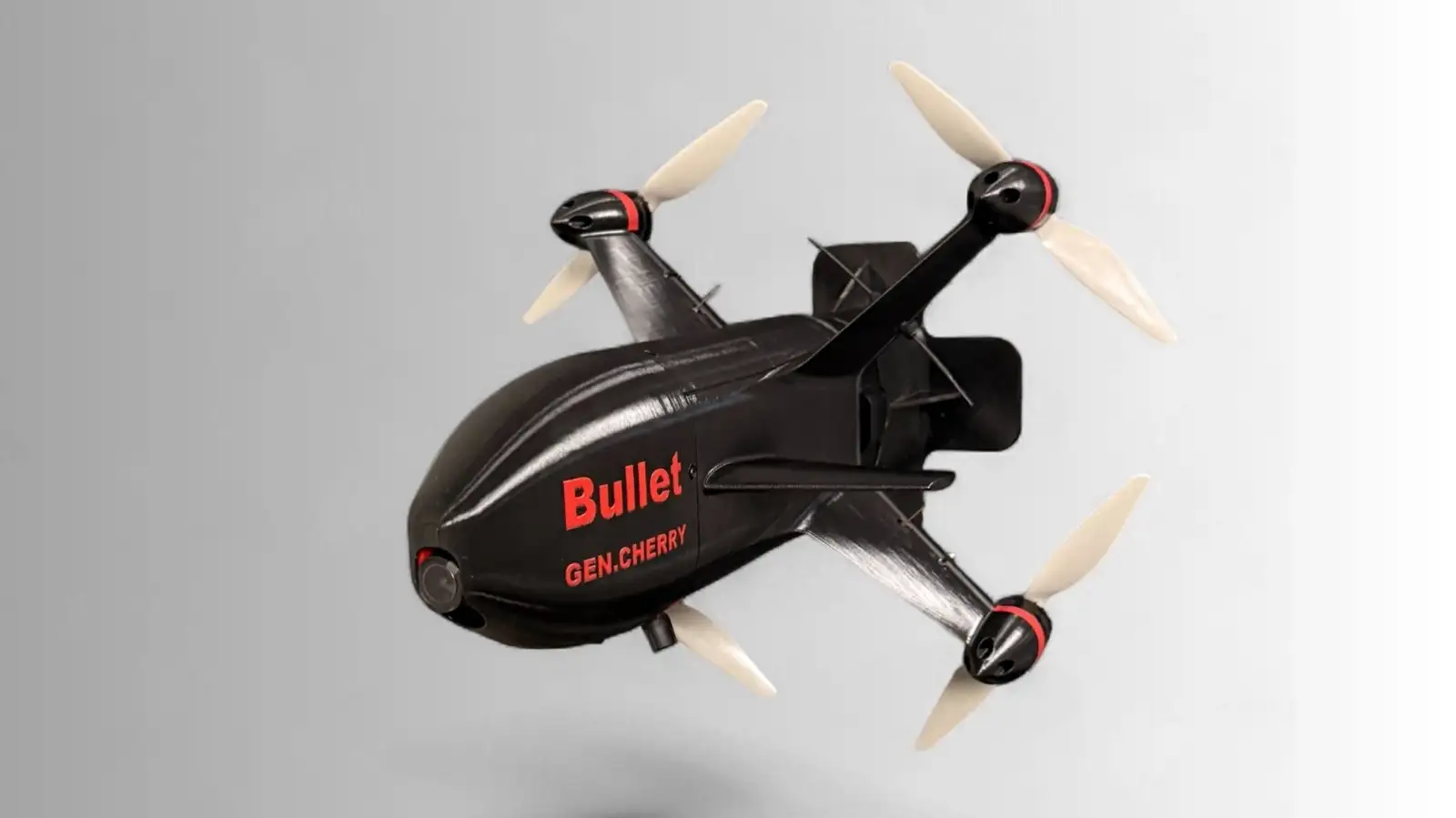
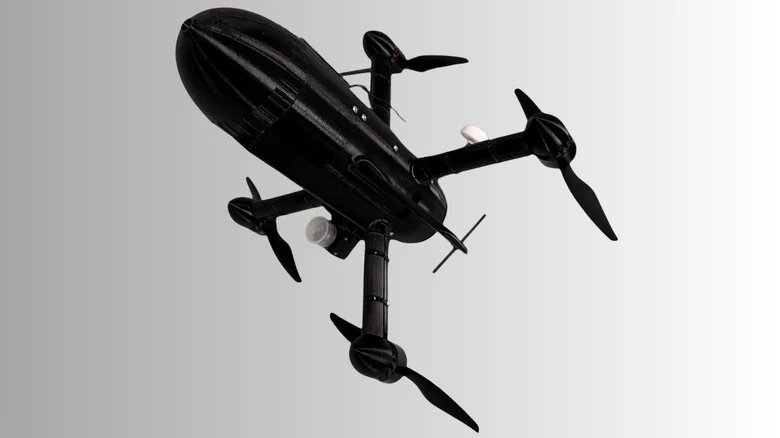
The modern battlefield has become a laboratory of speed, precision, and relentless iteration. We are now witnessing a phase where velocity itself has become a strategic weapon, and Ukraine’s latest interceptor drone represents a striking embodiment of that shift. According to Ukrainian officials, this newly revealed system reaches a top speed of 400 kilometers per hour, a figure that places it not merely ahead of conventional military drones, but squarely in the performance territory of elite hypercars.
This claim, shared publicly by Mykhailo Fedorov, Ukraine’s First Deputy Prime Minister, is more than a headline-grabbing statistic. It signals an intentional recalibration of aerial defense priorities, one that values reaction time and pursuit capability over brute force alone. In a conflict defined by saturation attacks and cost asymmetry, speed is no longer a luxury. It is survival.
The interceptor drone has been developed within Ukraine’s rapidly maturing defense innovation ecosystem, a network forged under the pressures of sustained conflict. At its core is a propulsion system supplied by Motor-G, a company operating under the government-backed Brave1 defense technology platform. While technical specifications of the engine remain classified, the performance benchmark alone indicates a significant leap in aerodynamic optimization, materials engineering, and power-to-weight efficiency.
Speed That Rivals Elite Hypercars
To appreciate the magnitude of this achievement, we must place it in a civilian performance context. A top speed of 248.5 miles per hour exceeds or matches some of the most celebrated road-going machines ever built. Vehicles such as the McLaren F1, the Ferrari SF90 Stradale, and the Lamborghini Aventador SVJ have long defined the upper limits of automotive engineering. Ukraine’s interceptor drone now claims comparable velocity, achieved not on asphalt but in contested airspace, under combat conditions, and within a far smaller mass envelope.
This comparison is not a gimmick. Hypercars represent the extreme edge of efficiency, where marginal gains require disproportionate ingenuity. Achieving similar speeds in an unmanned aerial vehicle designed for interception rather than record-setting underscores how far Ukraine’s drone program has evolved in a remarkably short time.
Engineering Under Fire, Not in Isolation
It is important to contextualize this development against global benchmarks. The absolute speed record for drones still belongs to Benjamin Biggs, an Australian engineer whose purpose-built DIY drone reportedly reached 407 miles per hour under downwind conditions. That achievement, however, was a controlled experiment optimized solely for velocity. Ukraine’s interceptor drone operates under entirely different constraints. It must carry sensors, guidance systems, and interception payloads while remaining agile, durable, and deployable at scale.
This distinction matters. Speed achieved in isolation is a technical curiosity. Speed achieved in combat is a strategic asset.
Why Velocity Is Reshaping Air Defense
The rationale behind faster interceptor drones becomes clearer when viewed through recent operational data. Reports citing Ukraine’s air force indicate a declining interception rate amid a surge in Russian drone and missile launches. In October alone, Ukrainian defenses neutralized 4,242 out of 5,312 incoming drones, marking the lowest success rate of the year. The sheer volume of threats has made traditional missile-based interception economically unsustainable.
A high-speed interceptor drone changes this calculus. It offers a reusable, lower-cost solution capable of rapidly closing distance, adjusting trajectory, and neutralizing targets that would otherwise slip through layered defenses. As Bloomberg has observed, Ukrainian drones have already demonstrated the ability to disable or destroy armored assets worth millions at a fraction of the cost.
Matching an Enemy That Is Getting Faster
Russia has not remained static. Intelligence and media reports suggest a growing emphasis on speed across Russian attack platforms, from modified loitering munitions to unconventional rapid-mobility units on the ground. The Associated Press has noted that newer Russian suicide drones are flying faster and at higher altitudes, compressing response windows and straining existing defenses.
In this environment, an interceptor capable of roughly 248 miles per hour becomes a direct counter to systems such as the Shahed-238 and Geran-3, both reported to reach speeds near 230 miles per hour. Speed parity is no longer sufficient. Superiority is required.
A Signal of Strategic Maturity
We view this development as a marker of Ukraine’s accelerating defense maturity. Despite not being a traditional hub of military technology, Ukraine has leveraged necessity into innovation, producing systems tailored precisely to the realities of modern warfare. The new high-speed interceptor drone is not merely faster than many hypercars. It is faster than outdated thinking about what drones are supposed to be. In today’s airspace, speed decides who reacts and who is remembered.