For decades, the aviation industry operated under a simple assumption: if passengers wanted a true long-haul premium experience, they needed to board a large twin-aisle aircraft. Widebodies such as the Boeing 777, Airbus A350, and Boeing 787 became symbols of international prestige, equipped with expansive business-class cabins, premium lounges, and fully flat beds designed for overnight comfort. Narrowbody aircraft, meanwhile, remained associated with short regional hops, cramped cabins, and compromise.
That distinction is rapidly disappearing.
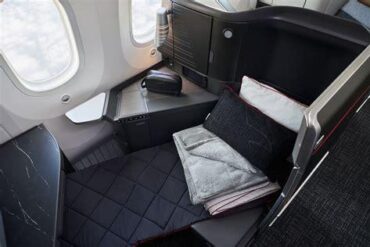
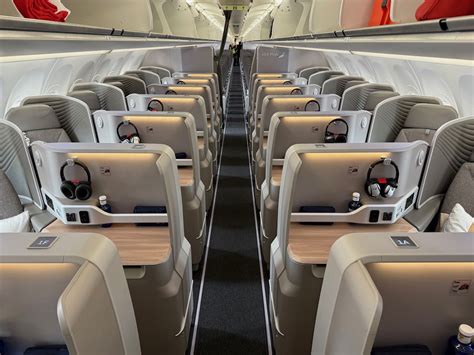
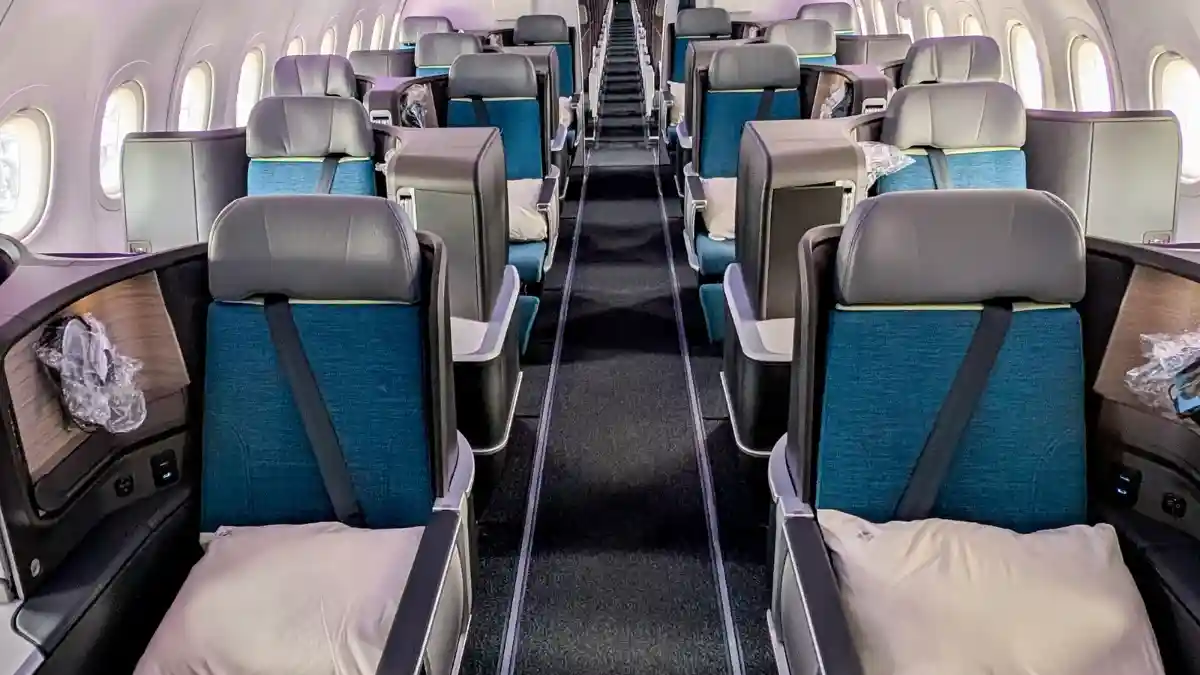
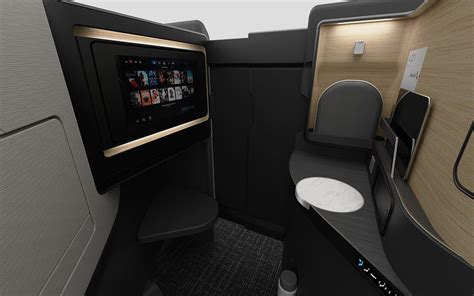
Airlines across the world are now investing billions of dollars into transforming single-aisle aircraft into premium long-haul machines. Modern narrowbody jets like the Airbus A321LR and A321XLR are being equipped with enclosed business-class suites, sliding privacy doors, wireless charging pads, ultra-high-definition entertainment systems, and lie-flat beds once reserved exclusively for flagship international aircraft.
The shift may appear to be driven by passenger comfort, but the real motivation is financial. Beneath the glossy marketing campaigns and luxurious cabin photos lies a powerful economic strategy that is reshaping global aviation networks. Airlines are discovering that premium narrowbody aircraft generate extraordinary profit margins on routes that widebody jets cannot economically sustain.
The lie-flat seat has become far more than a comfort upgrade. It is now one of the most valuable revenue-generating tools in commercial aviation.
The transformation is changing how airlines design routes, deploy aircraft, compete for corporate travelers, and define the future of long-haul flying itself.
By 2026, the narrowbody jet is no longer the industry’s secondary aircraft. In many markets, it is becoming the centerpiece of airline strategy.
After years of relying on giant aircraft to dominate international travel, airlines are learning that smaller jets equipped with premium cabins can produce better financial returns while offering greater operational flexibility. This realization is triggering one of the most important structural shifts the airline industry has seen in decades.
The Economics Behind The Lie-Flat Narrowbody Boom
The modern airline business revolves around one critical metric: revenue per square foot of cabin space.
Widebody aircraft traditionally solved profitability challenges through scale. By carrying 250 to 350 passengers across oceans, airlines could spread fuel costs, crew expenses, airport fees, and maintenance across hundreds of seats. Economy passengers alone could often make these routes viable because the sheer size of the aircraft diluted operational costs.
Narrowbody aircraft completely change that equation.
A single-aisle jet simply does not have enough cabin space to rely heavily on low-yield economy revenue. Every seat matters far more. Every section of the aircraft must work harder financially.
That is why airlines are aggressively prioritizing premium seating.
A single corporate traveler paying between $4,000 and $7,000 for a transatlantic business-class ticket can generate more profit than multiple rows of economy passengers combined. On many long-haul narrowbody flights, premium cabins produce a disproportionate share of total route revenue despite occupying only a small percentage of the aircraft.
This dramatically alters cabin planning decisions.
Instead of maximizing passenger numbers, airlines are optimizing financial yield. A smaller aircraft carrying fewer passengers can outperform a larger aircraft financially if enough high-paying travelers occupy premium seats.
Lie-flat suites make this possible.
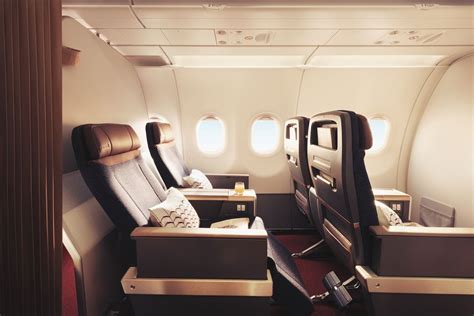
Without them, corporate travelers simply would not tolerate flying overnight on a narrowbody aircraft. Recliner-style business seats are no longer competitive on flights lasting six to ten hours. Corporate clients expect privacy, direct aisle access, premium dining, uninterrupted sleep capability, and consistent comfort standards regardless of aircraft size.
Airlines understand this perfectly.
The premium suite is not an optional luxury addition. It is the mechanism that unlocks the entire business model.
Why Smaller Aircraft Are Suddenly Dominating Long-Haul Expansion
The rise of long-range narrowbody aircraft has fundamentally changed route economics.
For years, airlines struggled with so-called “long-thin” routes — international city pairs that generated consistent demand but not enough passengers to fill a large widebody aircraft profitably. These routes often forced travelers to connect through overcrowded hubs such as London Heathrow, Frankfurt, Dubai, or Atlanta.
Modern narrowbody aircraft have eliminated that limitation.
Aircraft such as the Airbus A321XLR can now fly transatlantic and deep regional international routes with remarkable efficiency while carrying roughly 180 passengers. That smaller capacity allows airlines to profitably serve markets previously considered impossible.
Routes such as:
- New York to Edinburgh
- Montreal to Palma de Mallorca
- Toronto to Copenhagen
- Boston to Lisbon
- Dublin to Nashville
are becoming increasingly viable because airlines no longer need to gamble on filling enormous aircraft every day.
Instead, they can operate smaller jets with lower risk while maintaining premium pricing power.
This flexibility creates enormous strategic advantages.
A widebody aircraft represents a major financial commitment every time it departs. Fuel burn is higher. Crew costs are larger. Airport handling becomes more expensive. Maintenance overhead rises substantially. If passenger demand weakens, profitability collapses quickly.
Narrowbody aircraft dramatically reduce that exposure.
With lower operating costs and smaller seating capacity, airlines can enter emerging international markets cautiously while still offering a premium experience capable of attracting business travelers.
That combination is revolutionary.
Airlines no longer need massive passenger volumes to justify direct international service. They simply need enough premium demand to make the economics work.
The result is a global shift away from hub dependency.
The Death Of Forced Hub Connections
For decades, airline networks revolved around mega-hubs.
Passengers from secondary cities were routinely funneled through giant transfer airports before reaching their final destinations. This structure allowed airlines to consolidate demand onto large widebody aircraft operating between major hubs.
The model worked, but travelers hated it.
Long layovers, missed connections, congested terminals, and additional travel time became unavoidable parts of international flying. Business travelers especially viewed these connections as expensive productivity killers.
Premium narrowbody aircraft are dismantling that system.
Instead of routing passengers through major hubs, airlines can now offer nonstop flights directly between smaller international cities. Travelers save hours while airlines capture valuable premium traffic.
This is where lie-flat business-class cabins become absolutely essential.
Corporate travelers may accept a smaller aircraft, but they will not accept an inferior experience. If airlines want executives to choose a nonstop narrowbody flight over a connecting widebody itinerary, the onboard product must feel equally premium.
That means:
- Fully flat beds
- Direct aisle access
- High-speed Wi-Fi
- Large entertainment displays
- Premium meal service
- Privacy doors and partitions
The expectation gap between widebody and narrowbody aircraft is disappearing rapidly.
In many cases, newer narrowbody business-class suites are actually superior to older widebody cabins still flying today.
The Boeing 757 Legacy And The Rise Of The A321XLR
Much of today’s narrowbody revolution can be traced back to one legendary aircraft: the Boeing 757.
For years, the 757 dominated transatlantic narrowbody operations because of its unique balance of range, performance, and economics. Airlines used it extensively on thinner Atlantic routes where larger aircraft made little sense.
But the 757 is aging rapidly.
Fuel inefficiency, rising maintenance costs, and outdated systems are forcing airlines to retire these aircraft in large numbers. The industry needed a replacement capable of matching the 757’s versatility while dramatically improving efficiency.
Airbus delivered exactly that with the A321XLR.
The aircraft has become one of the most strategically important airliners of the modern era.
With its extended range capability and significantly lower fuel burn, the A321XLR allows airlines to operate routes previously impossible for single-aisle aircraft while reducing operational costs by roughly 30% per seat compared to older narrowbody jets.
That efficiency advantage changes everything.
When airlines combine lower operating expenses with premium business-class pricing, profitability rises sharply. The aircraft becomes a highly efficient revenue generator capable of competing directly against larger widebody aircraft.
This is why airlines worldwide are rushing to secure A321XLR deliveries.
The aircraft is not simply another narrowbody jet. It represents an entirely new category of long-haul platform.
For airline executives facing volatile fuel prices, uncertain global demand, and increasing pressure to improve margins, the formula is incredibly attractive:
- Smaller aircraft
- Lower operating costs
- Premium pricing power
- Reduced financial risk
- Expanded route flexibility
The lie-flat suite is what allows that formula to function.
How JetBlue Triggered The Industry Arms Race
The narrowbody premium revolution accelerated dramatically after JetBlue introduced its Mint product on premium US transcontinental routes.
Before Mint arrived, airlines largely treated narrowbody premium cabins as secondary products. Business-class seating existed, but it rarely matched the comfort or sophistication of international widebody cabins.
JetBlue disrupted that approach completely.
The airline installed fully flat business-class suites with direct aisle access on flights between New York, Los Angeles, and San Francisco. More importantly, it priced the product aggressively while directly targeting lucrative corporate travelers.
The response from competitors was immediate.
American Airlines, Delta Air Lines, and United Airlines rapidly upgraded their own narrowbody premium cabins to avoid losing valuable business customers. What began as a domestic competition soon expanded internationally.
Today, airlines understand that once one carrier introduces premium suites on a route, every competitor is effectively forced to respond.
If they fail to match the product standard, premium travelers simply move elsewhere.
This dynamic has created an industry-wide cabin engineering race focused heavily on narrowbody aircraft.
Why Premium Consistency Matters More Than Aircraft Size
Modern travelers are far more informed than previous generations.
Passengers now study seat maps, cabin reviews, privacy features, entertainment systems, and Wi-Fi speeds before booking flights. Corporate travel departments scrutinize product consistency across entire airline networks.
As a result, airlines can no longer afford fragmented cabin experiences.
A traveler flying from New York to Paris on a widebody with luxury suites expects a similar standard when flying from Boston to Dublin on a narrowbody. If the experience deteriorates significantly, brand loyalty weakens.
That is why airlines are designing narrowbody cabins that intentionally mirror their flagship aircraft.
Features increasingly include:
- Sliding privacy doors
- Wireless charging systems
- 4K entertainment screens
- Bluetooth audio connectivity
- Premium bedding
- Elevated meal presentation
- Advanced mood lighting
The goal is psychological consistency.
Passengers should not feel they are receiving an inferior experience simply because the aircraft has one aisle instead of two.
This philosophy represents a dramatic cultural shift inside the aviation industry.
The narrowbody aircraft is no longer viewed as a lower-tier platform. It is now expected to deliver flagship-level experiences on international routes.
The Global Expansion Of Premium Narrowbody Strategy
Although much attention focuses on transatlantic routes, the trend is expanding worldwide.
Airlines throughout Asia, the Middle East, and Europe are adopting similar strategies as regional travel patterns evolve.
Malaysia Airlines, for example, plans to introduce lie-flat business-class seats on select Boeing 737 MAX 10 routes to strengthen premium market positioning and unlock new regional opportunities.
This approach makes enormous strategic sense.
Many Asian routes involve flight times of five to eight hours — long enough for passengers to demand premium comfort, yet not always large enough to justify widebody deployment.
The same logic applies across Europe and the Middle East.
Airlines increasingly need aircraft capable of serving multiple market types efficiently:
- High-frequency corporate routes
- Seasonal leisure destinations
- Emerging international markets
- Premium regional corridors
Widebody aircraft are often too large and financially inflexible for these missions.
Premium narrowbody aircraft solve the problem elegantly.
They allow airlines to scale capacity precisely while maintaining strong premium yields.
Just as importantly, they provide remarkable operational agility.
Airlines can shift aircraft rapidly between routes based on demand patterns without sacrificing product consistency. That flexibility is becoming increasingly valuable in an unpredictable global market.
Why Lie-Flat Narrowbodies Represent Aviation’s Future
The rapid rise of premium narrowbody aircraft signals something much larger than a temporary industry trend.
It marks the collapse of aviation’s traditional hierarchy.
For decades, the industry treated aircraft categories almost like social classes. Widebodies symbolized prestige and premium international travel, while narrowbodies handled domestic and lower-priority routes.
That distinction no longer holds.
Modern single-aisle aircraft now possess the range, efficiency, cabin technology, and passenger comfort necessary to perform missions once reserved exclusively for large twin-aisle jets.
The implications are enormous.
Airlines gain greater financial resilience because smaller aircraft reduce risk exposure. Travelers gain more nonstop routes between secondary cities. Corporate passengers receive premium experiences regardless of aircraft size.
Most importantly, airlines gain unprecedented network flexibility.
Instead of building route systems entirely around giant hubs and oversized aircraft, carriers can now create highly targeted international networks tailored to precise demand levels.
The lie-flat business-class suite sits at the center of this transformation.
It enables airlines to command premium fares, attract high-value travelers, defend corporate contracts, and maximize profitability on smaller aircraft. Without the premium cabin, the economics collapse.
That is the hidden reason airlines are racing to install flat beds into narrowbody jets.
The strategy is not fundamentally about luxury.
It is about unlocking a new economic model capable of reshaping global aviation for decades to come.